
Articles
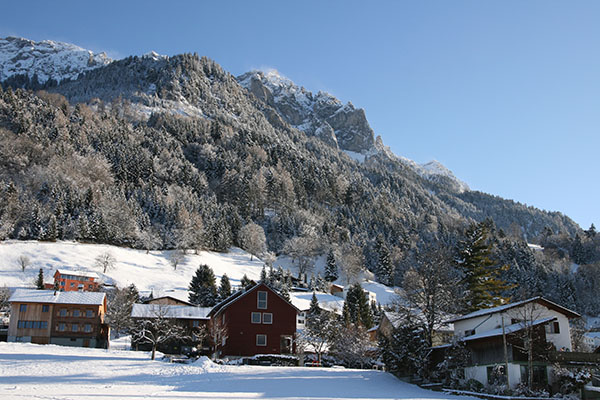
How intact ecosystems improve our quality of life
Nature provides us with enormous benefits. The AlpES project draws on the concept of ecosystem services in order to record these in the Alpine regions and increase their appreciation.
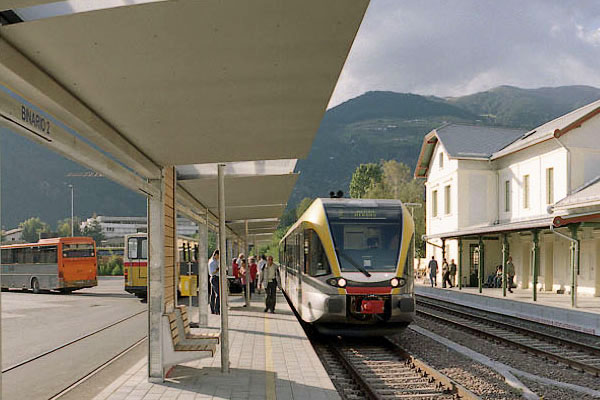
Solutions for borderless commuter mobility
Traffic jams, convoy controls, fine dust pollution and the Brenner base tunnel: while the problems of transit and goods traffic accumulate on political agendas, commuter cars remain stuck in queues.
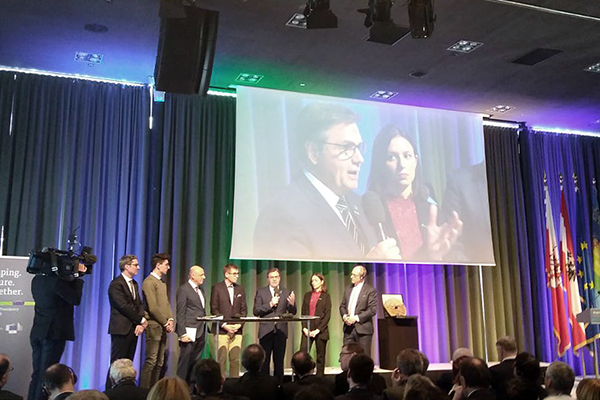
What now for the Alpine strategy?
Since January, the Austrian federal state of Tyrol has been chairing the European strategy for the Alps. This year will see a decision on how the strategy will be implemented in practice.
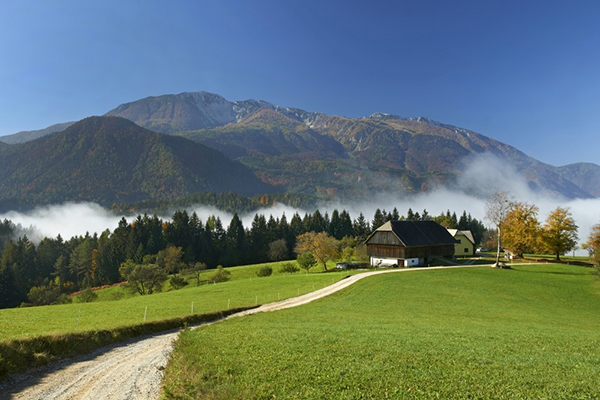
Prospects for young people
Like many other rural areas, the Koroška region of northern Slovenia also has to battle against depopulation. Various measures and ideas now aim to persuade young people to stay.

Point of view: Skiing, adieu!
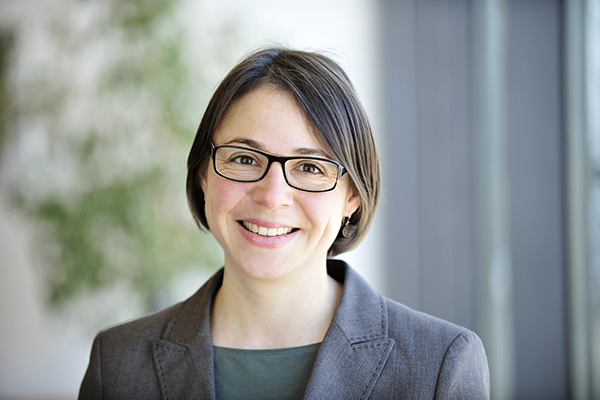
Winter is here and in many ski resorts the snow cannons are running at full blast. Yet the number of skiers is in decline, making it hard to justify the immense investments made with the aim of expanding ski areas. It is time to realise that skiing is not a business model with a future, says Katharina Conradin, President of CIPRA International.
Poisoned playgrounds
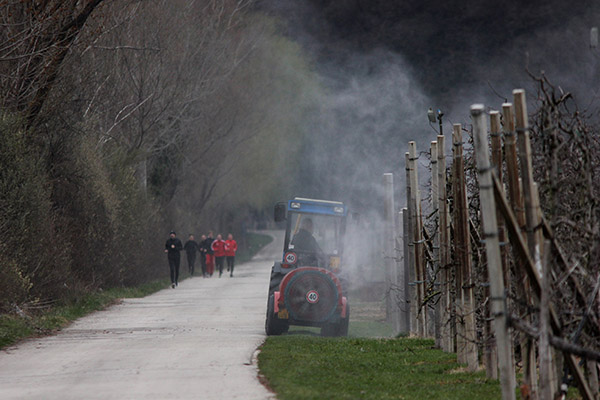
A study proves the presence of pesticides on children's playgrounds in South Tyrol. The provincial government has taken up a defensive posture.
Awards for attractive, well-built constructions
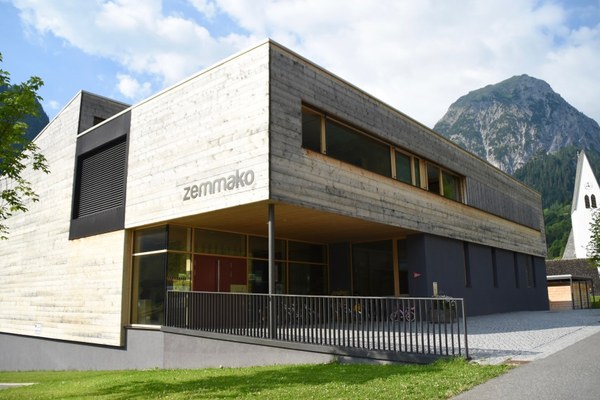
At the end of October 2017 in Bern, Switzerland, Constructive Alps crowned the winning projects, demonstrating that Alpine architecture can not only be pleasing on the eye, but sustainable too.
The Alps as the focus of climate policy
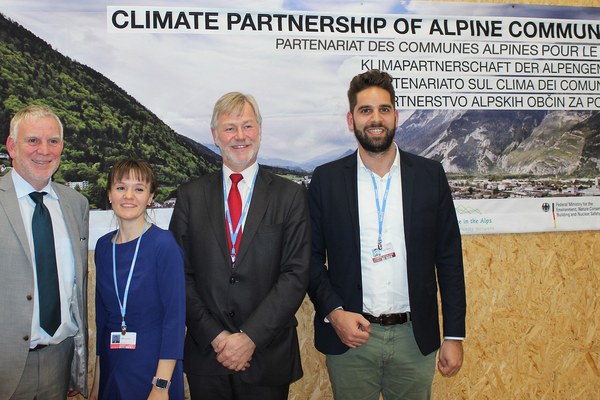
Temperatures in the Alps are rising faster than the global average. The search for solutions is not limited to the World Climate Conference being held in Bonn, Germany.
Underestimated soil
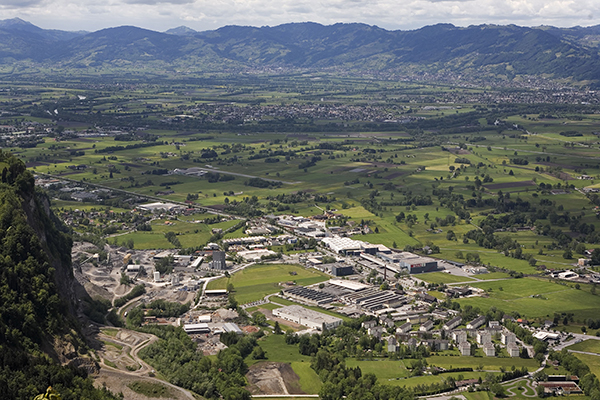
We cannot breathe it, we cannot drink it, and yet it forms the very basis of our lives: soil feeds us, is home to us, protects us. Why has its importance hardly been recognised until today?
Point of view: Municipalities as drivers for sustainable development
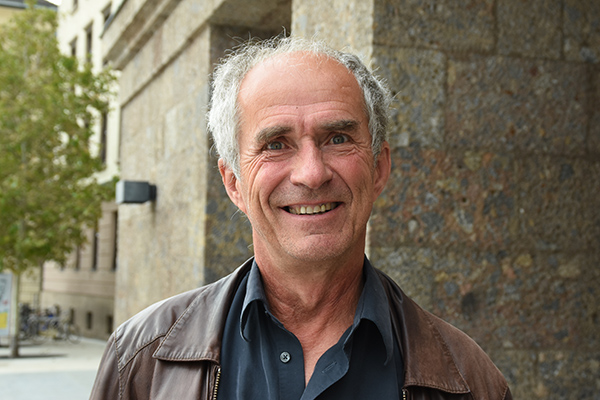
Sustainable development cannot be prescribed by law: it needs local people to put it into effect. Municipalities have a key role here, says Jean Horgues-Debat, the newly elected President of CIPRA France.
Society’s demands mark the landscape
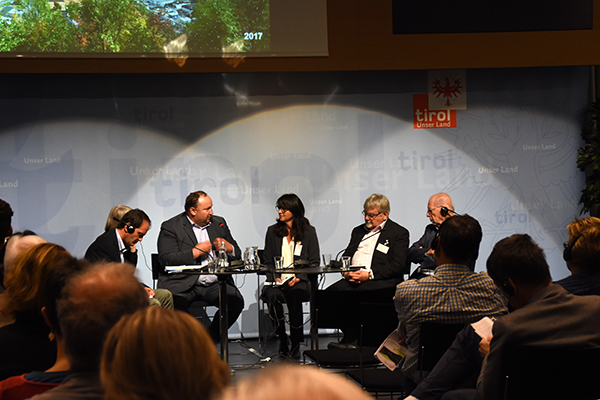
Conflicting needs and exaggerated expectations collide when it comes to spatial planning. Its role needs to be rethought, with a move away from overall planning and a shift towards guidance and awareness-raising. This was the tenor of the CIPRA Annual Conference held on 29 and 30 September 2017 in Innsbruck, Austria.
I-LivAlps: a conclusion for the future
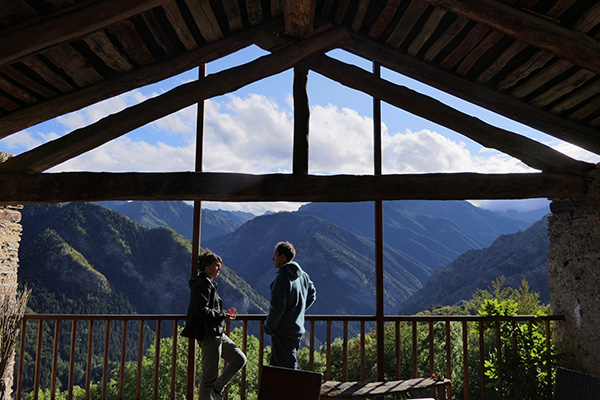
September saw the fourth and final I-LivAlps workshop on social innovation held in the Valle Maira, Italy. The end of the project has produced a rich harvest.
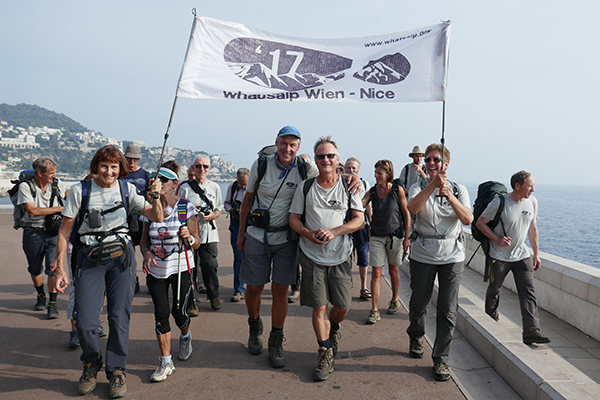
Reaching a conclusion: whatsalp arrives in Nice
After five countries, 568 hours of walking and 66,000 metres of altitude, on 29 September 2017 the “whatsalp” group arrived in Nice after a three-month trek through the Alps. The group’s conclusions were critical in nature.
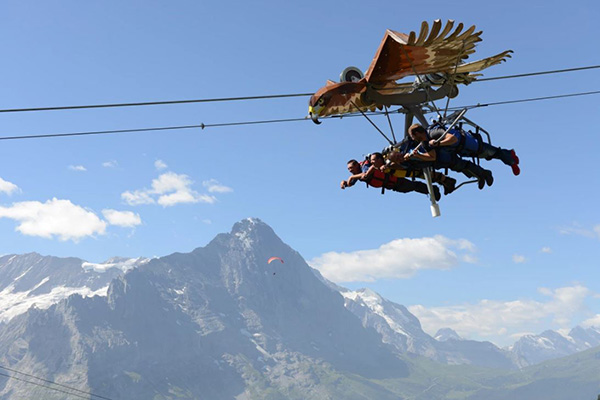
Oh...
Funfair up on the mountain
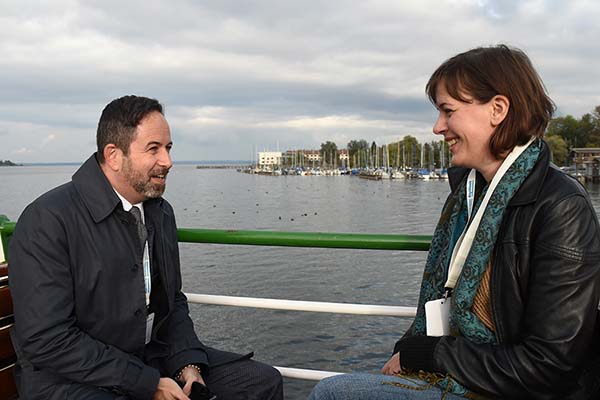
Where ideas make waves
CIPRA is a small organisation with a large network. It enables people to tackle challenges together and learn from one another – like Sandrine Percheval and Cassiano Luminati, who met for the first time at the AlpWeek in Grassau/D.

Going further, together
There is an African saying that goes: “If you want to go quickly, go alone. If you want to go far, go with others.” And the trail to sustainable development in the Alps and to preserving the alpine natural environment, its habitat and its economic area is a very long one indeed. It is one the Alliance in the Alps network of municipalities and CIPRA International have been trekking along together since 1997.
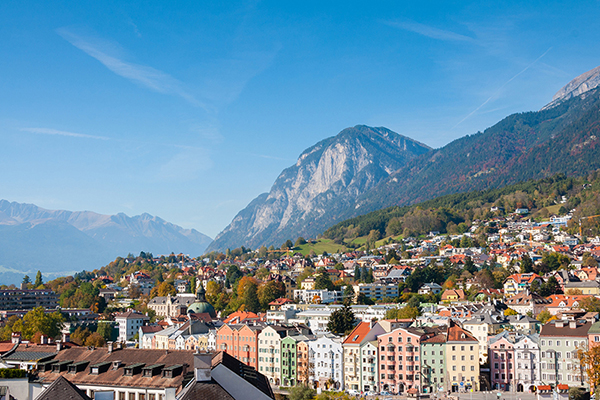
A pioneering region for a carbon-neutral economy and life
The economy of the Alps is to become greener. To make sure it takes on this colour, the comprehensive action programme “Greening the Economy in the Alpine Region” has been launched.
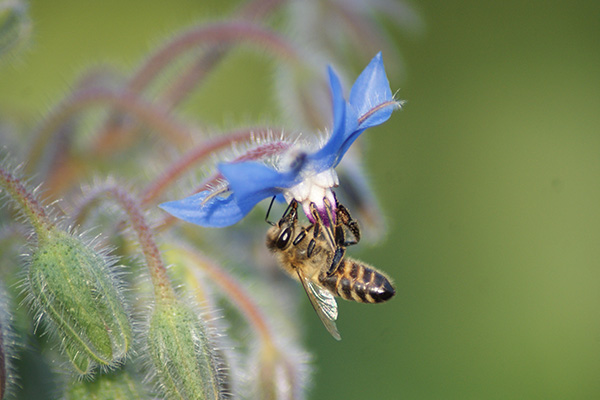
Salvation for the bees?
The European Commission is discussing the use of neonicotinoids. The damage caused by these insecticides also strongly affects bees.
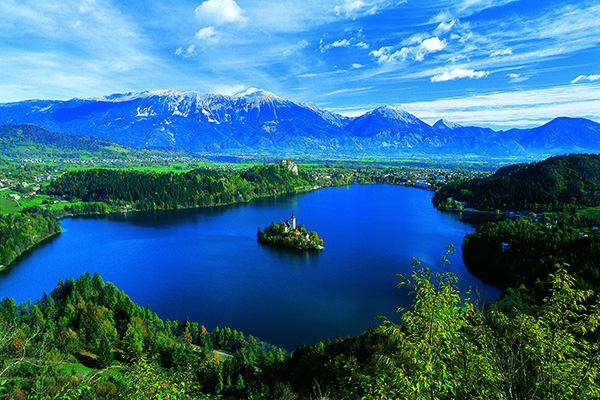
A blessing and a curse
Some places are deserted, others are overrun by tourists. The two Slovenian municipalities of Bled and Bohinj in the Triglav National Park were faced with the latter situation, as they struggled with masses of cars this summer.

Rivers connect people
The partners of the Spare Project are as diverse as they are at home in different Alpine countries, comprising as they do a university, two research agencies, two official bodies, a regional office, and two environmental organisations. Together they demonstrate how river management can be improved above and beyond administrative, cultural and technical boundaries.

A wind of change for municipalities
At the Nagelfluhkette Nature Park/A, young people are teaching primary schoolchildren for a day. Together, they study water courses as a habitat for plants and animals. In l’Argentière-la-Bessée/F, another group is creating an adventure trail to the entrance of a silver mine.

Space is finite
In 2016 CIPRA examined spatial planning from various perspectives. With the alpMonitor project for instance, it demonstrated under the Spatial Planning rubric how such processes can be tackled at the municipal level and what the potential stumbling blocks might be.

Awakening and change
“Us first” was the pervasive motto in 2016, more so than ever before. In the light of a global political and social climate of isolation it is all the more important for CIPRA to stand up for values such as solidarity, co-operation, environmental protection, and justice.
Turning risks into opportunities
On this October afternoon in the Swiss region of Surselva, the hotel in Vals is a hive of activity as a group of people discuss and gesticulate in German and Romansh. They’re engaged in an exchange of views on the opportunities, risks, and future of the valley in the wake of climate change.

Mobility as a state of mind
“People very quickly forget about a traffic jam providing it doesn’t lasts longer than ten minutes.” 140 pairs of eyes were focused on the speaker Gerhard Fehr. At the international symposium on commuter mobility in Hard, Austria, in mid-November, Mr Fehr, a behavioural economist, was showing his audience why the choice of means of transport is often not a rational decision.
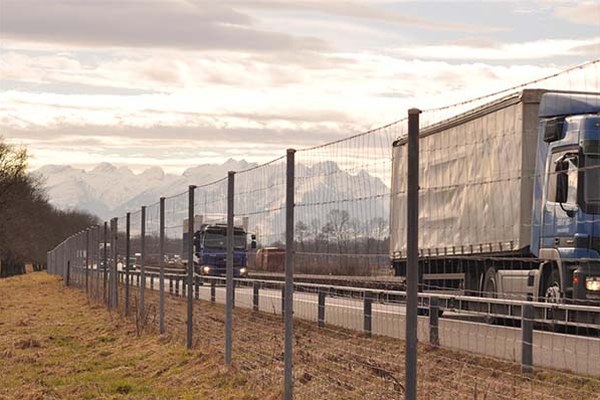
Together against transit traffic
CIPRA Italy. While most of Italy is surrounded by the Mediterranean, to the north the country is encircled by a wide arc formed by the Alps. Goods shipped to Italy via sea routes are distributed onwards throughout Europe from Italy, with European products shipped out through Italian ports.
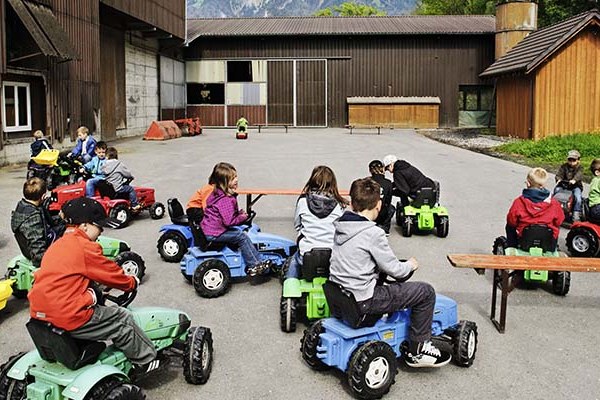
Laughing, walking and learning from each other
CIPRA Slovenia. Increasingly, children are now being driven to school by their parents. CIPRA Slovenia is working to counter that trend by working with the Institute for Spatial Policies and the Association for Sustainable Development. And thanks to the Pedibus, schoolchildren get to exercise – and have more opportunities for contact with children of the same age.
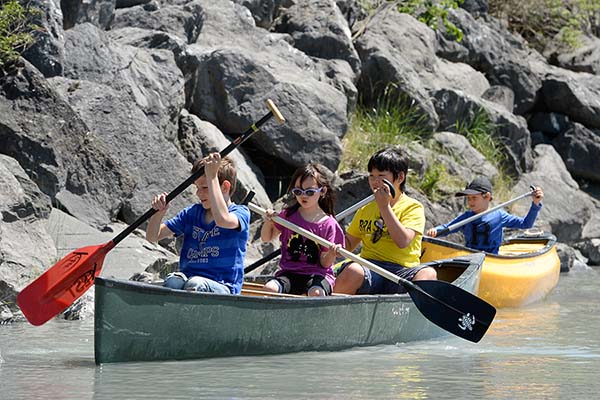
The Alpine Rhine fête
CIPRA Liechtenstein. Taming Europe’s biggest torrent began some two hundred years ago. Today, the Alpine Rhine is a canal, its course lined for the most part by intensively used farmland and residual pockets of wetland forest.
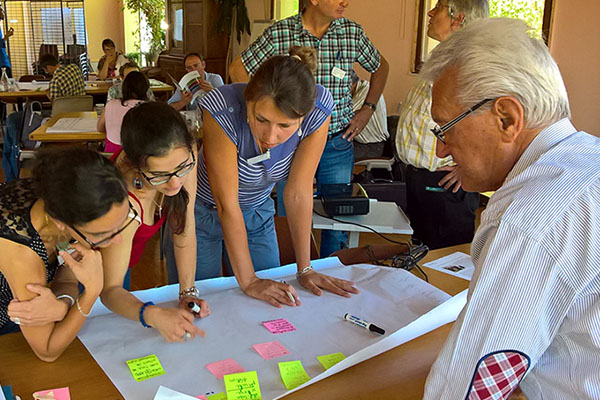
Think globally, act locally
CIPRA France. The European Strategy for the Alps (Eusalp) examines answers to challenges such as demographic change, economic globalisation, climate change, and energy transition.