
Articles
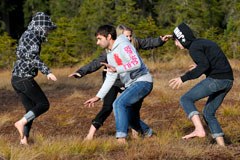
Young, climate-conscious, and thirsting for action
Young people from five Alpine nations campaigned as part of the My Clime-mate Project to make the Alps a carbon-neutral region. At the end of October they took stock - and forged new plans.
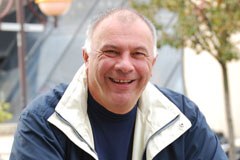
"We'll keep at it."
Virtually everyone was there. Idrija's festival hall was packed to the rafters, and the youth symphony orchestra summoned specially for the occasion was in full flow. There was plenty of drama, and the TV people were there, too. A murmur went through the 1,000-strong audience as they got to their feet and began clapping. Then a large burly man in a dark suit walked onto to the stage. Deep creases bracketed his laughing mouth like waterfalls, stretching up to his white temples. Bojan Sever, the major of the small Slovenian town in the alpine foothills, held aloft the certificate confirming their status as Alpine Town of the Year 2011. Cameras flashed and the applause redoubled. That was just over a year ago.
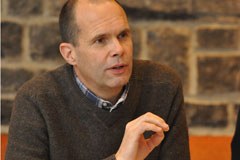
"CIPRA is a both a mainstay and a cornerstone"
Chris Walzer, lead partner of Econnect, on ecological networking, psychological barriers and a continuous landscape.
Alpine regions demand joint strategy
The Conference of the Alpine Regions has decided on an initiative paper for the development of a macro-regional strategy for the Alpine arc. It declares that the need is for greater innovation and economic strength within an intact environment, as well as more co-operation and the bundling of development funds. There is just one thing that is not mentioned: the Alpine Convention.
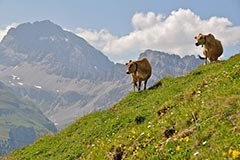
Fewer Alpine pastures
It is not the number of Alms (mountain pastures) that is in decline: rather it is the area of pastureland being worked, according to the preliminary results of the work on the "Alm Atlas".
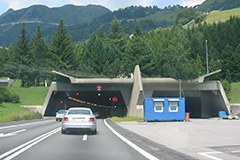
New vehicle tunnels for goods traffic: a dead end
Traffic chaos in the Alps: this summer the most important transit axes are being closed to rail traffic. Haulage associations are thus again demanding new road tunnels. But the Alpine regions have decided that the solution to the traffic problem lies elsewhere.
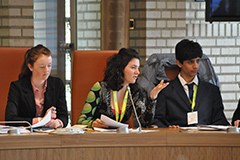
Alp Week: a place for youth
Politics, science, NGOs. All the usual suspects are there at the 2012 AlpWeek in Poschiavo. This time, however, there is a special place for young people. Here is an overview of the programme.
The future of farming in the mountains
The European Union is negotiating the Common Agricultural Policy (CAP). If the "Alliance for Agriculture and Nature Protection in the Alpine Regions" has its way, farming in the mountains will be given particular consideration. The alliance has now submitted its catalogue of demands.
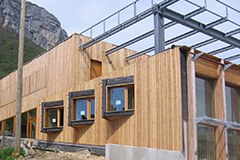
In summer cool, in winter warm
The European Union Directive on the energy performance of buildings takes effect from July. Low-energy buildings will be mandatory as from 2021. The community centre of Saint-Jean-d'Arvey already meets these criteria. The building, made of regional wood, will open at the end of June - a first.
Oh! ...
… the bears in Trentino have finally gone too far.
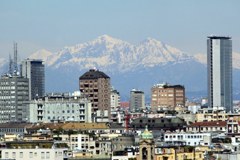
CIPRA's point of view: New solidarity between the Alps and metropolitan areas
Various political actors are pushing for the development of a macro-region for the Alps. CIPRA also says yes to an Alpine macro-region - but only within a clear framework. This offers the opportunity to make the rest of Europe aware of the issues facing its Alpine regions.
CIPRA's point of view: Alpine Convention: Italy says yes but Switzerland still says no
Italy, surprisingly, has ratified eight of nine protocols of the Alpine Convention. Only Switzerland has yet to sign up. We do not need the protocols, stated the Swiss Federal Council recently - Swiss policy is, in its view, more sustainable than in any other Alpine country.
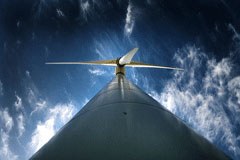
International support for campaign against Brenner wind farm
With its planned wind farm on the Brenner Pass, Italy is breaching the Alpine Convention, according to the Club Arc Alpin, which has petitioned the Alpine Convention's committee of inquiry. For the first time in the history of the convention, "complaint proceedings" have begun.
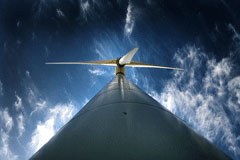
International support for campaign against Brenner wind farm
With its planned wind farm on the Brenner Pass, Italy is breaching the Alpine Convention, according to the Club Arc Alpin, which has petitioned the Alpine Convention's committee of inquiry. For the first time in the history of the convention, "complaint proceedings" have begun.
CIPRA's point of view: 60 years of CIPRA
The International Commission for the Protection of the Alps, CIPRA, has reason to celebrate. On 5 May this umbrella organisation, containing some one hundred members from all countries in the Alps, will turn 60.
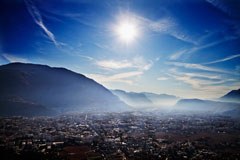
CIPRA's point of view: Knowing how to shape the climate
We should discharge no more greenhouse gases than the natural systems in the Alps, such as forests or moorlands, can absorb - CIPRA's vision, set out in its annual report, argues for sustained climate protection.
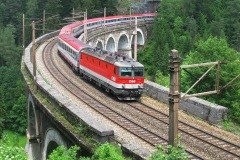
Work begins on Semmering Tunnel
The authorisation proceedings have yet to be concluded, but the excavators are already on the move for the building of the Semmering rail tunnel. Austrian politicians have given the project the green light, ignoring loud protests and empty state coffers.
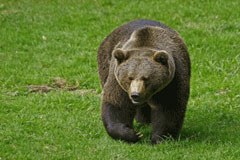
Bruin is back!
The number of bears in the province of Trento has grown, while the damage they cause has fallen significantly, states the report on bears in the province. But not all is well for Bruin and friends.
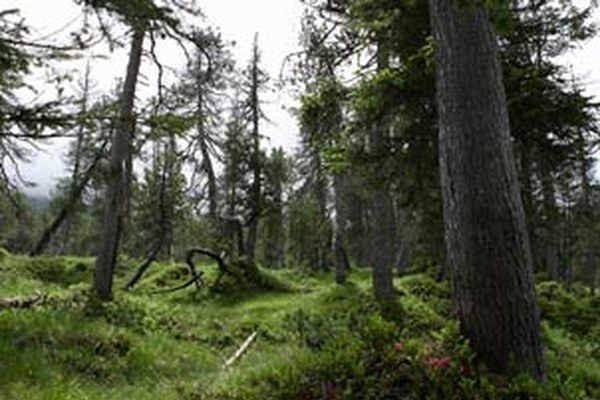
Transnational ecological networks - history, status quo and potentials
The TransEcoNet Final Symposium presented in March 2012 the results of more than three years of project work. It provided an interdisciplinary view on transnational ecological networks in Central Europe and beyond.
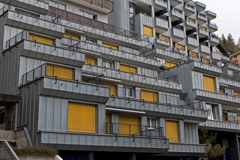
Swiss want to see fewer second homes
Most Swiss people have approved the "Stop the never-ending building of second homes" initiative, providing mountain communities with more protection for landscapes. But the building moratorium is not universally popular.
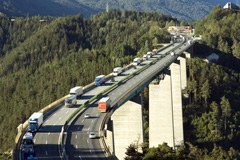
Alps overrun by traffic
Never before have such large quantities of goods been transported through Switzerland as in 2011. The title of "Transit Route Number 1", however, goes to the Brenner Pass.
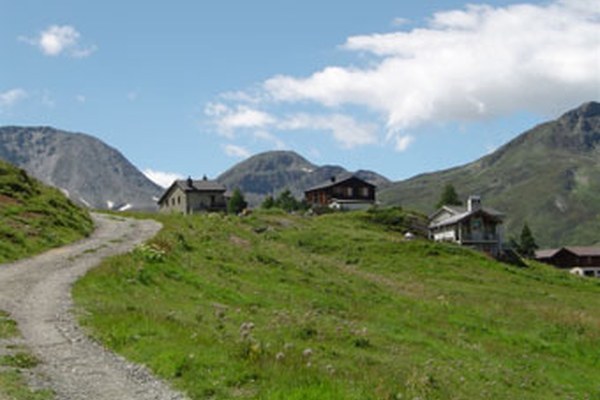
Swiss-Italian cooperation in favor of ecological connectivity
During the last Alpine Conference in March 2011 the Alpine Convention officially nominated 8 pilot regions for ecological connectivity in the Alps.
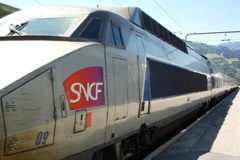
Lyon-Turin: Environment Ministry gives bad marks
Criticism of the planned Lyon-Turin rail line is growing: environmental organisations have rejected the megaproject, as has the conservative UMP party in Savoy. The French Environment Ministry is now also expressing doubts.
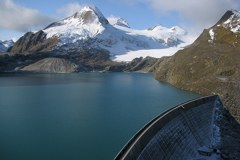
CIPRA's point of view: Water on!
Austria's checklist for the building of hydroelectric power plants is technically sound, offering transparency for building permits, but no protection for ecologically intact waters.
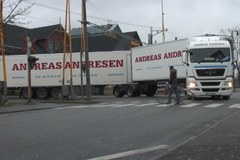
Are XXL trucks coming to the Alps next?
The European Union is seeking advice on authorising "gigaliners". These 25-metre trucks are intended to promote climate protection - at the expense of rail transport and infrastructure.
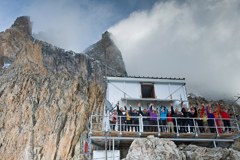
CIPRA's point of view: An appeal for the mountains
Bigger, faster, further: not even the mountains are immune to this mantra of growth. CIPRA France is thus seeking visions for a sustainable future for both people and mountains.
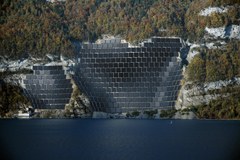
Solar installations in Switzerland: innovative yet infuriating
Solar modules on ski lifts and mountain-slopes: the legacy of Fukushima and rising electricity prices mean that creative solutions are needed for power production. We offer a summary of Swiss megaprojects and world premieres.
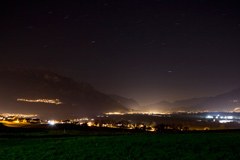
Liechtenstein switches the lights out
The first state in the world to go dark: in January and February Liechtenstein is conducting experiments in bird protection, energy efficiency and public safety.
Documentation on ECONNECT results now available
The ECONNECT partners have now compiled their results in a series of publications. There are dedicated reports for ECONNECT's key target groups: all different kinds of stakeholders (final booklet), experts (synopsis, species reports, reports on legal barriers), policy makers (policy recommendations) and practitioners (implementation recommendations).
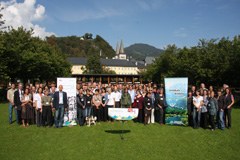
ECONNECT's results discussed at the final conference
After three years of research and fieldwork, the ECONNECT project has come to a conclusion. From 26 to 28 September political representatives of the six Alpine countries as well as experts and scientific researchers from local and international institutions attended ECONNECT's final conference in Berchtesgaden, Germany.