
Articles
Modifications to Alpine plant communities
A recent French study into 171 woodland plants in temperate regions shows how plant species have already adjusted to climate change, with a significant upward shift in species optimum elevation averaging 29 meters per decade in response to rising global temperatures.
EU: Legally enforceable right to clean air
The European Court of Justice (ECJ) has ruled that citizens have a legally enforceable right to clean air. Individuals affected by high concentrations of particulate matter can now call on the courts throughout the EU to ensure that effective measures are taken to improve the quality of the air.
New World Heritage sites in the Alps
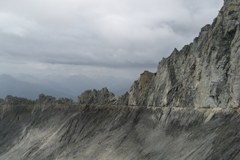
In July the UNESCO World Heritage Committee added another 27 cultural and natural sites to the World Heritage List, including three located in the Alpine region, namely the Swiss Tectonic Arena Sardona with the Glarus overthrust, the cross-border (CH/I) Rhaetian Railway in the Albula/Bernina Landscapes and the fortifications of Vauban in France.
Database on municipal development in the Alps
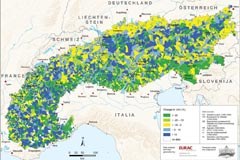
How do my town and region perform in terms of employment, demographics, structural diversity, agricultural and near-natural land use, structural change in agriculture, and landscape fragmentation in the Alpine space?
EU Greening Transport Package
On 8 July the Commission of the European Union presented a package comprising various initiatives for environment-friendly and sustainable transport. The package includes a strategy for internalisation of external costs in the transport sector, a proposal for a Directive on road tolls for lorries, and proposals for reducing the perceived noise from rail freight trains.
European regions calling for a green paper for mountain regions
The Committee of the Regions (CoR) is calling for the European Commission to deliver a green paper on development for the mountain regions, with such fields as economic and structural funds, employment policy, nature protection, civil defence, the environment and energy policy, and also transport and agricultural policies combined in an integrated approach that does justice to the special character of the mountain regions.
Climate Pact for the Alps - criteria for innovation
Some 350 attendees came to Argentière-la-Bessée/F for this year's AlpWeek from 11 - 14 June to discuss the question of innovation in and for the Alps under the title of "Innovating (in) the Alps".
2009 Alpine Town of the Year award for Bolzano
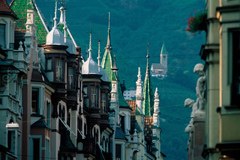
On 9 June Bolzano/I was officially declared the 2009 Alpine Town of the Year. The decision was taken in recognition of the South Tyrolean town's contribution to climate protection and a sustainable planning policy designed to provide a good quality of life for residents and an attractive destination for visitors.
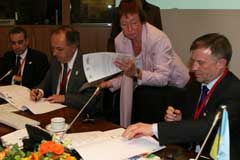
Alps and Carpathians pulling together for biological diversity
On 29 May, the representatives of the UN Convention on Biological Diversity, the Alpine Convention and the Carpathian Convention agreed to intensify collaboration in the field of nature protection and signed a memorandum of co-operation to that effect.
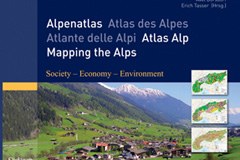
New publication: "Mapping the Alps"
With its international data sets and maps, this recently published atlas of the Alps provides a solid and up-to-date basis for a wide range of questions relating to the Alpine region. The editors see their work as a tool for studying the differences and the rapid pace of change in terms of place and society, which is so typical of the Alpine region in particular.
More winter passengers handled by France's Alpine airports
Passenger volumes at the airports in Grenoble-Isère/F and Chambéry-Savoie/F increased by 7% and 20% respectively in the 2007/2008 winter season. In the last two years, Grenoble-Isère has had the highest rates of growth in passenger totals of all French airports.
New look for the Via Alpina website
Via Alpina fans can now go the organisation's revamped website with additional functionality for planning and preparing for a walk. The officially designated routes of the Via Alpina, with descriptions of the walks available in several languages, are the ideal way to discover the Alpine Arc.
EU Structural Fund with negative environmental impacts
More than two thirds of the projects financed with the help of the European Union's Structural Fund have effects that are contrary to EU environmental policy objectives.
Geotourism Challenge - public voting for the winning projects
This year the American National Geographic Society launched the "Geotourism Challenge: Celebrating Places/Changing Lives", a new competition designed to find and promote pioneers in the field of geotourism.
The Climate in the Alps is much prized - CIPRA Competition cc.alps: win prizes worth up to €20,000 each
Prizes worth a total of €100,000 await the best measures aimed at a sustainable approach to the consequences of climate change in the Alpine region. CIPRA, the International Commission for the Protection of the Alps, has just launched this competition as part of its cc.alps Project.
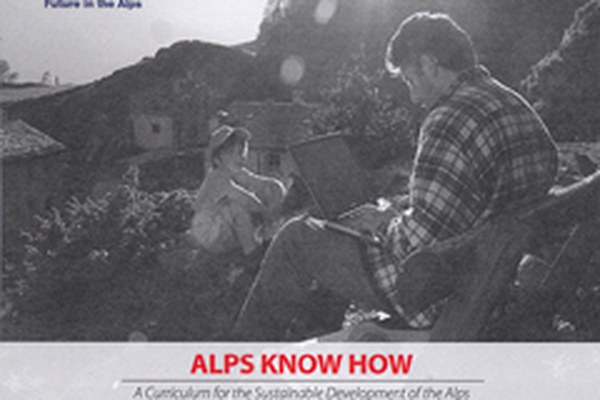
Educational CD on sustainable development in the Alps
A new educational CD-Rom has been published, providing a wide overview of key issues affecting the Alps.
Ibex Label for Swiss youth hostels
At the beginning of May ten Swiss youth hostels were awarded the Ibex Label, which has been presented to establishments operating according to sustainable management principles in Switzerland since 1994.
Ecological networks in the Alps at the 9th Conference on Biological Diversity
More than 5,000 participants are expected in Bonn/D at the end of May for the 9th Conference of the Contracting Parities to the Convention on Biological Diversity.
Successful destinations in alpine tourism
BAK - Basel Economics has been analysing the success and competitiveness of some 100 tourist destinations in the Alpine region on a regular basis since 2005; however the study focuses only on economic aspects and does not take ecological aspects into account.
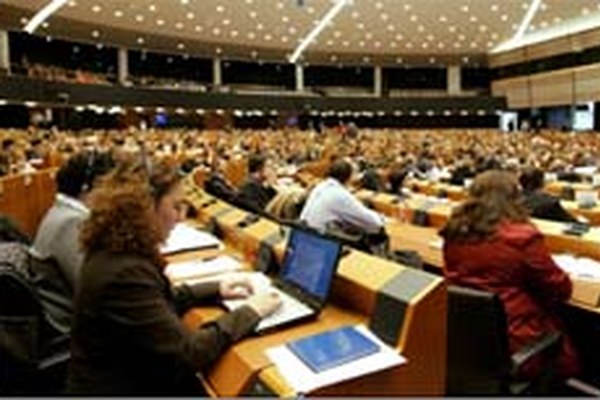
Citizens' Agora on the topic of climate change
On 12 and 13 June the European Parliament is inviting European civil society to the second citizens' Agora to express its views on the topic of climate change, submit analyses and proposals, and also define its role in future action.
Energy supplies at risk from shrinking glaciers
The shrinkage of the Mer de Glace in the French Alps is having a tangible impact on the use of hydropower.
Stable glaciers in Central Asia
Global warming is not causing all the world's glaciers to melt at the same rate.
ClimChAlp Project completed
The final conference in Laufen/D on 12 March 2008 marked the end of the Interreg IIIB Alpine Space Project "ClimChAlp" (Climate Change, Impacts and Adaptation Strategies in the Alpine Space).
Switzerland's first village hotel
The entire village of Vná in the Lower Engadine is to become a hotel as of May 1.
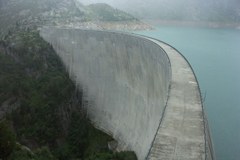
New publication on mountain dams
The new March issue of the bilingual magazine La revue de géographie alpine / Journal of Alpine Research looks at impoundment dams and new challenges in mountain areas.
The Alps as a Model Climate Region: cc.alps shows how it's done
Climate change is affecting the Alps more than other regions of Europe. That's why in many areas measures are now being adopted and prepared to reduce, or adapt to, climate change. CIPRA's new project "cc.alps" is designed to help ensure that these climate response measures are in keeping with the principle of sustainable development as far as possible.
New alpine Natura 2000 regions
In spring 2008 a whole range of new alpine Natura 2000 regions were included in the EU-wide network of protected areas Natura 2000 and published in an updated list.
Future in the Alps comes to a close
Future in the Alps was officially terminated last December. That makes it time to look back at the work done and the results and successes achieved in the course of the three and a half years of the project and also to look forward into the future after Future in the Alps.
Where's the know-how? Now we know!
At the beginning of the project there was the general conviction that the know-how was there and some good examples, too, but those who stood to benefit from them did not know where to find them. Forty experts from the Alps spent the first year collecting the available know-how on six main topics.
The challenge: disseminating knowledge
Establishing the knowledge base was an important first step. It formed the foundation for the transfer of knowledge in the central phase of Future in the Alps. Numerous activities were launched with the objective of communicating the know-how collected to as many actors as possible throughout the region of the Alps.