
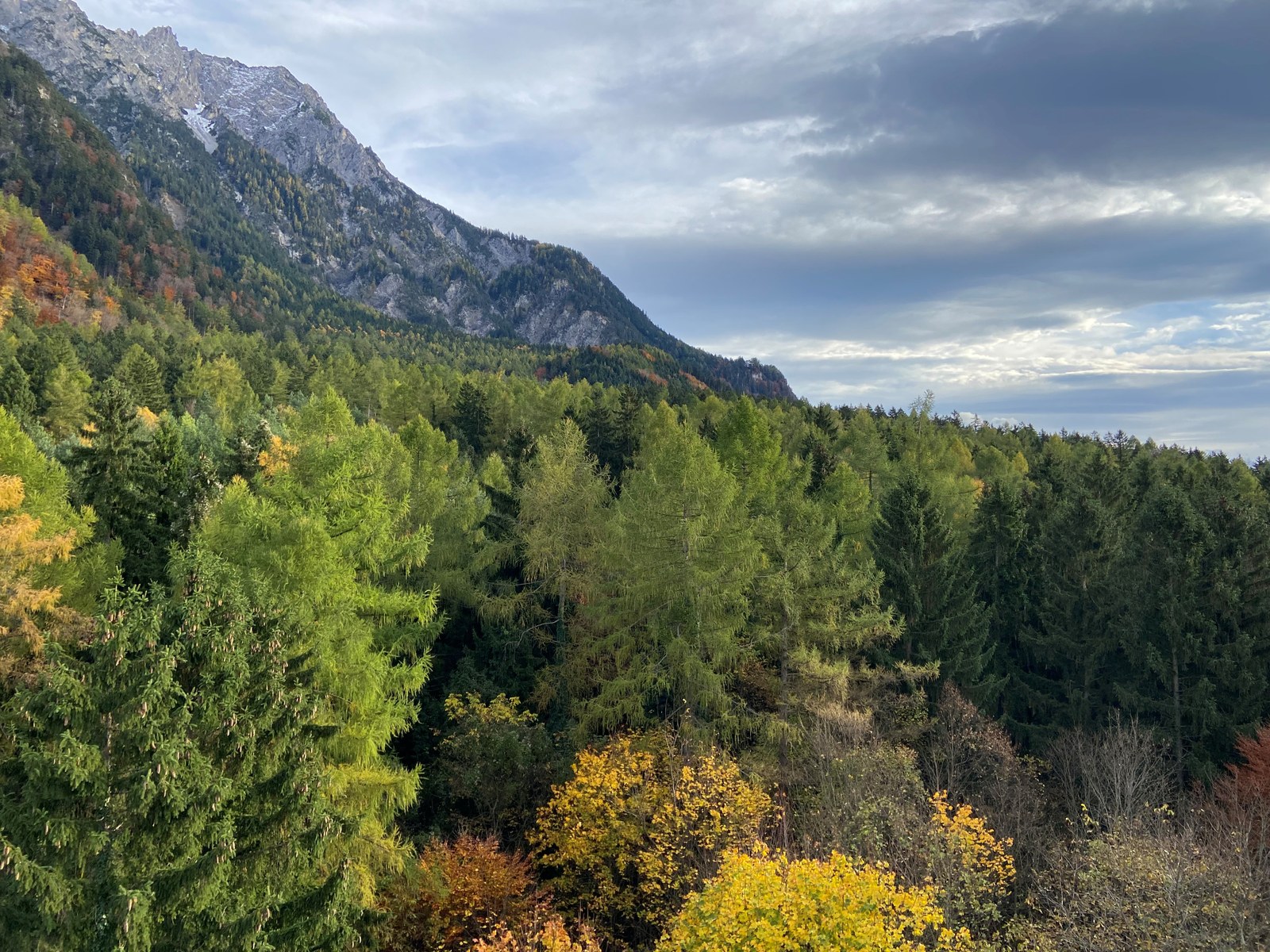
Act now to protect forests: sign the #HandsOffNature petition!
More than 40 percent of the Alpine region is covered by forests. They are not only a defining feature of the landscape, but also a cornerstone of Alpine livelihood, providing building materials, supporting biodiversity, and delivering essential ecosystem services.

Who is CIPRA?
Find out more!
More articles
alpMedia | Schaan, LI
Conference on "Cities in the Mountains"
The French mountain organisation Montanea is organising an international conference on "Cities in the Mountains" together with the Alpe magazine. It is to be held at the Chambéry Conference Centre on 29 June. Admission is free. The registration deadline is 22 June. The conference will offer simultaneous interpretation in French, German and Italian.
alpMedia | Schaan, LI
Ministers of alpine countries: More road safety and alternatives to road traffic
At a meeting in Switzerland the transport ministers of alpine countries underlined their commitment to improve road safety in cross-alpine HGV traffic in a joint and concerted effort adapted to the needs of the alpine countries, and to bolster the policy of transporting HGV traffic by rail. The meeting was attended by representatives from Germany, France, Italy, Austria and the EU Commission.
alpMedia | Schaan, LI
K2: Environmental impact of anniversary treks
To mark the 50th anniversary of the first ascent of the K2 summit in the Himalayas the Italian Alpine Association is organising several treks to the mountain's base camps. Up to 60,000 people are expected to pass through some of the intermediate camps this year. The problems this causes include the insufficiently rapid degradation of biological waste at high altitude, the pollution of rivers, or damage to the vegetation through the gathering of firewood. A number of expeditions are also to make greater use of helicopters.
alpMedia | Schaan, LI
7th CIPRA Summer Academy: Last opportunity to take part
There are still a few places left for the Summer Academy organised by the International Commission for the Protection of the Alps (CIPRA). The final deadline for registration, which can be made at www.cipra.org (de/fr/it/sl/en), is 30 June; the web site has details of this training and education event, including the course programme.
Events
|
Youth Parliament to the Alpine Convention: Climate Resilient Development | ||
|
The Better-Cities Event | Ljubljana | |
|
Local Peaks, Global Learning | online | |
|
Transhumance as Intangible Cultural Heritage of Humanity: A Way Forward? | MUCEM, Marseille/France | |
|
Growing alternative crops for new market opportunities in a changing climate | Vienna/Austria |
Projects
CIPRA International
Living Labs
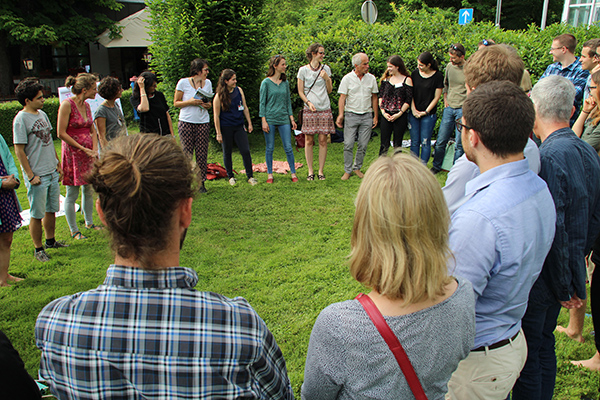
[Project completed] The project “Living Labs” brought together people of different ages from different Alpine countries to work together on process and know-how on selected topics. The project approach was participative and based on the principles of co-creation between young talents aged 18-30 years, environmental NGOs, civil society and politicians. The participants of this intergenerational project are committed to the sustainable development of the Alps at local, national and international level. For a desirable future it is important to set the right course today and to talk about how existing natural resources can be used sustainably.
CIPRA International | CIPRA Deutschland | CIPRA France | CIPRA Italia | CIPRA Slovenija
Sustainable Alpine Tourism
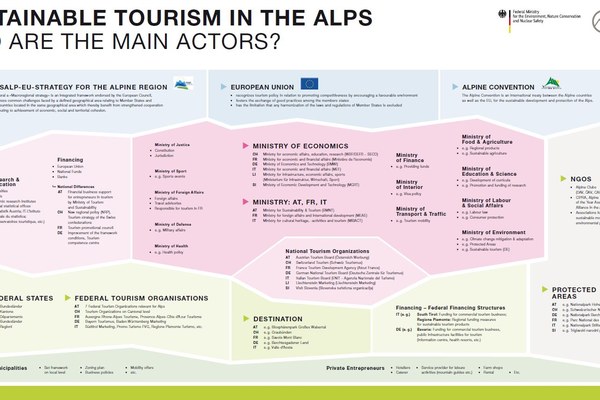
[Project completed] Sustainable tourism in the Alps is the only long-term alternative to conventional mass tourism in order to safeguard the habitat for nature and people. So far, however, there is a lack of jointly defined framework conditions on anational or alpine level for planning, promoting and implementing sustainable tourism.
CIPRA International
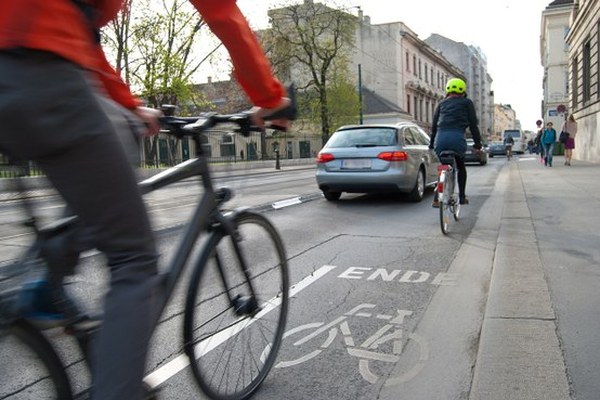
Cross-border mobility
[Project completed] Tens of thousands of commuters move across national borders every day in the Alpine region. Existing traffic routes, however, were mostly built with a purely national perspective and are not geared to cross-border commuter flows. The result is overloaded roads, noise and pollution for local residents.