
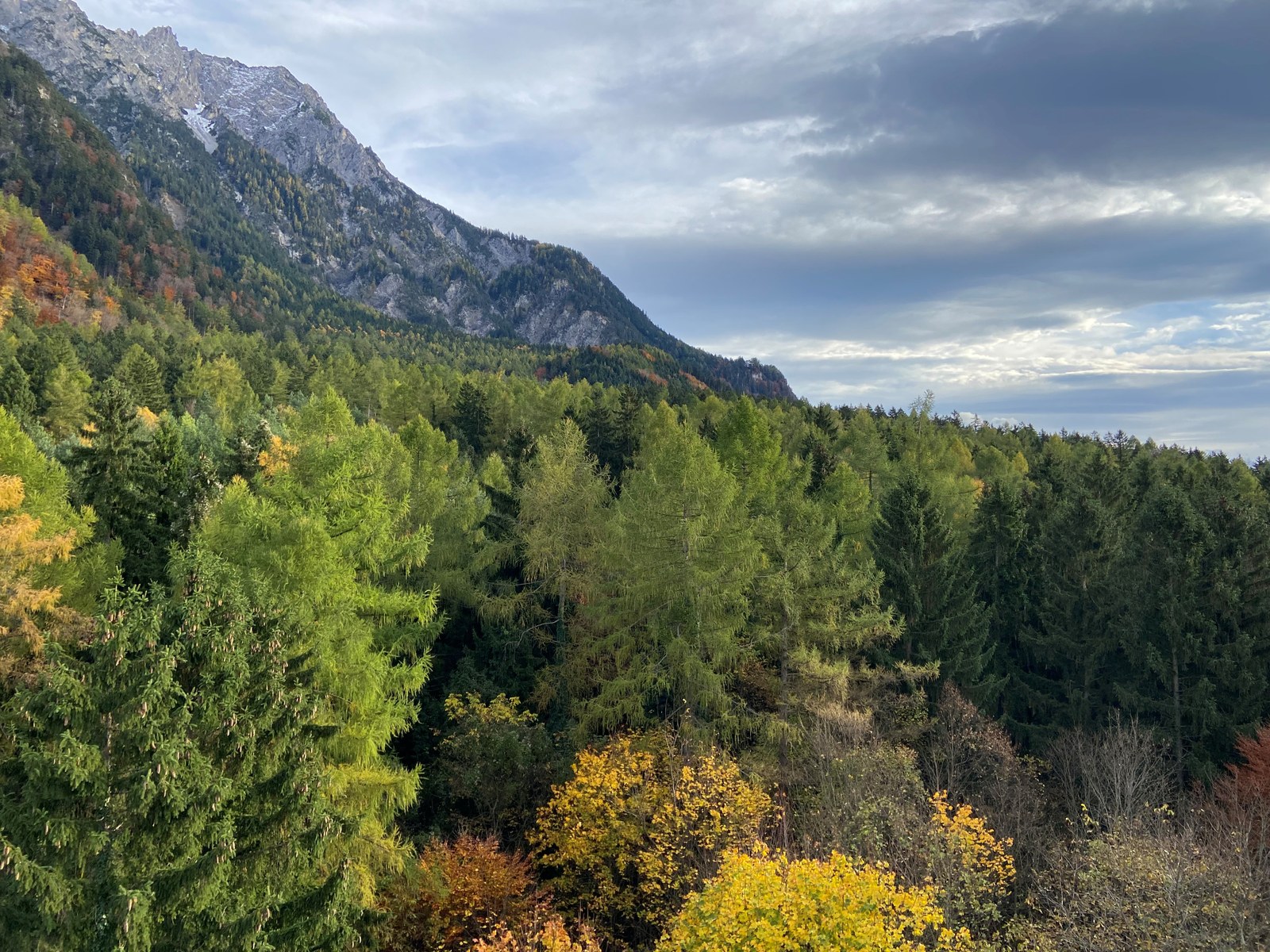
Act now to protect forests: sign the #HandsOffNature petition!
More than 40 percent of the Alpine region is covered by forests. They are not only a defining feature of the landscape, but also a cornerstone of Alpine livelihood, providing building materials, supporting biodiversity, and delivering essential ecosystem services.

Who is CIPRA?
Find out more!
More articles
CIPRA Internationale Alpenschutzkommission | Schaan, LI
Better ecological corridors and fewer accidents involving animals on Swiss roads
The Federal Council has drawn positive conclusions as regards the status of ecological corridors in Switzerland. A pilot project has tested how to successfully reduce collisions between animals and cars. The upcoming research field of landscape genetics provides new insights for the planning and implementation of ecological networks.
CIPRA Internationale Alpenschutzkommission | Schaan, LI
France paves the way for its green and blue infrastructure
After more than a year of discussions, France officially established its "trame verte et bleue" ecological network with the publication of a decree at the end of 2012. This Alpine country now has legal rules on how to define and implement its green and blue infrastructure.
CIPRA Internationale Alpenschutzkommission | Schaan, LI
Win-win for nature, economy and society: more green infrastructure throughout Europe
Since May the countries of the European Union have received guidelines on how to promote green infrastructure. The European Commission has adopted its strategy on this topic with the aim of better integrating natural processes into spatial planning and strengthening the benefits of intact ecosystems for the economy and society. In addition, Natura2000 and Emerald sites have been further recognized as major elements in an ecological network.
CIPRA Internationale Alpenschutzkommission | Schaan, LI
Alpine Convention strengthens co-operation between neighbouring countries
With its new presidency, the "Ecological Network" Platform of the Alpine Convention is now continuing its work. In focus over the next two years are cross-border co-operation between neighbouring states and activities in the pilot regions.
Events
|
Webinar: The journey of water | online | |
|
XIV European Mountain Convention | Sallanches / France | |
|
Alps in Motion: new Alpine-wide Day of Action | alpswide | |
|
Symposium 2: Vernacular Buildings in the Anthropocene | Austrian Academy of Sciences, Vienna (Austria) |
Projects
Caretaker Tourism
The Alpine Climate Board (ACB) is a body of the Alpine Convention that is committed to climate-neutral and climate-resilient Alps by 2050, with the “Tourism” pathway also in this sector. Within the framework of “Caretaker Tourism”, certain organizations and individuals assume responsibility for developing climate-friendly and sustainable tourism strategies.

CIPRA International Lab
OUT4INGOV: Shaping youth migration
The emigration of young people poses major challenges for many Alpine regions. The OUT4INGOV project is working with local organisations to develop innovative approaches to better manage youth migration and raise awareness of the issue in society.
CIPRA France
GOVQoL – Empowering Alpine communities to improve their quality of life
Alpine communities’ quality of life (QoL) is currently facing several challenges such as the depopulation of remote areas, reduced provision of services of general interest, the impacts of climate change, and mistrust of governance. These issues are not only reshaping the Alpine territories but also impacting the daily lives of its inhabitants. Despite the urgent need for responsive and inclusive governance, there is currently a significant gap in understanding and addressing QoL at the local level which our project aims to address.