
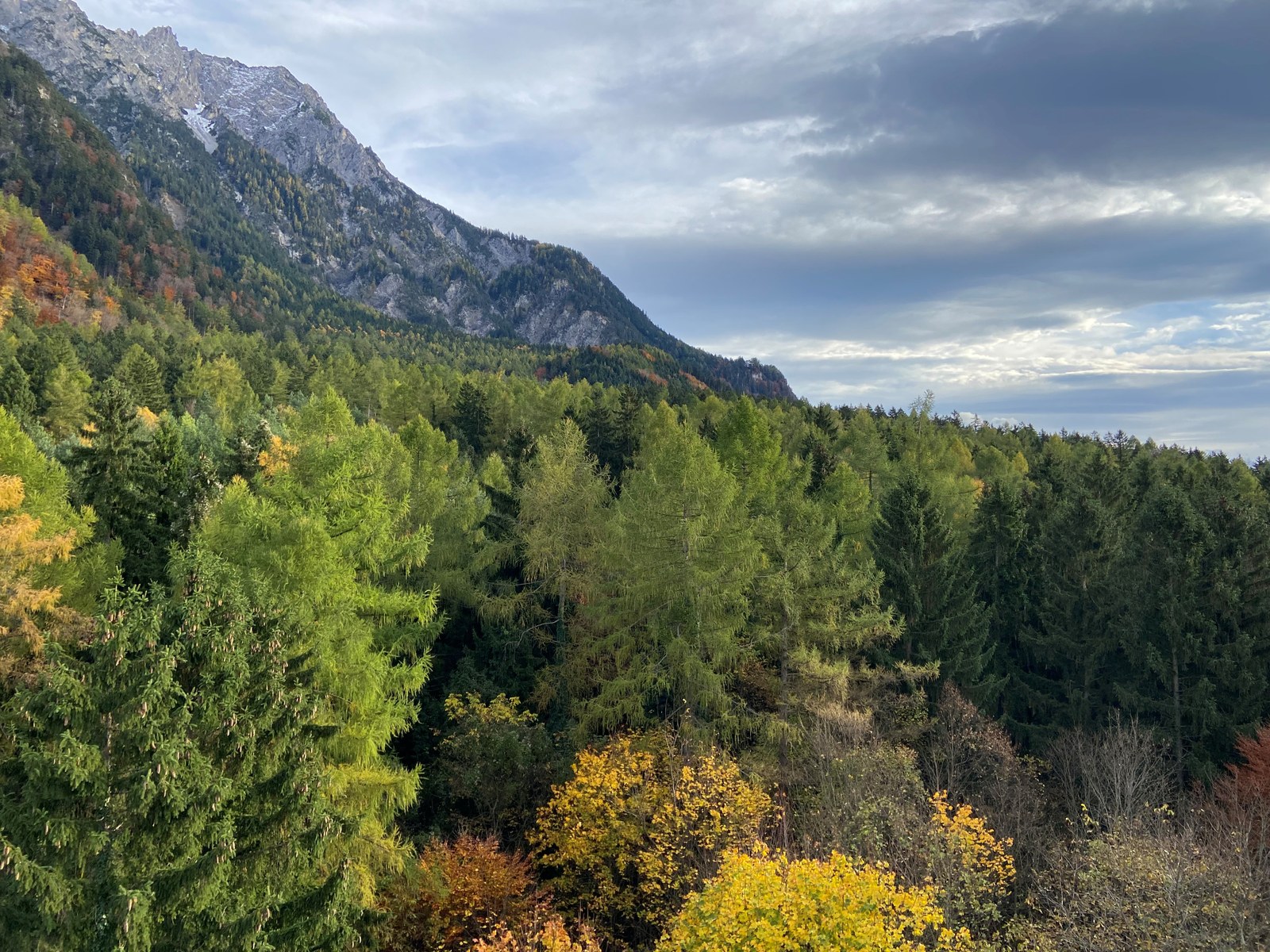
Act now to protect forests: sign the #HandsOffNature petition!
More than 40 percent of the Alpine region is covered by forests. They are not only a defining feature of the landscape, but also a cornerstone of Alpine livelihood, providing building materials, supporting biodiversity, and delivering essential ecosystem services.

Who is CIPRA?
Find out more!
More articles
alpMedia | Schaan, LI
Leisure: car-free mobility
Leisure activities that do not involve the use of cars are now "in", as the increasing number of information packs clearly shows. The Alpine Club South Tyrol (AVS) for instance recently published five new brochures, each featuring 15 to 20 hiking routes whose starting and finishing points can all be reached by public transport. In the series Hiking Without Cars the Alpine Club has compiled a total of some 300 hiking tips for the whole of South Tyrol. As the AVS remarks in a press release, "It should be a priority for tourist regions to adopt measures that promote the use of public transport for travel both to and from destinations as well as for activities at the holiday destination itself".

alpMedia | Schaan, LI
The "brain drain": an opportunity for the Alps?
Highly qualified people are also leaving alpine regions to move to other regions or countries. But according to a study by the Arbeitsgemeinschaft Alpenländer (ARGE ALPE) Working Group the Alps can put this brain drain to a positive use. Indeed these brilliant minds are also multipliers and image carriers for their homeland around the globe, a fact that should be capitalised on.
alpMedia | Schaan, LI
International projects on the impact of climate change in mountain regions
The results of the CIRCLE MOUNTAIN Call are now available. The financing of four translational projects has been approved. The projects are to run for a period of two years and have a volume of approximatively EUR 300'000 each. The four funded projects are ARNICA, EURAS-CLIMPACT, ChangingRISKS and CAMELEON.
Dear colleagues,
One of the main challenges in the process of implementing the Alpine ecological network is involving all the relevant stakeholders. The Ecological Continuum Initiative supports this goal in different ways. On the one hand with printed information material (fact sheets and the brochure), on the other hand by organizing meetings that offer a chance for personal interactions and exchange among stakeholders. Such a workshop on stakeholder integration took place in Dobbiaco/I this April.
Events
|
Local Peaks, Global Learning | online | |
|
Transhumance as Intangible Cultural Heritage of Humanity: A Way Forward? | MUCEM, Marseille/France | |
|
Growing alternative crops for new market opportunities in a changing climate | Vienna/Austria | |
|
Trento Film Festival | Santa Croce street, 67; I-38122 Trento | |
|
ForumAlpinum 2026 | Aosta |
Projects
CIPRA International
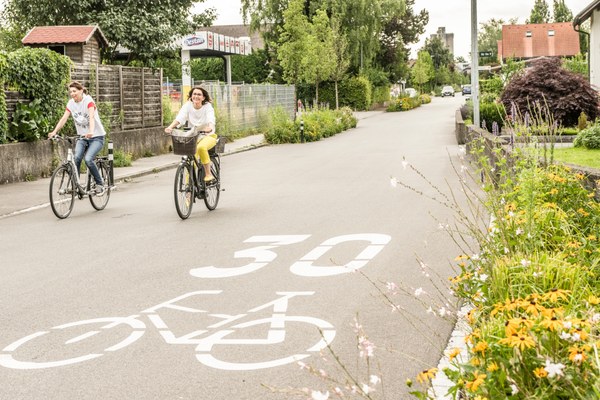
Climate-friendly streetscapes
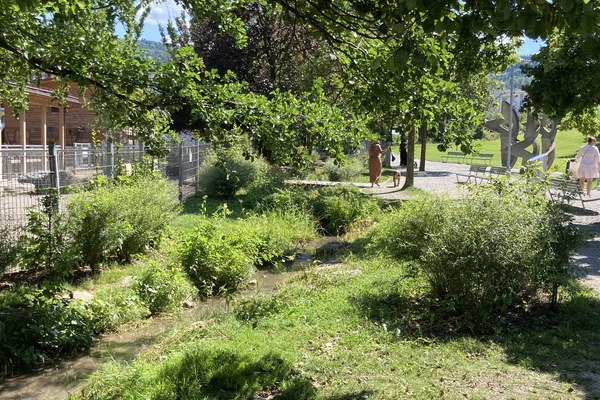
Whether travelling by car, public transport, bicycle or on foot, roads and their immediate surroundings are probably the most important part of our daily journeys. Against the backdrop of the climate crisis, they can become a problem because they increase the heat island effect and seal the ground. The project, based in the Alpine Rhine Valley, aims to make road spaces fair, climate-friendly and health-promoting.
CIPRA International
Nature-based solutions and their governance structures in the Alpine region
In view of the global challenges of climate change and biodiversity loss, the use of nature-based solutions (NbS) is becoming increasingly important. On behalf of the German Federal Environment Agency, ifuplan (lead) and CIPRA International are preparing a report on “Nature-based solutions and governance structures in the Alpine region”. The aim of the report is to analyse the potential of various NbS in the Alpine region and the governance mechanisms behind them that ensure their success. Based on this, their transferability to other Alpine regions will be analysed and recommendations for action formulated.
CIPRA International
Ars vivendi
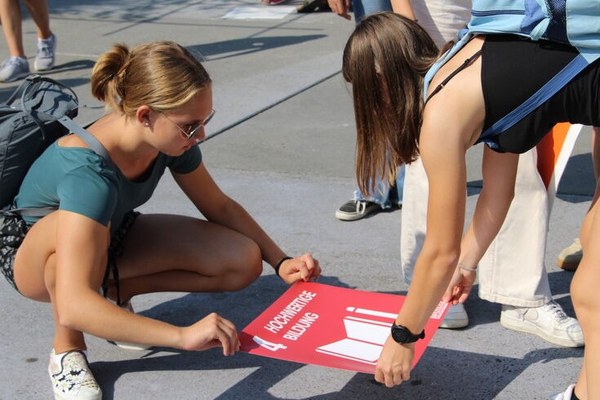
[Project completed] How can the Sustainable Development Goals (SDGs) be learned and taught? In the project «ars vivendi» a didactic tool for the Global Agenda 2030 is being developed.