
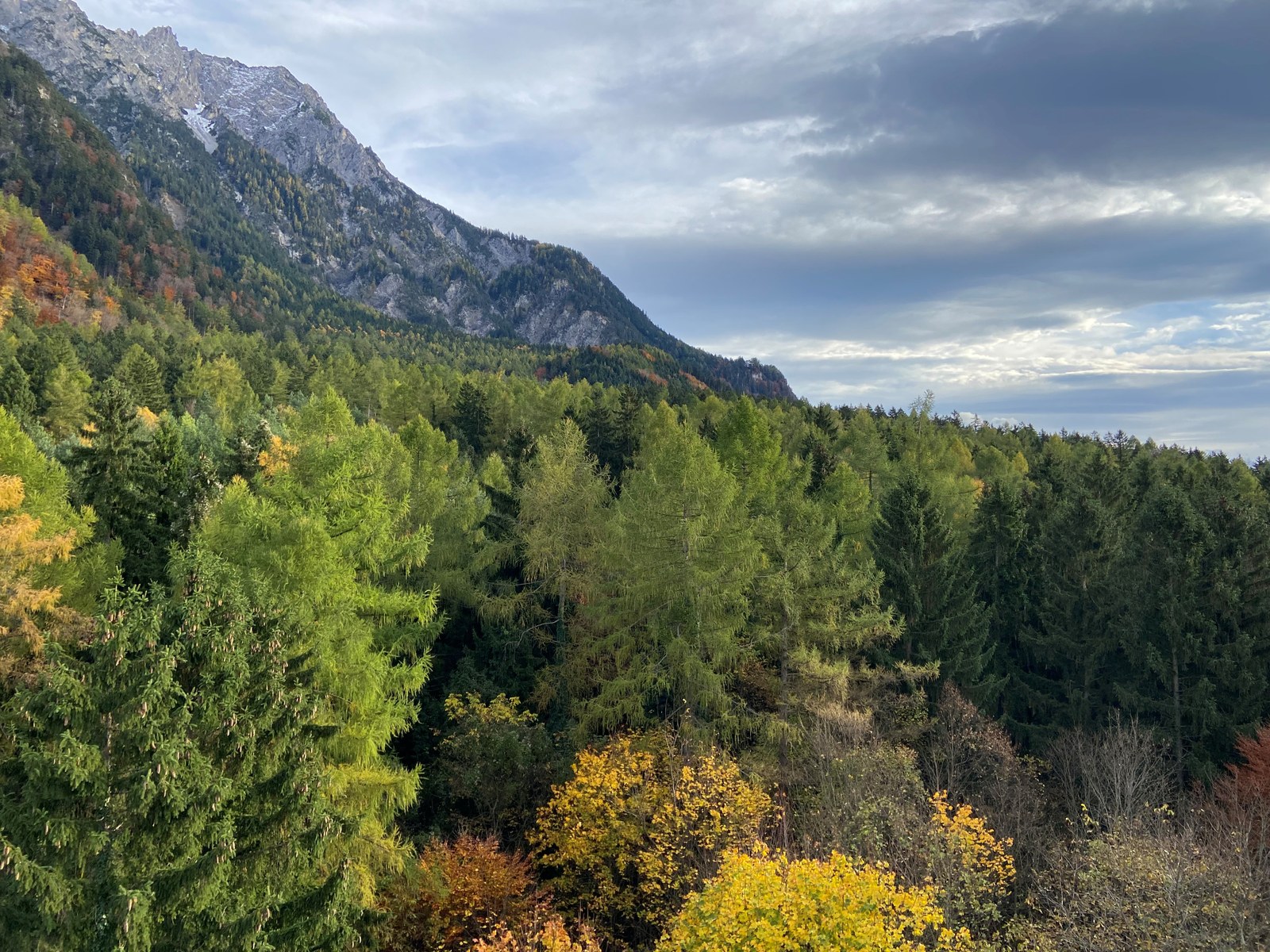
Act now to protect forests: sign the #HandsOffNature petition!
More than 40 percent of the Alpine region is covered by forests. They are not only a defining feature of the landscape, but also a cornerstone of Alpine livelihood, providing building materials, supporting biodiversity, and delivering essential ecosystem services.

Who is CIPRA?
Find out more!
More articles
Austria: pressure caused by exploitation rose at the highest altitudes
All across Austria the tendency to build cableways and other skiing infrastructures inside the boundaries of protected areas and other high-value zones can be observed. The Austrian Alpine Club (OeAV) warns against the destruction of landscape and recreational resources in the Alps and demands a framework for a well-balanced territorial planning, in order to preserve the typical Alpine landscape.
cc.alps | Schaan, LI
New compacts on Transport and Spatial Planning now online
The assessments of climate response measures for the areas of Transport and Spatial Planning have been available online since the end of February. Both background reports (or "compacts") can be downloaded from www.cipra.org/en/cc.alps (de, en).

cc.alps | Schaan, LI
Regions tackle climate change
The participants at the start-up meeting for a transnational LEADER project held in Mäder/A on 20 and 21 January 2010 went one step further. The 20 or so representatives from five interested project regions in different Alpine countries met up with CIPRA staff in Vorarlberg to get to know one another and come up with a joint project design.
cc.alps | Schaan, LI
CIPRA actively involved in the transfer of know-how
Several events have been scheduled as part of the cc.alps project in 2010. At a workshop entitled "Building with a Future" to be held in Bolzano/I on 22 and 23 April following a field trip, participants from towns and municipalities are to exchange views on energy-efficient construction. For more information visit www.cipra.org/de/alpmedia/veranstaltungen (de/it/sl).
Events
|
Local Peaks, Global Learning | online | |
|
Transhumance as Intangible Cultural Heritage of Humanity: A Way Forward? | MUCEM, Marseille/France | |
|
Growing alternative crops for new market opportunities in a changing climate | Vienna/Austria | |
|
Trento Film Festival | Santa Croce street, 67; I-38122 Trento | |
|
ForumAlpinum 2026 | Aosta |
Projects
CIPRA International
Living Labs
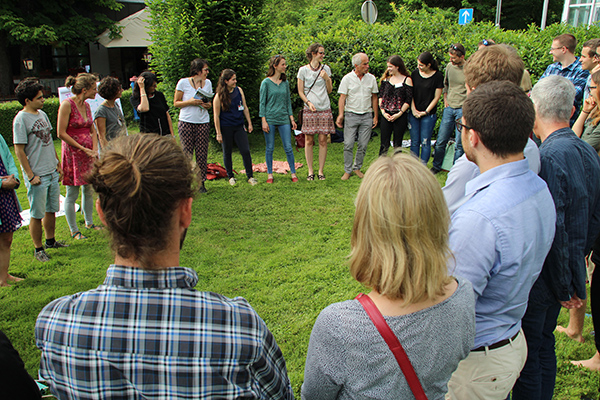
[Project completed] The project “Living Labs” brought together people of different ages from different Alpine countries to work together on process and know-how on selected topics. The project approach was participative and based on the principles of co-creation between young talents aged 18-30 years, environmental NGOs, civil society and politicians. The participants of this intergenerational project are committed to the sustainable development of the Alps at local, national and international level. For a desirable future it is important to set the right course today and to talk about how existing natural resources can be used sustainably.
CIPRA International | CIPRA Deutschland | CIPRA France | CIPRA Italia | CIPRA Slovenija
Sustainable Alpine Tourism
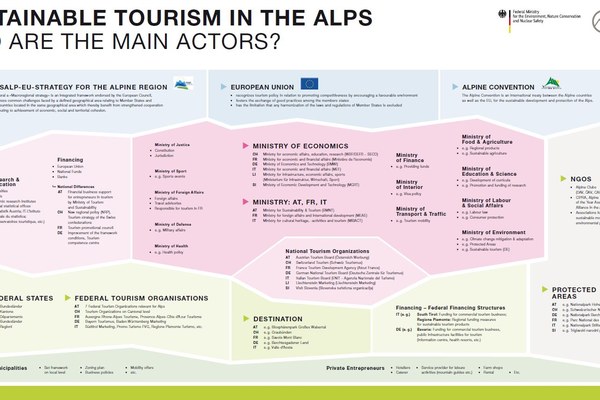
[Project completed] Sustainable tourism in the Alps is the only long-term alternative to conventional mass tourism in order to safeguard the habitat for nature and people. So far, however, there is a lack of jointly defined framework conditions on anational or alpine level for planning, promoting and implementing sustainable tourism.
CIPRA International
Cross-border mobility
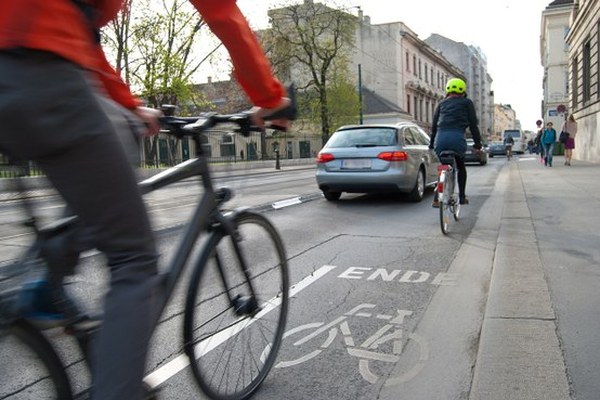
[Project completed] Tens of thousands of commuters move across national borders every day in the Alpine region. Existing traffic routes, however, were mostly built with a purely national perspective and are not geared to cross-border commuter flows. The result is overloaded roads, noise and pollution for local residents.