
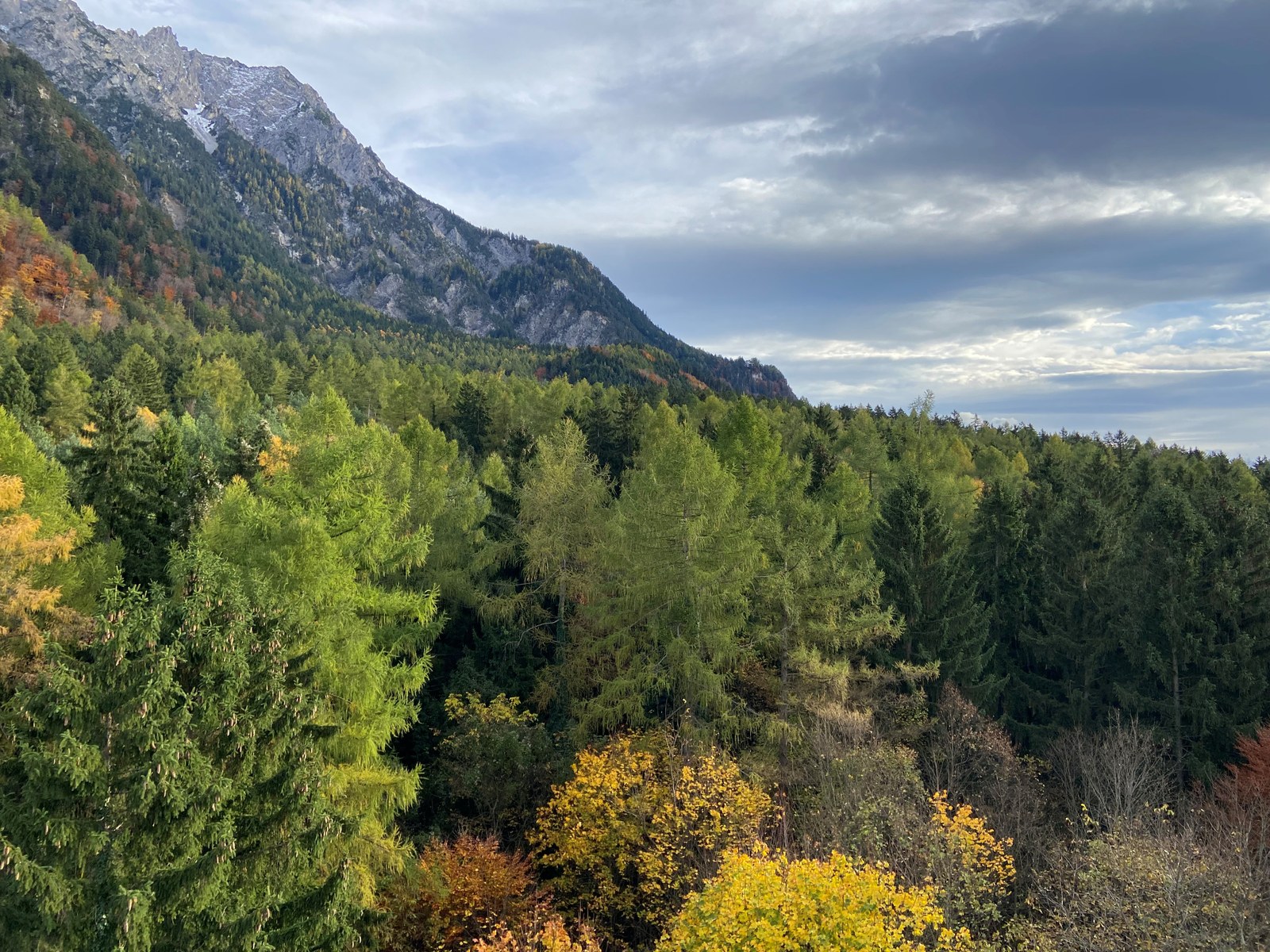
Act now to protect forests: sign the #HandsOffNature petition!
More than 40 percent of the Alpine region is covered by forests. They are not only a defining feature of the landscape, but also a cornerstone of Alpine livelihood, providing building materials, supporting biodiversity, and delivering essential ecosystem services.

Who is CIPRA?
Find out more!
More articles
cc.alps | Schaan, LI
New content for www.cipra.org/cc.alps
The cc.alps website now offers additional in-depth content in the form of Compacts. Regular updates and additions are planned. For each topic, CIPRA has drawn up a list of demands, which can be downloaded separately from its website at www.cipra.org/de/cc.alps/ergebnisse (de/fr/it/sl).
cc.alps | Schaan, LI
cc.alps to continue in 2010
The cc.alps project continues in 2010 with a focus on more in-depth research and dissemination of the knowledge generated, above all by promoting specific projects at the municipal level, and also by organising and participating in international events.
alpMedia | Schaan, LI
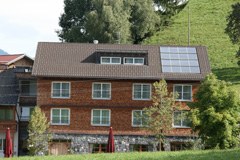
New builds to meet tough climate requirements by 2020
From 2020 new builds in the EU will have to comply with tough energy balance requirements. Last week representatives of the European Parliament and EU states agreed that new builds should in future have virtually zero greenhouse gas emissions. Any remaining energy requirements should also be met essentially from renewable sources. These stipulations are to come into force two years earlier for public buildings.
alpMedia | Schaan, LI
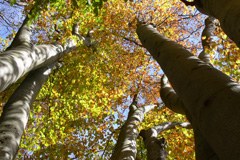
Extremes of climate affect spread of tree species
In a recently published study scientists at the WSL (the Swiss Federal Institute for Forest, Snow and Landscape) working with an international research team demonstrated for the first time that the disappearance of tree species in certain regions is due not just to the higher mean temperature but also to extremes of climate-related events.
Events
|
Local Peaks, Global Learning | online | |
|
Transhumance as Intangible Cultural Heritage of Humanity: A Way Forward? | MUCEM, Marseille/France | |
|
Growing alternative crops for new market opportunities in a changing climate | Vienna/Austria | |
|
Trento Film Festival | Santa Croce street, 67; I-38122 Trento | |
|
ForumAlpinum 2026 | Aosta |
Projects
CIPRA International
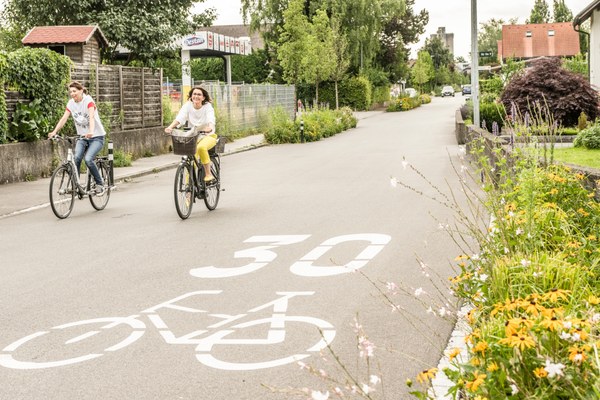
Climate-friendly streetscapes
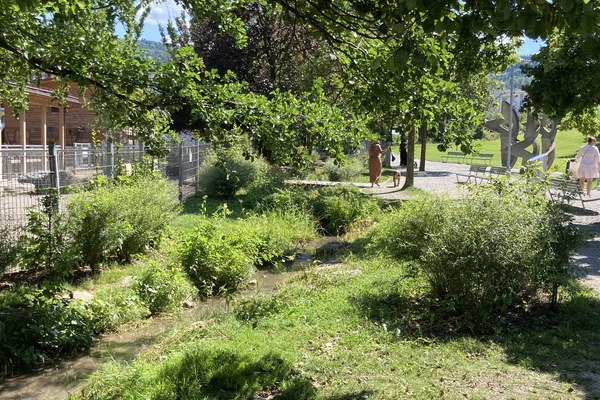
Whether travelling by car, public transport, bicycle or on foot, roads and their immediate surroundings are probably the most important part of our daily journeys. Against the backdrop of the climate crisis, they can become a problem because they increase the heat island effect and seal the ground. The project, based in the Alpine Rhine Valley, aims to make road spaces fair, climate-friendly and health-promoting.
CIPRA International
Nature-based solutions and their governance structures in the Alpine region
In view of the global challenges of climate change and biodiversity loss, the use of nature-based solutions (NbS) is becoming increasingly important. On behalf of the German Federal Environment Agency, ifuplan (lead) and CIPRA International are preparing a report on “Nature-based solutions and governance structures in the Alpine region”. The aim of the report is to analyse the potential of various NbS in the Alpine region and the governance mechanisms behind them that ensure their success. Based on this, their transferability to other Alpine regions will be analysed and recommendations for action formulated.
CIPRA International
Ars vivendi
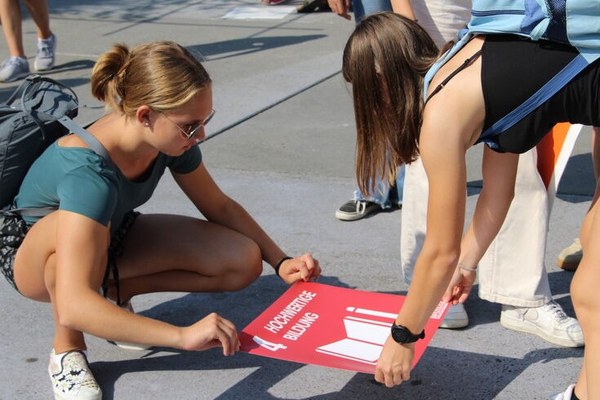
[Project completed] How can the Sustainable Development Goals (SDGs) be learned and taught? In the project «ars vivendi» a didactic tool for the Global Agenda 2030 is being developed.