Alpine Politics

For more than 70 years, CIPRA has been working to promote sustainable policies for the Alps, looking ahead, putting tomorrow’s challenges on the political agenda and taking policymakers to task.

For a good life in the Alps, it is important to guarantee a balance between economic interests and the needs of the local populations and nature. CIPRA helps to bridge this gap on the political stage. The protocols of the Alpine Convention offer guidance. In combination with other tools, they empower the political actors to adopt appropriate measures.

The tools of Alpine policy

  • The Alpine Convention is an international treaty involving the countries of the Alps and the European Union. As co-initiator, CIPRA helped to create a fundamental requirement: an international political body for sustainable development and protection for the Alps. CIPRA contributes expertise in the Compliance Committee and the working groups.
  • As a mountain chain at the heart of Europe, the Alps are strongly impacted by the policies of the EU. The EU strategy for the Alpine Region (EUSALP) is being established to strengthen future cooperation between the Alps and the surrounding regions and cities. CIPRA and its partners are calling for civil society to be involved in this process.
  • In its core activities and beyond, CIPRA is working in national and transnational political bodies for a good life in the Alps.

CIPRA’s vision

  • A strong civil society
    Cities, municipalities, regions and countries of the Alps communicate their experiences and learn from one another. They involve the people in the planning processes and take account of the ideas and visions of young people. They set the framework conditions needed for all three pillars of sustainability – economy, nature and society – to be strengthened in equal measure.
  • A vibrant Alpine Convention
    The Alpine Convention provides a framework for these endeavours. It is an active clearing house. Keen use is made of its various platforms and working groups, while the Compliance Committee provides effective monitoring of observance of its provisions.
  • A responsible response
    The 14 million residents of the Alps can count on the solidarity of the 56 million people living in the surrounding regions – and vice-versa. All these people are aware of the special value of the Alps as a living space for human beings and the flora and fauna.

Alpine Convention

For more than 60 years, CIPRA has been working to promote sustainable policies for the Alps, looking ahead, putting tomorrow’s challenges on the political agenda and taking policymakers to task. More

Macroregional Strategy

The EU strategy for the Alpine Region (EUSALP) is to strengthen future cooperation between the Alps and the surrounding cities and regions. CIPRA and its partners are calling for civil society to be involved in the process. More

Sustainable development goals

In its Agenda 2030, the United Nations has formulated a total of 17 goals for sustainable development. What do they mean for the Alps? More

CIPRA's Positions

CIPRA regards it as one of its core tasks to comment on current topics and developments. Its broad support as an umbrella organisation with more than 100 member associations in the Alpine region justifies it. Please check the other language versions for more position papers!

Schaan Memorandum on the Future in the Alps
The future belongs to those who shape it. In the Alps countless initiatives involving thousands of activists are working to do just that. Yet many are unaware of the fact that elsewhere other people are working on precisely the same problems as they are. This is where the Future in the Alps, a project launched by CIPRA, the International Commission for the Protection of the Alps, comes into play. The scope of the project is to collect practical experience throughout the Alps, classify it and make it available to those who need it. It consists of a phase of collating knowledge and good projects, called alpKnowhow, a phase of processing and disseminating it, called alpService, and an implementation phase, called alpPerformance. CIPRA itself is not a research body, nor is it an educational institution; it is a non-governmental organisation, so it is mainly concerned with the questions of what the results of alpKnowhow mean politically and what demands can be derived from these results. To answer these questions CIPRA representatives from seven countries convened in Schaan/Liechtenstein on 8 and 9 December 2006. The demands and political conclusions on all topics are set out in the present Schaan Memorandum on the Future in the Alps.
Resolution: Climate Protection and Climate Change Adaptation Strategies
The Alpine region is particularly affected by global climate changes, many of which are the result of man’s impact. The Alps are a particularly sensitive region and are affected all the more by the forecast changes such as the rise in annual average temperatures, the increase in extreme meteorological events, summer droughts and melting glaciers. It is CIPRA’s view that climate change represents one of the 21st century’s greatest challenges. Given the above it calls upon the European Union, the bodies of the Alpine Convention, all the Alpine states, the federal provinces, regions and cantons as well as all governmental and non-governmental authorities .. to intensify their climate protection efforts in order to reduce the greenhouse effect; .. to draw up sustainable strategies for dealing with the growing repercussions of climate change.
Resolution on the role of local government and administration in sustainable development
At a conference on the Role of Local Governments and Administrations in Sustainable Development held in 2005, representatives of the mountain regions of Central Asia, the Caucasus, the Carpathians, the Alps, the Altai and Mongolia adopted a resolution with recommendations aimed at managers involved in the development of mountain areas. In it they called for an exchange of positive experience between different mountain regions, education in sustainable development as a condition for active participation, and also for research and the transfer of technology and methodology. The resolution also contains concrete recommendations on decentralisation and reliable dialogue structures as a basis for sustainable development, sustainable economic development, and the role of local governance in the management of natural resources. It also underscores the importance of information and the role of women in sustainable development. Finally it sets out conditions for the effectiveness of alliances and conventions.

News on Alpine politics

Truck promotion instead of ecology
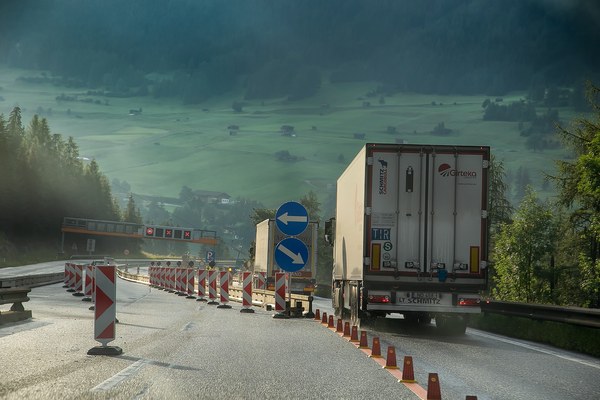
The European Parliament has shown no understanding. Even the last rescue attempts by three parliamentarians were shot down. The new toll regulation for road haulage on European motorways will lead to the one-sided promotion of hydrogen and electric engines. This will lead to a massive disadvantage for freight transport by rail and to even more trucks.
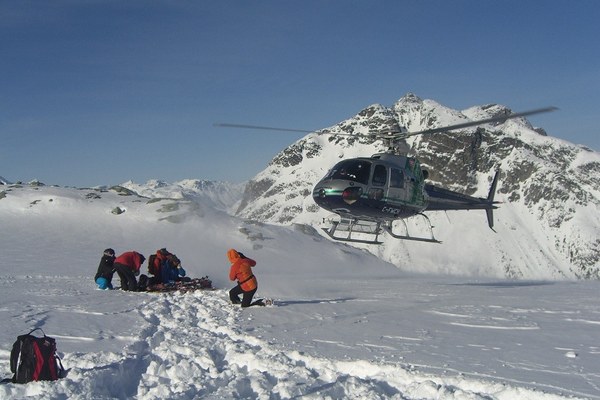
Onto the slopes by helicopter
Is heliskiing in the public interest? Vorarlberg extends its authorisation by two and a half years: CIPRA Austria calls for greater emphasis on climate protection.
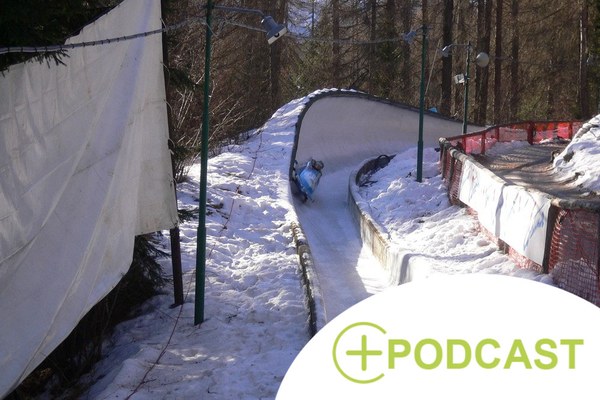
Winter Games on a slippery slope
History repeats itself: after the fiasco surrounding the construction ruins in Turin in 2006, the plans for Italy's supposedly “green” Winter Games in Milan and Cortina in 2026 are now too coming under criticism.
New alliance for European mountain regions
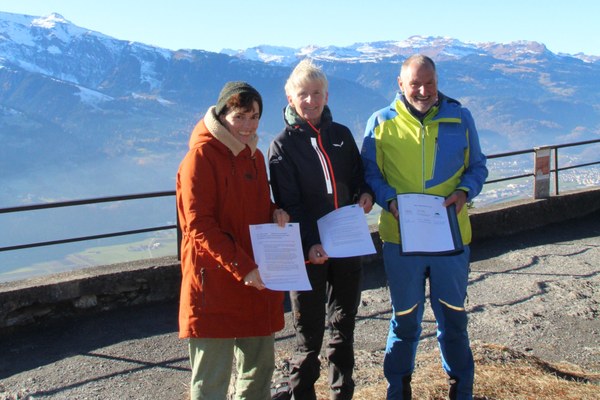
Three umbrella organizations committed to mountaineering and sustainability in European mountain regions decided, at the end of November 2021, to join forces: the Club Arc Alpin (CAA), the European Union of Mountaineering Associations (EUMA) and the International Commission for the Protection of the Alps (CIPRA).

Point of Views of CIPRA

Point of view: the enlightened Olympics-free Alps
The referendum decisions against "Munich 2022" and "Graubünden 2022" prove that the Olympic spirit is dead. Simply not everyone has yet noticed.
CIPRA's point of view: Co-operation, not killing
The authorities in Graubünden are demanding that bears be shot in Italy before they cross into Switzerland and potentially cause problems there. Is a preventive shooting really suitable to prevent conflicts with humans?
CIPRA's point of view: Shaping the macro-region Alps according to the Alpine Convention - but better
Many people in the Alps are afraid of being marginalised by the surrounding metropolitan areas. But the expansion of the sphere of action and influence also offers numerous opportunities - if we rise to the challenge, CIPRA believes.
CIPRA's point of view: The Alps are far too valuable for the Olympics
The result of the vote held on 3 March 2013 in Graubünden is clear: 52.7% are against the Winter Olympics being held there in 2022. This example shows that there is no desire for gigantism in the Alps.
CIPRA's point of view:Italian French Summit: modal shift gets red light
The summit meeting last week between Italian leader Mario Monti and French president François Hollande covered plenty of ground - except for a rapid and effective modal shift from road to rail.
CIPRA's point of view: Alpine Convention must produce results
The renewal of the Alps needs youth. This was recognised by AlpWeek. The parties to the Alpine Convention are now being challenged to follow up their words with deeds - including as regards the energy question.