Alpine Politics

For more than 70 years, CIPRA has been working to promote sustainable policies for the Alps, looking ahead, putting tomorrow’s challenges on the political agenda and taking policymakers to task.

For a good life in the Alps, it is important to guarantee a balance between economic interests and the needs of the local populations and nature. CIPRA helps to bridge this gap on the political stage. The protocols of the Alpine Convention offer guidance. In combination with other tools, they empower the political actors to adopt appropriate measures.

The tools of Alpine policy

  • The Alpine Convention is an international treaty involving the countries of the Alps and the European Union. As co-initiator, CIPRA helped to create a fundamental requirement: an international political body for sustainable development and protection for the Alps. CIPRA contributes expertise in the Compliance Committee and the working groups.
  • As a mountain chain at the heart of Europe, the Alps are strongly impacted by the policies of the EU. The EU strategy for the Alpine Region (EUSALP) is being established to strengthen future cooperation between the Alps and the surrounding regions and cities. CIPRA and its partners are calling for civil society to be involved in this process.
  • In its core activities and beyond, CIPRA is working in national and transnational political bodies for a good life in the Alps.

CIPRA’s vision

  • A strong civil society
    Cities, municipalities, regions and countries of the Alps communicate their experiences and learn from one another. They involve the people in the planning processes and take account of the ideas and visions of young people. They set the framework conditions needed for all three pillars of sustainability – economy, nature and society – to be strengthened in equal measure.
  • A vibrant Alpine Convention
    The Alpine Convention provides a framework for these endeavours. It is an active clearing house. Keen use is made of its various platforms and working groups, while the Compliance Committee provides effective monitoring of observance of its provisions.
  • A responsible response
    The 14 million residents of the Alps can count on the solidarity of the 56 million people living in the surrounding regions – and vice-versa. All these people are aware of the special value of the Alps as a living space for human beings and the flora and fauna.

Alpine Convention

For more than 60 years, CIPRA has been working to promote sustainable policies for the Alps, looking ahead, putting tomorrow’s challenges on the political agenda and taking policymakers to task. More

Macroregional Strategy

The EU strategy for the Alpine Region (EUSALP) is to strengthen future cooperation between the Alps and the surrounding cities and regions. CIPRA and its partners are calling for civil society to be involved in the process. More

Sustainable development goals
In its Agenda 2030, the United Nations has formulated a total of 17 goals for sustainable development. What do they mean for the Alps? More

CIPRA's Positions

CIPRA regards it as one of its core tasks to comment on current topics and developments. Its broad support as an umbrella organisation with more than 100 member associations in the Alpine region justifies it. Please check the other language versions for more position papers!

Declaration on protected areas in European mountain regions, Chambéry 2002
The Declaration on Protected Areas in European Mountain Regions emphasises the significance of biological and geological resources and water reserves in mountain regions. It stresses the necessity of targeted development and conservation measures as well as regional co-operation. Protected areas can serve as an experimental field for the development of conservation measures. Concrete steps proposed for the period 2003-2005 include the creation, in each European massif, of a mountain co-operation committee with representatives of governmental and non-governmental organisations. One of the tasks of the committees is to help disseminate information about models and methods to implement nature conservation and to transfer knowledge from research to improve the management of protected areas and sustainable development. Other important factors include encouraging partnerships, networks and joint projects as well as developing strategies for the active participation of populations.
Friends-of-Nature Wildhaus Declaration: tourism and sustainability in the 21st century
Tourism needs an intact natural environment, a vibrant cultural life, and a fair partnership between visitors and visited. As an economic sector, tourism is directly dependent on sustainability. The Declaration calls upon the tourism industry, the tourism regions, governments and individual tourists to curb the consumption of natural resources and reduce the burden of traffic caused by tourism traffic. It also calls on tourism to contribute towards eliminating poverty and to implement a sustainable destination and transport policy for the environment.
Berchtesgaden Declaration on regional co-operation in mountain regions 2002
At the end of June 2002 a conference on international co-operation between the mountain regions of the world was held in Berchtesgaden. The participants at the conference presented ten fundamental principles for regional co-operation. The principles underscore the key responsibility of governments and the need for regional co-operation to ensure the sustainable and proper management of mountain regions. Equal rights, decentralisation and the involvement of resident populations are essential in achieving sustainable development. Measures aimed at establishing cross-border partnerships and networks for the exchange of experience and the dissemination of knowledge are of crucial importance in bringing regional co-operation to life. The Declaration is aimed at governments, the international community, the private sector and NGOs.

News on Alpine politics

AlpWeek 2024 in Nova Gorica
Two decades ago, “AlpWeek” was held for the first time in Slovenia as an international event organised by Alpine organisations. It will return there from 23 to 25 September 2024.
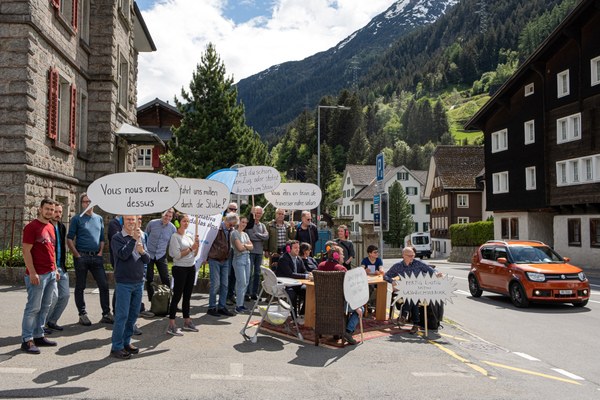
Sustainable traffic management, not lawsuits
CIPRA representatives along the transport axis over the Brenner Pass are calling for sustainable traffic management instead of populist grievances. Now Switzerland is facing a renewed increase in traffic.
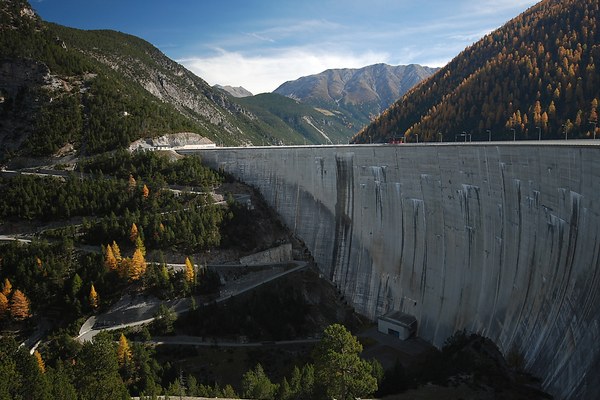
New Alpine reservoirs to combat water shortages
Frequent droughts, thirsty agriculture: Italy is discussing the construction of additional reservoirs to supply drinking water and energy. More ecologically sound solutions are in danger of falling by the wayside.
Point of view: European elections 2024: why a Swiss citizen would also like to vote
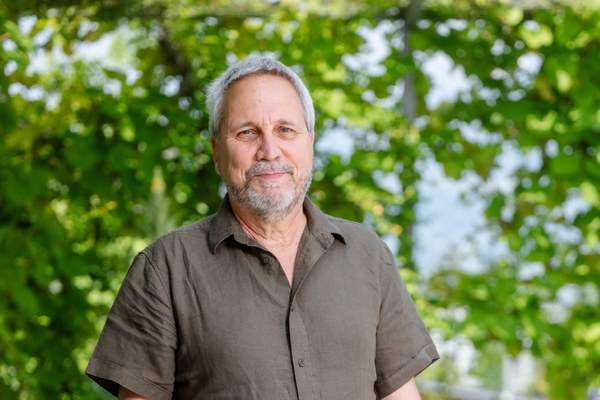
Switzerland’s referendum-based democracy has pitfalls of its own when it comes to environmental and climate policy. There needs to be an overarching corrective, such as neighbouring countries have in their constitutional courts and through the legal institutions of the EU, says Kaspar Schuler – as a Swiss citizen and Executive Director of CIPRA International.

Point of Views of CIPRA

Point of view: For a cultural change in transit traffic
Trade has been the driving force behind cultural and social development in the Alpine region. Transit traffic in its current form, on the other hand, mainly benefits regions away from the Alps. To ban noise and exhaust fumes from the Alpine valleys we need more than a watered-down EU directive, says Stephan Tischler, President of CIPRA Austria.
Point of view: A plea for colourful cities
Corona has strikingly shown how important accessible local recreation areas are for our well-being. Over 70 percent of the Alpine population live in cities. There is a great deal of potential for action there in particular, says Magdalena Holzer, Project Manager at CIPRA International.
Point of view: The mountains, a safe place
During the lockdown due to the corona pandemic, mountain areas have gained in importance as places of retreat. In order to be able to fulfil this role better in the future, they must be strengthened and digitally networked, demands Vanda Bonardo, President of CIPRA Italy.
Point of view: A building plan for a resilient society
The corona crisis has broken our lives into pieces: relationships, working models, leisure and consumerism are loose building blocks. It is still unclear how we will reassemble them. We now have the chance to draw up a new building plan that is fit for the future, says Barbara Wülser, Co-Executive Director of CIPRA International.
Point of view: Water needs no borders – do we?
So far, sufficient water is available in the Alpine regions. If there is to be enough for everyone in the future, despite climate change, water must be treated as a common Alpine resource across national borders, says Marion Ebster, Project Manager at CIPRA International.
Point of view: For glaciers without a circus
The largest glacier ski resort in the Alps is to be built in Tyrol, Austria - on already melting glaciers. The planned connection of the ski areas in Pitztal and Ötztal goes against all reason, says Kaspar Schuler, Co-Manager of CIPRA International.