Alpine Politics

For more than 70 years, CIPRA has been working to promote sustainable policies for the Alps, looking ahead, putting tomorrow’s challenges on the political agenda and taking policymakers to task.

For a good life in the Alps, it is important to guarantee a balance between economic interests and the needs of the local populations and nature. CIPRA helps to bridge this gap on the political stage. The protocols of the Alpine Convention offer guidance. In combination with other tools, they empower the political actors to adopt appropriate measures.

The tools of Alpine policy

  • The Alpine Convention is an international treaty involving the countries of the Alps and the European Union. As co-initiator, CIPRA helped to create a fundamental requirement: an international political body for sustainable development and protection for the Alps. CIPRA contributes expertise in the Compliance Committee and the working groups.
  • As a mountain chain at the heart of Europe, the Alps are strongly impacted by the policies of the EU. The EU strategy for the Alpine Region (EUSALP) is being established to strengthen future cooperation between the Alps and the surrounding regions and cities. CIPRA and its partners are calling for civil society to be involved in this process.
  • In its core activities and beyond, CIPRA is working in national and transnational political bodies for a good life in the Alps.

CIPRA’s vision

  • A strong civil society
    Cities, municipalities, regions and countries of the Alps communicate their experiences and learn from one another. They involve the people in the planning processes and take account of the ideas and visions of young people. They set the framework conditions needed for all three pillars of sustainability – economy, nature and society – to be strengthened in equal measure.
  • A vibrant Alpine Convention
    The Alpine Convention provides a framework for these endeavours. It is an active clearing house. Keen use is made of its various platforms and working groups, while the Compliance Committee provides effective monitoring of observance of its provisions.
  • A responsible response
    The 14 million residents of the Alps can count on the solidarity of the 56 million people living in the surrounding regions – and vice-versa. All these people are aware of the special value of the Alps as a living space for human beings and the flora and fauna.

Alpine Convention

For more than 60 years, CIPRA has been working to promote sustainable policies for the Alps, looking ahead, putting tomorrow’s challenges on the political agenda and taking policymakers to task. More

Macroregional Strategy

The EU strategy for the Alpine Region (EUSALP) is to strengthen future cooperation between the Alps and the surrounding cities and regions. CIPRA and its partners are calling for civil society to be involved in the process. More

Sustainable development goals

In its Agenda 2030, the United Nations has formulated a total of 17 goals for sustainable development. What do they mean for the Alps? More

CIPRA's Positions

CIPRA regards it as one of its core tasks to comment on current topics and developments. Its broad support as an umbrella organisation with more than 100 member associations in the Alpine region justifies it. Please check the other language versions for more position papers!

Hydropower in the Alps
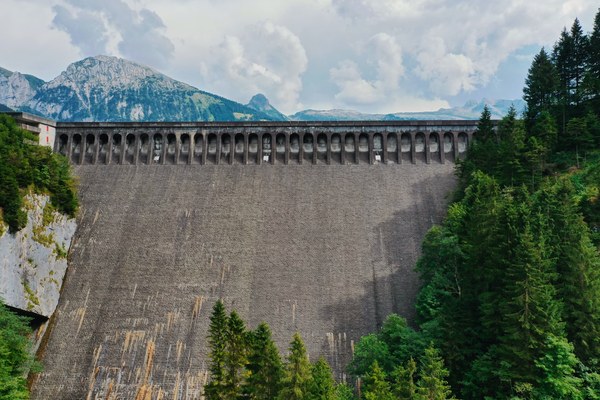
How much hydropower use is environmentally compatible and ecologically sustainable? This question has been on the minds of people in the Alpine region for decades - all the more so against the backdrop of the urgent need to move away from fossil fuels. There are currently around 21,000 hydropower plants in operation in Europe, 300 under construction and over 8,500 in the planning stage. In many places, climate change with its imponderables such as extreme floods is being countered with more dams and walls, although river widening, for example, would make more ecological sense.
Alpine landscape is not renewable!
Landscape is a key to negotiating social and political issues. CIPRA has taken up these issues as part of its Alpine-wide priority theme “Landscape” 2019-2020. This position paper, which was developed in a broad and participatory process with CIPRA representatives, young Alpine women and experts from all Alpine countries, is the conclusion of this priority theme.

News on Alpine politics

Point of view: 25 years of the Alpine Convention are not enough
While we celebrate 25 years of the Alpine Convention, we still bemoan the slow pace of its implementation. For its objectives to be achieved, believes Katharina Conradin, President of CIPRA International, we have to repeatedly demand their realisation.
Change is in the air
A change of executive director at CIPRA International and at CIPRA Austria, and a new president for CIPRA Switzerland: the new faces shaping the future of CIPRA.
Alpine municipalities strengthen youth participation
If municipalities wish to introduce policies that will meet the expectations of coming generations, they have to be able to offer their young people something. The YSAM project has shown how youth participation can be strengthened in Alpine communities. A new label is being used in Switzerland to mark youth-friendly municipalities.
Alpine regional strategy on the starting blocks
The European strategy for the Alps is ready. There nevertheless remain some challenges to its effective and sustainable implementation.

Point of Views of CIPRA

Point of view: We need more young people in the Alps
Ageing, emigration and dying villages are typical problems for many mountain regions. It must therefore become attractive for young people to live in the Alps again, says Kathrin Holstein, member of CIPRA’s Youth Council and staff member of the Alliance in the Alps network of municipalities.
Point of view: Let’s create an “Alpine Plan” for all Alpine regions!
The Bavarian Alpine Plan celebrates its 50th anniversary in 2022. Alpine spatial planning has proven here that it is predestined to find solutions to the pressing issues of the day. Similar planning instruments are lacking in many Alpine regions, although we need them more urgently than ever, claim Paul Kuncio, Executive Director of CIPRA Austria, and Uwe Roth, Executive Director of CIPRA Germany.
Point of view: the excessive character of the Olympics
High construction costs, unused sports facilities, environmentally damaging large-scale projects: loud criticism continues to surround the staging of the 2026 Winter Olympics in Milan and Cortina/I. We must ask whether such sporting events still have a place in the Alps, says Vanda Bonardo, President of CIPRA Italy.
Point of view: Let's finally press the reset button in tourism!
Mass tourism in the Alps has collapsed due to the ongoing Corona pandemic, and the opportunities for switching to environmentally and socially just tourism have increased. But they must also be exploited, says Hans Weber, Executive Director of CIPRA Switzerland.
Point of view: Water will not tolerate resistance
Extreme weather conditions are also increasingly affecting the Alps. The climate crisis is driving this development. Can more and more dams, barriers or power stations solve the problem and at the same time satisfy the growing hunger for energy? We must work with the power of water rather than against it, says Kaspar Schuler, CIPRA’s Executive Director and co-author of CIPRA’s new position paper on hydropower.
Point of view: We need an Alpine Ticket for public transport
Homeschooling, no public transport and closed borders: the corona crisis has revealed some aspects of life that people did not previously appreciate so much. An Alps-wide ticket for public transport could tackle all of these issues, as Rok Brišnik explains. He studies Geography and History at the University of Ljubljana/SI and is a member of the CIPRA Youth Council (CYC).