Alpine Politics

For more than 70 years, CIPRA has been working to promote sustainable policies for the Alps, looking ahead, putting tomorrow’s challenges on the political agenda and taking policymakers to task.

For a good life in the Alps, it is important to guarantee a balance between economic interests and the needs of the local populations and nature. CIPRA helps to bridge this gap on the political stage. The protocols of the Alpine Convention offer guidance. In combination with other tools, they empower the political actors to adopt appropriate measures.

The tools of Alpine policy

  • The Alpine Convention is an international treaty involving the countries of the Alps and the European Union. As co-initiator, CIPRA helped to create a fundamental requirement: an international political body for sustainable development and protection for the Alps. CIPRA contributes expertise in the Compliance Committee and the working groups.
  • As a mountain chain at the heart of Europe, the Alps are strongly impacted by the policies of the EU. The EU strategy for the Alpine Region (EUSALP) is being established to strengthen future cooperation between the Alps and the surrounding regions and cities. CIPRA and its partners are calling for civil society to be involved in this process.
  • In its core activities and beyond, CIPRA is working in national and transnational political bodies for a good life in the Alps.

CIPRA’s vision

  • A strong civil society
    Cities, municipalities, regions and countries of the Alps communicate their experiences and learn from one another. They involve the people in the planning processes and take account of the ideas and visions of young people. They set the framework conditions needed for all three pillars of sustainability – economy, nature and society – to be strengthened in equal measure.
  • A vibrant Alpine Convention
    The Alpine Convention provides a framework for these endeavours. It is an active clearing house. Keen use is made of its various platforms and working groups, while the Compliance Committee provides effective monitoring of observance of its provisions.
  • A responsible response
    The 14 million residents of the Alps can count on the solidarity of the 56 million people living in the surrounding regions – and vice-versa. All these people are aware of the special value of the Alps as a living space for human beings and the flora and fauna.

Alpine Convention

For more than 60 years, CIPRA has been working to promote sustainable policies for the Alps, looking ahead, putting tomorrow’s challenges on the political agenda and taking policymakers to task. More

Macroregional Strategy

The EU strategy for the Alpine Region (EUSALP) is to strengthen future cooperation between the Alps and the surrounding cities and regions. CIPRA and its partners are calling for civil society to be involved in the process. More

Sustainable development goals

In its Agenda 2030, the United Nations has formulated a total of 17 goals for sustainable development. What do they mean for the Alps? More

CIPRA's Positions

CIPRA regards it as one of its core tasks to comment on current topics and developments. Its broad support as an umbrella organisation with more than 100 member associations in the Alpine region justifies it. Please check the other language versions for more position papers!

Vienna Declaration by the Regional Conference on Transport and the Environment 1997
The Declaration was adopted by the governments of the member states of the UN Economic Commission for Europe. The states pledge to take steps aimed at reducing the negative impact of transport and traffic on the environment and on health. Energy-efficient and ecological vehicles and fuels as well as efficient and sustainable transport systems are to be encouraged and sensitive regions protected. The UNECE members are also planning to encourage the safe transport of hazardous substances and adopt measures aimed at protecting water resources from pollution. Annexed to the Declaration is a programme with a description of potential measures and solutions in the area of transport and the environment. http://www.unece.org/doc/ece/rcte/ece.rcte.conf..2.final.e.pdf

News on Alpine politics

Hidden CO2 emitters
Hidden CO2 emitters
Climate protection measures are expensive, which is why they are regularly criticised and rejected. How then can it be that at the same time the Alpine states are spending billions on environmentally harmful subsidies?
Alpine Policy 2023: the Slovenian-Swiss year
This year, Slovenia and Switzerland will play a decisive role in shaping international cooperation between states and regions in the Alps: Slovenia is taking over the presidency of the Alpine Convention, while Switzerland is the first non-EU country to chair the Eusalp, the EU Strategy for the Alpine Region.
No glacier marriage in Tyrol
Finally it’s official: the plans for the world’s largest glacier ski area are history. In November 2022, the Tyrolean federal state government rejected the planned merger of the glacier ski areas in Austria’s Ötztal and Pitztal valleys.
Unsuitable landscapes for energy production
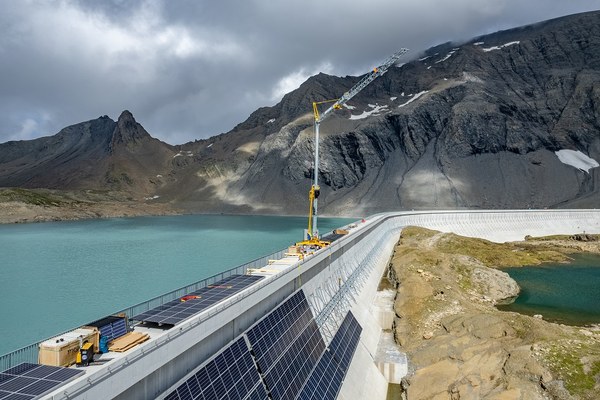
The results of a recent survey from Switzerland are clear: no to energy production in almost unspoilt mountain areas. Intensively used areas around ski resorts or existing power plants would be better suited to the expansion of renewable energy.

Point of Views of CIPRA

Point of view: A strategy for people in the Alps
The European strategy for the Alps is intended to create new relationships between Alpine regions and the surrounding areas. This however requires oversight to ensure the reconciliation of interests as well as sustainable development, says Andreas Pichler, director of CIPRA international.
Point of view: Switzerland needs help with its climate policy
Switzerland was formerly a leading light in environmental policy. Today, sadly, it does not even have a plan for implementing the goals of the Paris climate agreement, says Hans Weber, executive director of CIPRA Switzerland.
Point of view: 25 years of the Alpine Convention are not enough
While we celebrate 25 years of the Alpine Convention, we still bemoan the slow pace of its implementation. For its objectives to be achieved, believes Katharina Conradin, President of CIPRA International, we have to repeatedly demand their realisation.
Point of view: He who sows infrastructure, reaps more traffic
At the end of February 2016 Swiss voters will decide on the building of a second road tunnel at the Gotthard Pass. The CHF 4 billion project will torpedo Switzerland’s modal shift policy, believes Barbara Wülser, CIPRA International’s communications manager.
Point of view: Change begins in the heart
Claire Simon, Executive Director of CIPRA International, used the occasion of the 2015 CIPRA annual conference to call for more engagement with people and their ways of thinking in order to strengthen the natural and cultural diversity of the Alps.
Point of view: Making the Alpine Convention more interactive
The effectiveness of the Alpine Convention is often called into question. A new approach could help reposition it as an engine of co-operation and sustainable development in the Alpine regions, says Claire Simon, Executive Director of CIPRA International.