Alpine Politics

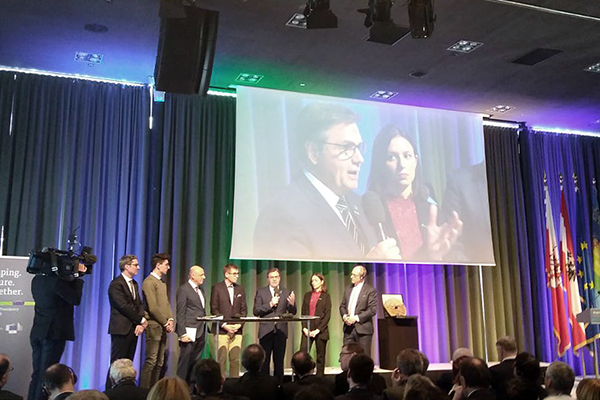
For more than 70 years, CIPRA has been working to promote sustainable policies for the Alps, looking ahead, putting tomorrow’s challenges on the political agenda and taking policymakers to task.

For a good life in the Alps, it is important to guarantee a balance between economic interests and the needs of the local populations and nature. CIPRA helps to bridge this gap on the political stage. The protocols of the Alpine Convention offer guidance. In combination with other tools, they empower the political actors to adopt appropriate measures.

The tools of Alpine policy

  • The Alpine Convention is an international treaty involving the countries of the Alps and the European Union. As co-initiator, CIPRA helped to create a fundamental requirement: an international political body for sustainable development and protection for the Alps. CIPRA contributes expertise in the Compliance Committee and the working groups.
  • As a mountain chain at the heart of Europe, the Alps are strongly impacted by the policies of the EU. The EU strategy for the Alpine Region (EUSALP) is being established to strengthen future cooperation between the Alps and the surrounding regions and cities. CIPRA and its partners are calling for civil society to be involved in this process.
  • In its core activities and beyond, CIPRA is working in national and transnational political bodies for a good life in the Alps.

CIPRA’s vision

  • A strong civil society
    Cities, municipalities, regions and countries of the Alps communicate their experiences and learn from one another. They involve the people in the planning processes and take account of the ideas and visions of young people. They set the framework conditions needed for all three pillars of sustainability – economy, nature and society – to be strengthened in equal measure.
  • A vibrant Alpine Convention
    The Alpine Convention provides a framework for these endeavours. It is an active clearing house. Keen use is made of its various platforms and working groups, while the Compliance Committee provides effective monitoring of observance of its provisions.
  • A responsible response
    The 14 million residents of the Alps can count on the solidarity of the 56 million people living in the surrounding regions – and vice-versa. All these people are aware of the special value of the Alps as a living space for human beings and the flora and fauna.

Alpine Convention

For more than 60 years, CIPRA has been working to promote sustainable policies for the Alps, looking ahead, putting tomorrow’s challenges on the political agenda and taking policymakers to task. More

Macroregional Strategy

The EU strategy for the Alpine Region (EUSALP) is to strengthen future cooperation between the Alps and the surrounding cities and regions. CIPRA and its partners are calling for civil society to be involved in the process. More

Sustainable development goals
In its Agenda 2030, the United Nations has formulated a total of 17 goals for sustainable development. What do they mean for the Alps? More

CIPRA's Positions

CIPRA regards it as one of its core tasks to comment on current topics and developments. Its broad support as an umbrella organisation with more than 100 member associations in the Alpine region justifies it. Please check the other language versions for more position papers!

Vienna Declaration by the Regional Conference on Transport and the Environment 1997
The Declaration was adopted by the governments of the member states of the UN Economic Commission for Europe. The states pledge to take steps aimed at reducing the negative impact of transport and traffic on the environment and on health. Energy-efficient and ecological vehicles and fuels as well as efficient and sustainable transport systems are to be encouraged and sensitive regions protected. The UNECE members are also planning to encourage the safe transport of hazardous substances and adopt measures aimed at protecting water resources from pollution. Annexed to the Declaration is a programme with a description of potential measures and solutions in the area of transport and the environment. http://www.unece.org/doc/ece/rcte/ece.rcte.conf..2.final.e.pdf

News on Alpine politics

Building – a bottomless pit?
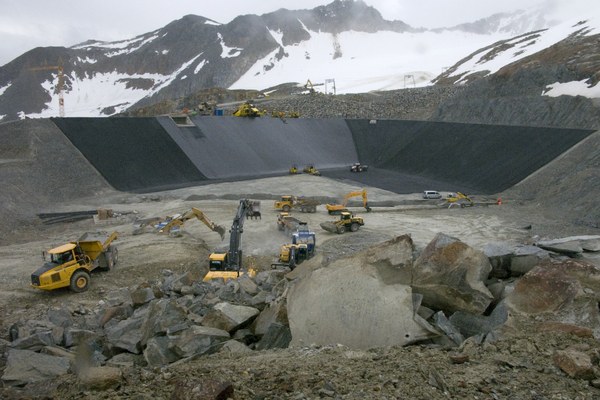
Whether it is a question of major projects or infrastructure developments in protected areas – Alpine countries such as Austria and Switzerland cannot build quickly or easily enough.
Point of view: The Alpine community must not forget the refugees!
While Eusalp wants to bring together the Alpine regions, migrants are dying on the borders between the Alpine countries. Francesco Pastorelli, Director of CIPRA Italy, asks what has happened to our hospitable, solidarity-based, tolerant Europe?
The Brenner Pass: transit trouble
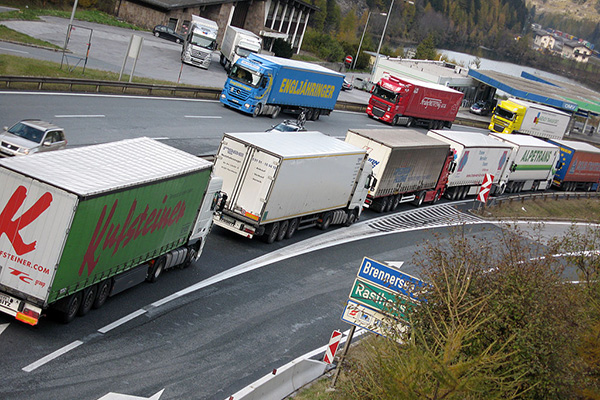
The year 2017 saw record numbers of trucks crossing the Brenner Pass. Now there is an opportunity to find a solution to the problem.
What now for the Alpine strategy?
Since January, the Austrian federal state of Tyrol has been chairing the European strategy for the Alps. This year will see a decision on how the strategy will be implemented in practice.

Point of Views of CIPRA

Point of view: Let’s break up (the ground)!
Instead of continuing to build on large areas of the ground beneath our feet, we should unseal it wherever possible and do ourselves a favour, says Marion Ebster. She runs the Ground:breaking project – which includes an Alpine-wide unsealing competition.
Point of view: European elections 2024: why a Swiss citizen would also like to vote
Switzerland’s referendum-based democracy has pitfalls of its own when it comes to environmental and climate policy. There needs to be an overarching corrective, such as neighbouring countries have in their constitutional courts and through the legal institutions of the EU, says Kaspar Schuler – as a Swiss citizen and Executive Director of CIPRA International.
Point of view: Mountains for everyone? Not a chance!
Access to the mountains and mountain sports is often unfair, exclusive, segregating and discriminatory. Henriette Adolf, Deputy Executive Director of CIPRA Germany, argues in favour of equal participation in mountain sports.
Point of view: In nature restoration we trust!
The Nature Restoration Law now obliges all EU member states to restore destroyed nature to a good ecological condition and thus safeguard the stocks of pollinators, natural resources, clean air and clean water. The Alpine region and its agriculture will also benefit, says Serena Arduino, Co-President of CIPRA International.
Point of view: Avoiding transport collapse together
As regards the growing volume of individual and transit traffic, it can be stated that neither regional nor national perspectives will lead to solutions. We have to find them together, because the Alps lie in the midst of Europe. This geographical truism is central to an understanding of transport policy problems in the Alps so as to avoid transport collapse, says Kaspar Schuler, Executive Director of CIPRA International.
Point of view: The Alps are not an endless source of energy!
Solar, wind and hydropower are helping us become less dependent on fossil fuels such as coal, oil and gas. This can also be done without sacrificing the last biodiversity hotspots in the Alps, says Isabella Helmschrott, Executive Director of CIPRA Switzerland.