Alpine Politics

For more than 70 years, CIPRA has been working to promote sustainable policies for the Alps, looking ahead, putting tomorrow’s challenges on the political agenda and taking policymakers to task.

For a good life in the Alps, it is important to guarantee a balance between economic interests and the needs of the local populations and nature. CIPRA helps to bridge this gap on the political stage. The protocols of the Alpine Convention offer guidance. In combination with other tools, they empower the political actors to adopt appropriate measures.

The tools of Alpine policy

  • The Alpine Convention is an international treaty involving the countries of the Alps and the European Union. As co-initiator, CIPRA helped to create a fundamental requirement: an international political body for sustainable development and protection for the Alps. CIPRA contributes expertise in the Compliance Committee and the working groups.
  • As a mountain chain at the heart of Europe, the Alps are strongly impacted by the policies of the EU. The EU strategy for the Alpine Region (EUSALP) is being established to strengthen future cooperation between the Alps and the surrounding regions and cities. CIPRA and its partners are calling for civil society to be involved in this process.
  • In its core activities and beyond, CIPRA is working in national and transnational political bodies for a good life in the Alps.

CIPRA’s vision

  • A strong civil society
    Cities, municipalities, regions and countries of the Alps communicate their experiences and learn from one another. They involve the people in the planning processes and take account of the ideas and visions of young people. They set the framework conditions needed for all three pillars of sustainability – economy, nature and society – to be strengthened in equal measure.
  • A vibrant Alpine Convention
    The Alpine Convention provides a framework for these endeavours. It is an active clearing house. Keen use is made of its various platforms and working groups, while the Compliance Committee provides effective monitoring of observance of its provisions.
  • A responsible response
    The 14 million residents of the Alps can count on the solidarity of the 56 million people living in the surrounding regions – and vice-versa. All these people are aware of the special value of the Alps as a living space for human beings and the flora and fauna.

Alpine Convention

For more than 60 years, CIPRA has been working to promote sustainable policies for the Alps, looking ahead, putting tomorrow’s challenges on the political agenda and taking policymakers to task. More

Macroregional Strategy

The EU strategy for the Alpine Region (EUSALP) is to strengthen future cooperation between the Alps and the surrounding cities and regions. CIPRA and its partners are calling for civil society to be involved in the process. More

Sustainable development goals

In its Agenda 2030, the United Nations has formulated a total of 17 goals for sustainable development. What do they mean for the Alps? More

CIPRA's Positions

CIPRA regards it as one of its core tasks to comment on current topics and developments. Its broad support as an umbrella organisation with more than 100 member associations in the Alpine region justifies it. Please check the other language versions for more position papers!

Alpine rivers are not renewable
Towards a fully sustainable energy strategy in the Alps
New solidarity between the Alps and surrounding areas. CIPRA position paper on a European Macro-Region Strategy for the Alps
Various political actors in the Alpine space are pushing for a European strategy for a macro-region for the Alps (MRS Alps). The International Alpine Protection Commission CIPRA, with over one hundred member organisations, possesses a wide-ranging network in all Alpine countries that extends beyond the Alps and into the surrounding metropolitan areas. CIPRA is therefore actively joining the process for a Macro-Regional Strategy for the Alps, representing the interests of sustainable, eco-friendly Alpine policies. Strengthened co-operation in such a MRS Alps must take place with the Alpine regions and surrounding areas as equal partners without undermining the achievements of the Alpine Convention.
Healthy, natural forests: responding to climate change! cc.alps: CIPRA's demands for forest management
As forestry measures have long-term effects, adaptation of the forests to new climate conditions is urgently needed - but it should be initiated with great caution. The carbon storage ability of forests has to be exploited. Wood should first be used as a raw and building material; only under certain circumstances it should be used for heating. Short regional exploitation cycles are to be created. Natural forests should be fostered as they are more resilient to climate change. Forest owners who in the interest of climate protection give up part of their earnings should be compensated. Finally targeted research into practical climate adaptation measures has to become an important long-term task.

News on Alpine politics

Truck promotion instead of ecology
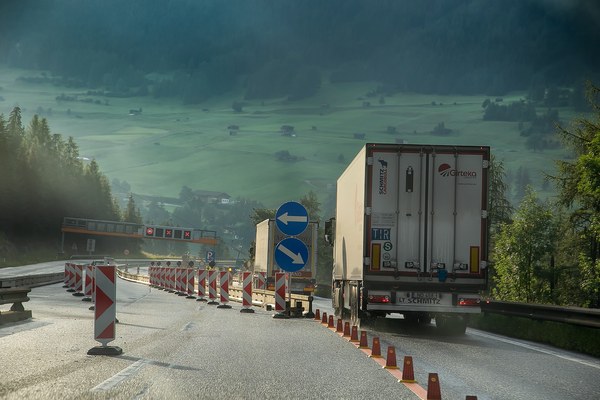
The European Parliament has shown no understanding. Even the last rescue attempts by three parliamentarians were shot down. The new toll regulation for road haulage on European motorways will lead to the one-sided promotion of hydrogen and electric engines. This will lead to a massive disadvantage for freight transport by rail and to even more trucks.
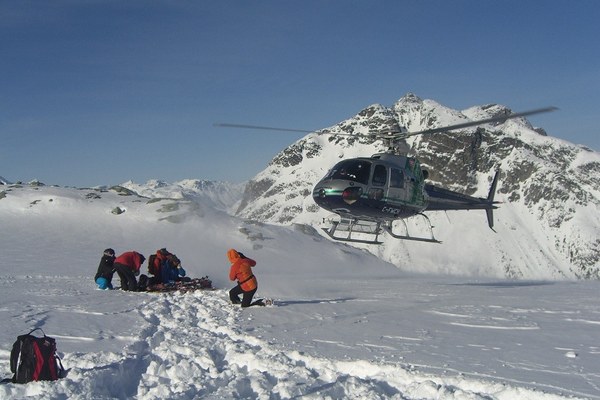
Onto the slopes by helicopter
Is heliskiing in the public interest? Vorarlberg extends its authorisation by two and a half years: CIPRA Austria calls for greater emphasis on climate protection.
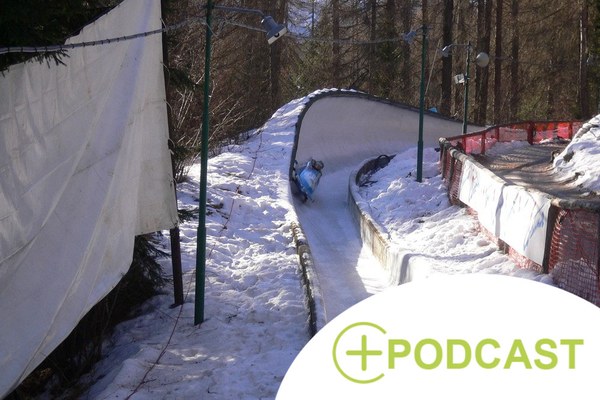
Winter Games on a slippery slope
History repeats itself: after the fiasco surrounding the construction ruins in Turin in 2006, the plans for Italy's supposedly “green” Winter Games in Milan and Cortina in 2026 are now too coming under criticism.
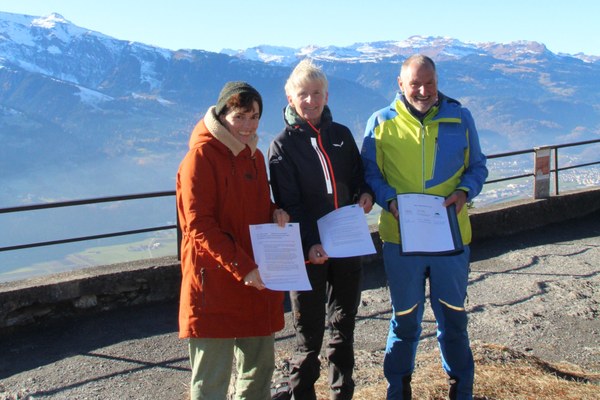
New alliance for European mountain regions
Three umbrella organizations committed to mountaineering and sustainability in European mountain regions decided, at the end of November 2021, to join forces: the Club Arc Alpin (CAA), the European Union of Mountaineering Associations (EUMA) and the International Commission for the Protection of the Alps (CIPRA).

Point of Views of CIPRA

Point of view: The Alps: on course for sustainability
It is time to reflect on the unique values of the Alps, emphasises the President of CIPRA International, Katharina Conradin, after her first 100 days in office. Her plea is for a common goal: the Alps as a model region for sustainability.
Point of view: Protecting the Alps – the responsibility of people
The diversity of the Alps is a challenge that at the same time holds great potential. It is up to the new German presidency of the Alpine Convention to put this into effect, states Federica Corrado, President of CIPRA Italy.
Point of view: Preserving the strongholds of the Alps
Dozens of development projects are simmering in the drawers of investors from Slovenia to France. It is thus even more important to sustain existing protected areas, says Katharina Conradin, member of the executive board of CIPRA International and executive director of Mountain Wilderness Switzerland.
Point of view: Second homes – no end in sight
By voting “Yes” in 2012 in the referendum “No to the unrestricted building of second homes”, Swiss voters expressed their desire for new tourism policies. Dominik Siegrist, President of CIPRA International, expresses doubt that the population’s demand canactually be implemented.
Point of view: who will fill the macro-regional Alpine house with life?
Just as in the building of a house, the inhabitants are the most important persons involved in the Alpine macro-region. But, eight weeks after the start of the process, states and regions have yet to indicate to the representatives of civil society whether they may contribute. R.S.V.P.
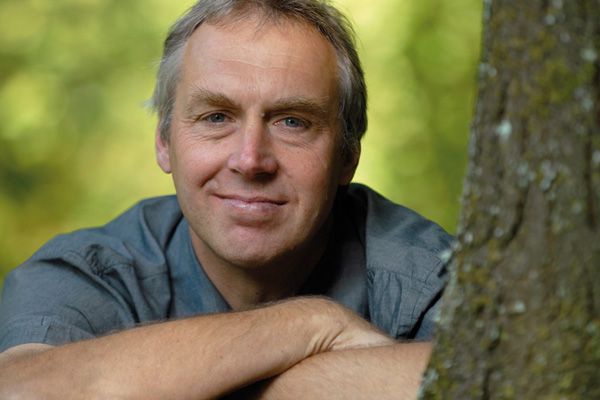
Point of view: The mountains do not grow to heaven
Mountains and valleys do not grow bigger - at least not in the human timescale. Yet our appetites grow from day to day. Sooner or later we will have to adapt our consumption of natural resources to their availability. We had better decide freely for a more modest life before we are forced to do so, demands Claire Simon.