
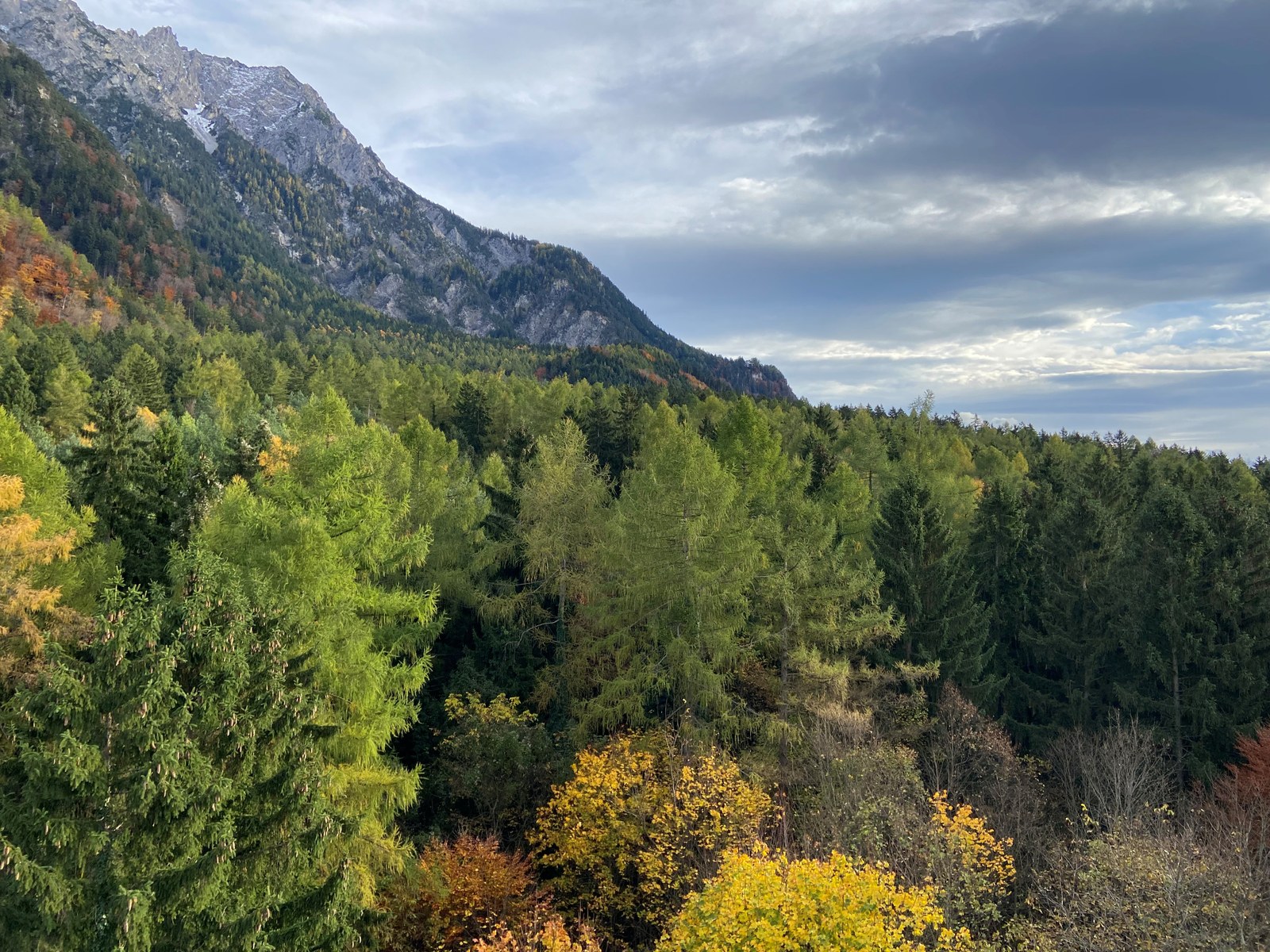
Act now to protect forests: sign the #HandsOffNature petition!
More than 40 percent of the Alpine region is covered by forests. They are not only a defining feature of the landscape, but also a cornerstone of Alpine livelihood, providing building materials, supporting biodiversity, and delivering essential ecosystem services.
CIPRA Germany

Would you like to find out more about CIPRA's country representative in Germany? Click here!
More news

Veronika Hribernik, CIPRA International
Young people’s demands for a good life in the Alps
Environmental protection, car-free mobility and better work-life balance: these were the political demands of young people from Germany, France, Slovenia and Liechtenstein at the end of the CIPRA “Alpine Compass” project.
Michael Gams, CIPRA International
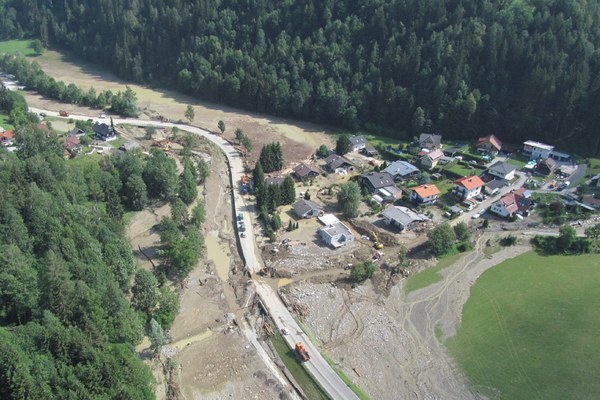
After the flood
What role could biosphere reserves play in dealing with climate risks? This was the subject of an international workshop organised by the MultiBios project in Bad Kleinkirchheim/A at the beginning of April 2024, which included a site visit to the Gegendtal valley that was affected by heavy rainfall and flooding two years ago.
Sophie V. Mahlknecht, CIPRA International
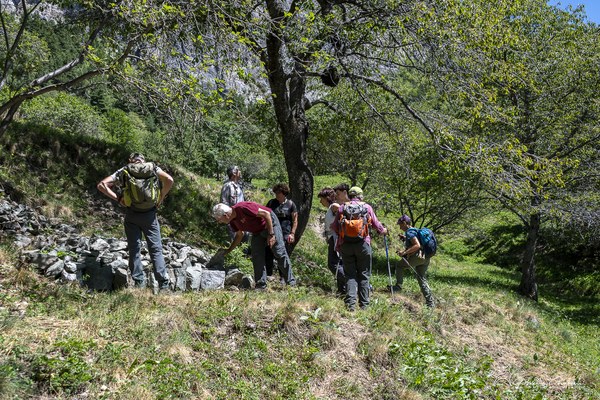
Natural diversity through stones
What do the large woolly bee, the protected fire-bellied toad, the busy ant and the white stonecrop have in common? They all feel right at home in and around cairns, which CIPRA’s “StoneRich” project is creating in seven pilot regions.
Michael Gams, Sophie V. Mahlknecht, CIPRA International
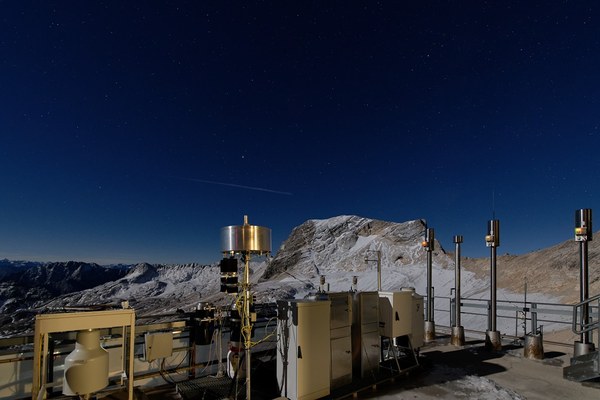
Extreme weather at a glance across the Alps
At the end of November, a new Alpine-wide research centre presented itself to the public at the Schneefernerhaus, the German environmental research station below the Zugspitze peak: the “TUM Alpha – Centre for Alpine Hazards and Risks” will coordinate, on an international basis, the prediction of extreme climate events in the mountains.
Events
There is nothing to see here at the moment. Why not take a look at the other countries?
Projects
CIPRA International
Reset Alpine Tourism
[Project completed] "Reset Alpine Tourism" brought together relevant tourism stakeholders to discuss climate protection and sustainable development in tourism.
CIPRA International | CIPRA Deutschland | CIPRA France | CIPRA Italia | CIPRA Slovenija
Sustainable Alpine Tourism
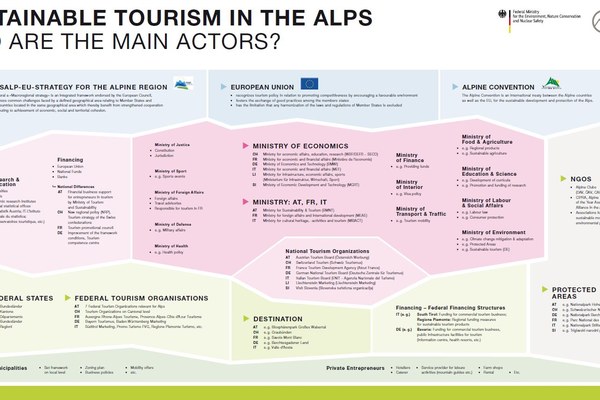
[Project completed] Sustainable tourism in the Alps is the only long-term alternative to conventional mass tourism in order to safeguard the habitat for nature and people. So far, however, there is a lack of jointly defined framework conditions on anational or alpine level for planning, promoting and implementing sustainable tourism.
CIPRA International
speciAlps
[Project completed] Grasslands, marshes, hedges, biotopes and woods are examples of natural treasures and biological diversity that are of great value to alpine regions and municipalities. Not only do they offer a habitat for plants and animals, but also humans value functioning natural areas for their attractiveness and the quality of life they offer. Nevertheless, –these areas have much more potential than we often realise and there is much more every municipality can do!