Political positions of CIPRA

Make the Alps energy self-sufficient! CIPRA-demands - Energy self-sufficient regions
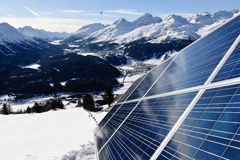
Not having to depend on energy imports: this vision holds great fascination for many regions. Self-sufficiency is "in." There are already many very positive approaches and examples of attempts to go down this road. At the heart of all the concepts is the idea of meeting demand through regional renewable sources of energy, saving energy and using energy more efficiently. Anyone who systematically takes this approach in an attempt to create an energy self-sufficient region changes the face of their region and its structures - to the benefit of their own economy, society and the environment.
cc.alps: CIPRA's demands for agriculture
The agricultural sector is directly affected by climate change impacts but it also contributes to the release of greenhouse gases (GHG) and rising concentrations of GHG in the atmosphere. A sustainable climate response strategy in the field of agriculture involves anticipating, planning and long-term thinking from farm level to transnational level. Prominent fields of activity are sustainable land and soil management, sustainable water management, managing manure and soil carbon as well as organic agriculture as an overall strategy. As agriculture is a highly subsidized economic sector, subvention policy can be used as a lever to guide the sector to sustainability and climate neutrality.
Only climate-friendly tourism is sustainable: cc.alps - CIPRA’s demands for tourism in climate change
Climate change is a major challenge to Alpine tourism. It has to adapt to climate change and at the same time become more climate-friendly. There is a particularly large potential for reduction of CO2 emissions in the key areas of traffic and energy. Tourism is a branch of the economy which is heavily subsidized. Therefore public policy can and must direct developments towards sustainability through the support given to tourism. The present discussion about developments in the tourism industry is dominated by the large chair lift companies which are essentially fixed on ski tourism and the maintenance of the status quo. But focusing only on snow and skiing means promoting a capital-intensive, highly technological form of Alpine tourism and a monoculture. This is neither climatologically nor environmentally sustainable.

News on Alpine Politics

What now for the Alpine strategy?
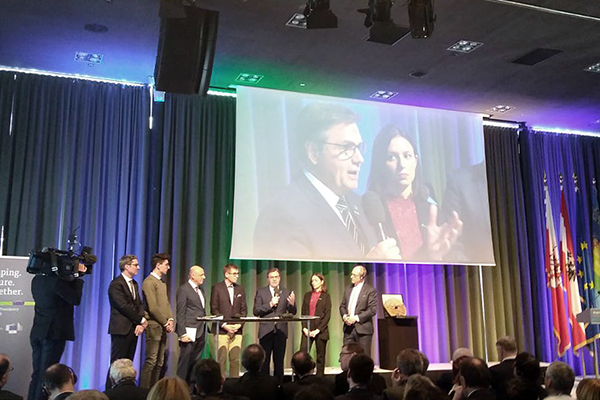
Since January, the Austrian federal state of Tyrol has been chairing the European strategy for the Alps. This year will see a decision on how the strategy will be implemented in practice.
The Alps as the focus of climate policy
Temperatures in the Alps are rising faster than the global average. The search for solutions is not limited to the World Climate Conference being held in Bonn, Germany.
Going further, together
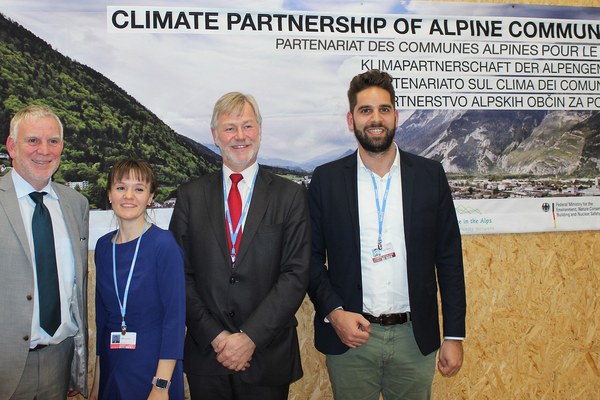
There is an African saying that goes: “If you want to go quickly, go alone. If you want to go far, go with others.” And the trail to sustainable development in the Alps and to preserving the alpine natural environment, its habitat and its economic area is a very long one indeed. It is one the Alliance in the Alps network of municipalities and CIPRA International have been trekking along together since 1997.
Give youth a voice! How youth participation can be encouraged in the Alpine space
How can young people become more involved in political processes? What good examples already exist for this? These questions were the central issues at a workshop held in the context of the GaYA project in Bozen/Bolzano.

Point of view of CIPRA

Point of view: Mountains for everyone? Not a chance!
Access to the mountains and mountain sports is often unfair, exclusive, segregating and discriminatory. Henriette Adolf, Deputy Executive Director of CIPRA Germany, argues in favour of equal participation in mountain sports.
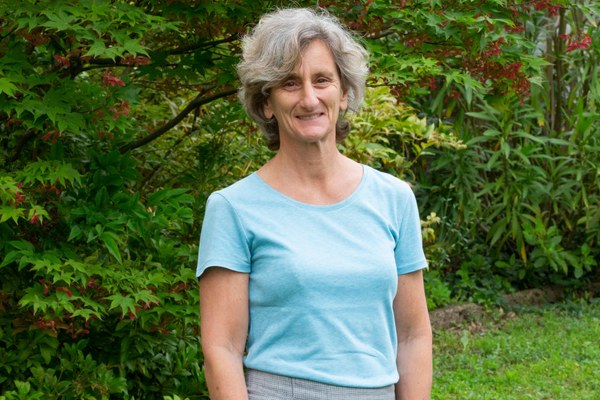
Point of view: In nature restoration we trust!
The Nature Restoration Law now obliges all EU member states to restore destroyed nature to a good ecological condition and thus safeguard the stocks of pollinators, natural resources, clean air and clean water. The Alpine region and its agriculture will also benefit, says Serena Arduino, Co-President of CIPRA International.
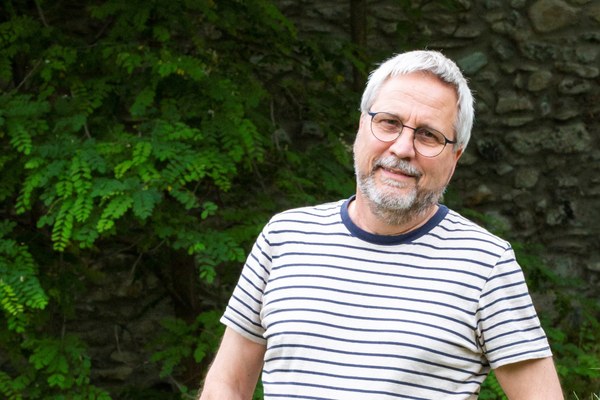
Point of view: Avoiding transport collapse together
As regards the growing volume of individual and transit traffic, it can be stated that neither regional nor national perspectives will lead to solutions. We have to find them together, because the Alps lie in the midst of Europe. This geographical truism is central to an understanding of transport policy problems in the Alps so as to avoid transport collapse, says Kaspar Schuler, Executive Director of CIPRA International.