Political positions of CIPRA

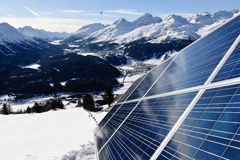
Make the Alps energy self-sufficient! CIPRA-demands - Energy self-sufficient regions
Not having to depend on energy imports: this vision holds great fascination for many regions. Self-sufficiency is "in." There are already many very positive approaches and examples of attempts to go down this road. At the heart of all the concepts is the idea of meeting demand through regional renewable sources of energy, saving energy and using energy more efficiently. Anyone who systematically takes this approach in an attempt to create an energy self-sufficient region changes the face of their region and its structures - to the benefit of their own economy, society and the environment.
cc.alps: CIPRA's demands for agriculture
The agricultural sector is directly affected by climate change impacts but it also contributes to the release of greenhouse gases (GHG) and rising concentrations of GHG in the atmosphere. A sustainable climate response strategy in the field of agriculture involves anticipating, planning and long-term thinking from farm level to transnational level. Prominent fields of activity are sustainable land and soil management, sustainable water management, managing manure and soil carbon as well as organic agriculture as an overall strategy. As agriculture is a highly subsidized economic sector, subvention policy can be used as a lever to guide the sector to sustainability and climate neutrality.
Only climate-friendly tourism is sustainable: cc.alps - CIPRA’s demands for tourism in climate change
Climate change is a major challenge to Alpine tourism. It has to adapt to climate change and at the same time become more climate-friendly. There is a particularly large potential for reduction of CO2 emissions in the key areas of traffic and energy. Tourism is a branch of the economy which is heavily subsidized. Therefore public policy can and must direct developments towards sustainability through the support given to tourism. The present discussion about developments in the tourism industry is dominated by the large chair lift companies which are essentially fixed on ski tourism and the maintenance of the status quo. But focusing only on snow and skiing means promoting a capital-intensive, highly technological form of Alpine tourism and a monoculture. This is neither climatologically nor environmentally sustainable.

News on Alpine Politics

The Youth Parliament to the Alpine Convention campaigns for Alpine protected areas
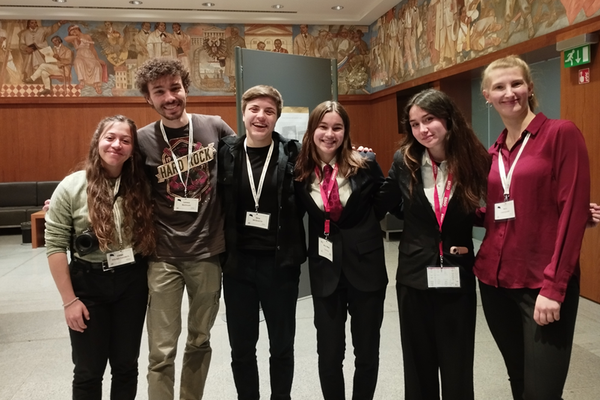
A limited number of entrance tickets for protected areas, the designation of infrastructure-free zones and an excursion to protected areas anchored in the curriculum: the 18th Youth Parliament to the Alpine Convention (YPAC) focused on Alpine nature reserves. For the first time, there was also an exchange with the CIPRA Youth Council.
The urban exodus and the climate
Many mountain regions in the Alps are affected by out-migration. However, climate change is also causing some people to migrate – at least temporarily – from the cities to the mountains, as an Italian research project shows.
Point of view: Mountains for everyone? Not a chance!
Access to the mountains and mountain sports is often unfair, exclusive, segregating and discriminatory. Henriette Adolf, Deputy Executive Director of CIPRA Germany, argues in favour of equal participation in mountain sports.
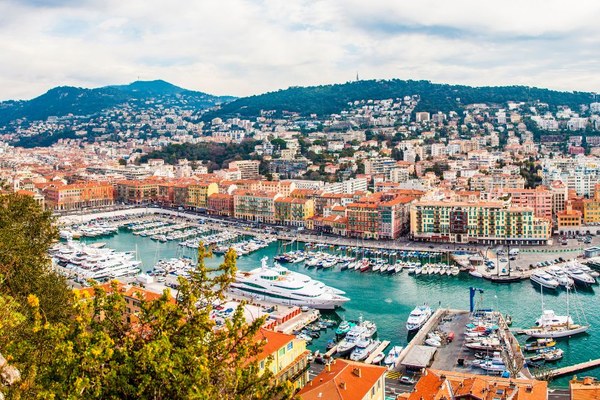
2030 Winter Olympics in Nice
Switzerland’s idea of decentralised, sustainable games has been rejected by the IOC. Instead, the French Mediterranean city of Nice is very likely to be awarded the contract.

Point of view of CIPRA

Point of view: The Alps are not an endless source of energy!
Solar, wind and hydropower are helping us become less dependent on fossil fuels such as coal, oil and gas. This can also be done without sacrificing the last biodiversity hotspots in the Alps, says Isabella Helmschrott, Executive Director of CIPRA Switzerland.

Point of view: We need more young people in the Alps
Ageing, emigration and dying villages are typical problems for many mountain regions. It must therefore become attractive for young people to live in the Alps again, says Kathrin Holstein, member of CIPRA’s Youth Council and staff member of the Alliance in the Alps network of municipalities.

Point of view: Let’s create an “Alpine Plan” for all Alpine regions!
The Bavarian Alpine Plan celebrates its 50th anniversary in 2022. Alpine spatial planning has proven here that it is predestined to find solutions to the pressing issues of the day. Similar planning instruments are lacking in many Alpine regions, although we need them more urgently than ever, claim Paul Kuncio, Executive Director of CIPRA Austria, and Uwe Roth, Executive Director of CIPRA Germany.