Political positions of CIPRA

cc.alps: CIPRA Demands on Nature Protection
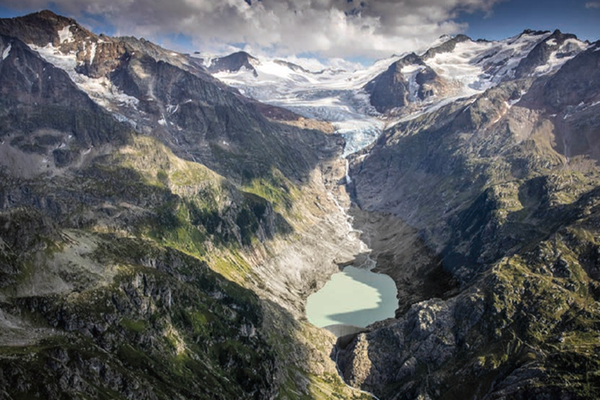
When climate changes, nature feels it. Mountain areas are particularly sensitive, and the greatest losses in terms of plant and animal species may occur precisely there. According to scientific estimates, almost every second plant species in the Alps is threatened with extinc-tion by 2100. For the flora with the highest number of varieties in Central Europe this would be an enormous loss. Because of global warming, also well-known animal species such as the Alpine ibex, the snow grouse and the mountain hare will experience far worse living con-ditions in the Alps.
cc.alps: CIPRA Demands on Energy
In order to limit global warming, first of all it is important that we use energy more efficiently. Yet this will not be enough for operating in a way that climate can sustain. We must radically change our energy consumption and our consumption of energy-intensive goods and services. Experience shows that consumption only goes down when clear political signals are sent - which include legislative initiatives, rewarding energy saving and punishing waste. The switch from fossil to renewable energies must be forced - but not to the detriment of nature. Biomass production, the installation of wind power turbines and new hydroelectric power stations in the Alps hide many potential conflicts. The environmental, social and economic consequences of climate projects must be carefully assessed and compared.
Resolution of Bolzano
"During this conference CIPRA expressed its strong expectations with regard to the outcome of the 15th Conference of the Contracting Parties of the United Nations Framework Convention on Climate Change, to be held in Copenhagen in December 2009. Further more, CIPRA calls upon the governments of the Alpine countries and upon those of the main industrialised countries, to show extraordinary commitment to achieve a distinct acceleration in climate change prevention policies at the global meeting in Copenhagen, in the light of new evidence and the confirmation of the seriousness of the phenomenon."

News on Alpine Politics

Italy to chair Alpine Convention in 2025
Italy is preparing to chair the Alpine Convention for the period 2025-2026, while Liechtenstein and Austria will co-chair the EU Strategy for the Alpine Region (EUSALP) in 2025. Sustainability and cross-border cooperation are the focus of both initiatives.
The battle for Alpine water
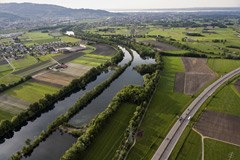
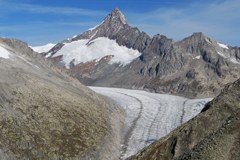
A revival of the hydropower boom: 70 years ago, many Alpine rivers were dammed for the benefit of power stations, while valuable high valleys were built over. Today, new requirements are threatening their ecological functions. In view of the dwindling glaciers and increasing utilisation demands, a distribution battle is looming.
Protecting Alpine biodiversity
In September 2024, CIPRA launched two innovative Interreg projects: LiveAlpsNature and AlpsLife. These projects are helping to protect biodiversity in the Alps and meet the growing challenges posed by the climate crisis and intensive tourism.
Point of view: Let’s prioritise youth over tourism
We want young people to stay on the land, but the demands of tourism, high property prices and the landscape as an object of speculation make this difficult. We talk about the fight against the climate and biodiversity crisis, all while shopping centres and business parks are being built in the countryside. Environmental protection and solutions to the housing crisis should be prioritised, as this would also be in the interests of young people, says Dijana Čataković from CIPRA Slovenia. She asks: Who else will be able to live in the Alps and afford to live there?

Point of view of CIPRA

Point of view: We need an Alpine Ticket for public transport
Homeschooling, no public transport and closed borders: the corona crisis has revealed some aspects of life that people did not previously appreciate so much. An Alps-wide ticket for public transport could tackle all of these issues, as Rok Brišnik explains. He studies Geography and History at the University of Ljubljana/SI and is a member of the CIPRA Youth Council (CYC).

Point of view: For a cultural change in transit traffic
Trade has been the driving force behind cultural and social development in the Alpine region. Transit traffic in its current form, on the other hand, mainly benefits regions away from the Alps. To ban noise and exhaust fumes from the Alpine valleys we need more than a watered-down EU directive, says Stephan Tischler, President of CIPRA Austria.
Point of view: A plea for colourful cities
Corona has strikingly shown how important accessible local recreation areas are for our well-being. Over 70 percent of the Alpine population live in cities. There is a great deal of potential for action there in particular, says Magdalena Holzer, Project Manager at CIPRA International.