Political positions of CIPRA

Action Plan on Climate Change in the Alps
The Action Plan following the Ministers' Declaration of Alpbach rests on the joint commitments taken by the Alpine countries which fall under the Framework Convention on climate change and the Kyoto Protocol. This Action Plan is part of the ongoing discussions to reach a comprehensive and ambitious post-2012 agreement and takes into account the commitments made in this regard by the European Union. Its aim is to go beyond the general framework to offer concrete measures that are specific to the Alps by promoting, both in terms of mitigation and adaptation, themes and measures that could be the subject of regional co-operations in the frame of the Alpine Convention, and by taking into account actions that are already in place on a national, regional and local level. The Action Plan on Climate contributes to both the global effort aiming at reducing greenhouse effect following international commitments by the Contracting Parties and to the quality of life of Alpine populations for present and future generations.
Factsheet to the „Eurovignette III“
The International Commission for the Protection of the Alps (CIPRA International) very much welcomes the fact that the EU now intends to set a course that reflects the true costs of transport and is taking a first step by amending Directive 2006/38/EC ("Eurovignette III"). The Directive must also relieve the burden on the Alpine region, which is particularly sensitive ecologically and whose population has to bear particularly high external costs; it must also contribute more to sustainability in freight transport. One important step is a sound directive on transport infrastructure costs, i.e. one that includes the efficient and consistent allocation of all relevant costs. Everyone stands to benefit from its success: the population, with a healthier, safer and better quality of life, and the transport industry, with more reliable transit routes. Indeed, the risks affect the local population as much as they affect those travelling through.
Schaan Memorandum on the Future in the Alps
The future belongs to those who shape it. In the Alps countless initiatives involving thousands of activists are working to do just that. Yet many are unaware of the fact that elsewhere other people are working on precisely the same problems as they are. This is where the Future in the Alps, a project launched by CIPRA, the International Commission for the Protection of the Alps, comes into play. The scope of the project is to collect practical experience throughout the Alps, classify it and make it available to those who need it. It consists of a phase of collating knowledge and good projects, called alpKnowhow, a phase of processing and disseminating it, called alpService, and an implementation phase, called alpPerformance. CIPRA itself is not a research body, nor is it an educational institution; it is a non-governmental organisation, so it is mainly concerned with the questions of what the results of alpKnowhow mean politically and what demands can be derived from these results. To answer these questions CIPRA representatives from seven countries convened in Schaan/Liechtenstein on 8 and 9 December 2006. The demands and political conclusions on all topics are set out in the present Schaan Memorandum on the Future in the Alps.

News on Alpine Politics

No pardon for crimes against the environment
Damaging the environment in Italy can henceforth be punished with a jail term of up to fifteen years. Environmental legislation was also a concern of CIPRA co-founder Wolfgang Burhenne. A biography is now dedicated to him.
Point of view: Making the Alpine Convention more interactive
The effectiveness of the Alpine Convention is often called into question. A new approach could help reposition it as an engine of co-operation and sustainable development in the Alpine regions, says Claire Simon, Executive Director of CIPRA International.
New French policy for the mountains
Thirty years ago, France passed a special law for its mountain areas. It is now undergoing a review. Here is a summary of the most significant amendments.
New models for a better life
The western economic model consumes the natural resources of three planet Earths. And it is spreading to developing countries – we are their role model.

Point of view of CIPRA

Point of view: Mountains for everyone? Not a chance!
Access to the mountains and mountain sports is often unfair, exclusive, segregating and discriminatory. Henriette Adolf, Deputy Executive Director of CIPRA Germany, argues in favour of equal participation in mountain sports.
Point of view: In nature restoration we trust!
The Nature Restoration Law now obliges all EU member states to restore destroyed nature to a good ecological condition and thus safeguard the stocks of pollinators, natural resources, clean air and clean water. The Alpine region and its agriculture will also benefit, says Serena Arduino, Co-President of CIPRA International.
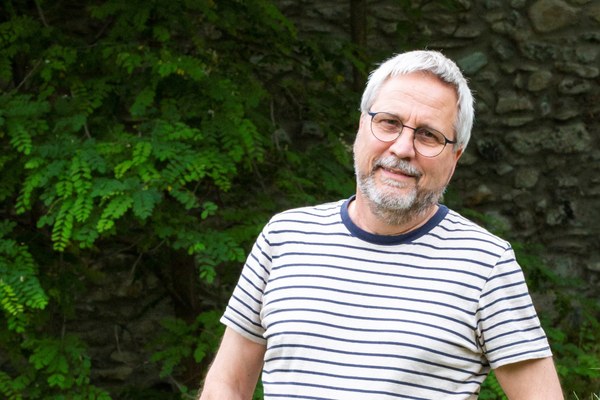
Point of view: Avoiding transport collapse together
As regards the growing volume of individual and transit traffic, it can be stated that neither regional nor national perspectives will lead to solutions. We have to find them together, because the Alps lie in the midst of Europe. This geographical truism is central to an understanding of transport policy problems in the Alps so as to avoid transport collapse, says Kaspar Schuler, Executive Director of CIPRA International.