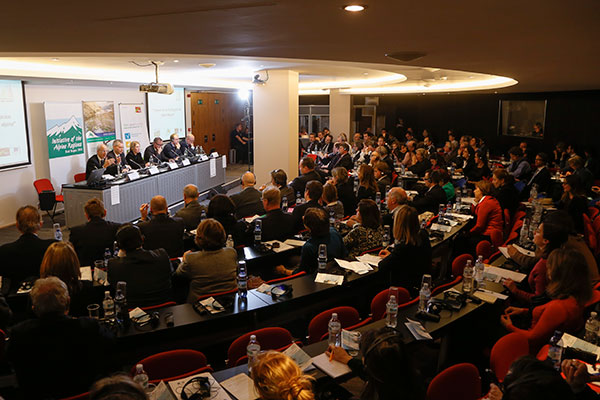
Political positions of CIPRA

Resolution: Climate Protection and Climate Change Adaptation Strategies
The Alpine region is particularly affected by global climate changes, many of which are the result of man’s impact. The Alps are a particularly sensitive region and are affected all the more by the forecast changes such as the rise in annual average temperatures, the increase in extreme meteorological events, summer droughts and melting glaciers. It is CIPRA’s view that climate change represents one of the 21st century’s greatest challenges. Given the above it calls upon the European Union, the bodies of the Alpine Convention, all the Alpine states, the federal provinces, regions and cantons as well as all governmental and non-governmental authorities .. to intensify their climate protection efforts in order to reduce the greenhouse effect; .. to draw up sustainable strategies for dealing with the growing repercussions of climate change.
Resolution on the role of local government and administration in sustainable development
At a conference on the Role of Local Governments and Administrations in Sustainable Development held in 2005, representatives of the mountain regions of Central Asia, the Caucasus, the Carpathians, the Alps, the Altai and Mongolia adopted a resolution with recommendations aimed at managers involved in the development of mountain areas. In it they called for an exchange of positive experience between different mountain regions, education in sustainable development as a condition for active participation, and also for research and the transfer of technology and methodology. The resolution also contains concrete recommendations on decentralisation and reliable dialogue structures as a basis for sustainable development, sustainable economic development, and the role of local governance in the management of natural resources. It also underscores the importance of information and the role of women in sustainable development. Finally it sets out conditions for the effectiveness of alliances and conventions.
Declaration on protected areas in European mountain regions, Chambéry 2002
The Declaration on Protected Areas in European Mountain Regions emphasises the significance of biological and geological resources and water reserves in mountain regions. It stresses the necessity of targeted development and conservation measures as well as regional co-operation. Protected areas can serve as an experimental field for the development of conservation measures. Concrete steps proposed for the period 2003-2005 include the creation, in each European massif, of a mountain co-operation committee with representatives of governmental and non-governmental organisations. One of the tasks of the committees is to help disseminate information about models and methods to implement nature conservation and to transfer knowledge from research to improve the management of protected areas and sustainable development. Other important factors include encouraging partnerships, networks and joint projects as well as developing strategies for the active participation of populations.

News on Alpine Politics

Alpine policy put to the test
With the development of a macro-regional strategy Europe’s attention is increasingly turned to the Alps – at least for the present. The CIPRA publication SzeneAlpen focuses on the events.
Improvisational Theatre: Macro-Region for the Alps
Is it a comedy, a farce, or a whodunnit? In any case, the subject matter - an Alpine macro-region - is controversial and the cast high-powered. Inspired by the EU, Alpine countries and regions take to the stage while the Alpine Convention assumes the role of input provider.
Point of view: who will fill the macro-regional Alpine house with life?
Just as in the building of a house, the inhabitants are the most important persons involved in the Alpine macro-region. But, eight weeks after the start of the process, states and regions have yet to indicate to the representatives of civil society whether they may contribute. R.S.V.P.
We are the macro-region Alps
On 19 December 2013 the European Council will decide whether there should be a European strategy for the Alpine space. States and regions have been working for months on an appropriate proposal - while excluding representatives of civil society. Why the alpine macro-region needs the science, NGOs and municipalities.

Point of view of CIPRA

Point of view: We need an Alpine Ticket for public transport
Homeschooling, no public transport and closed borders: the corona crisis has revealed some aspects of life that people did not previously appreciate so much. An Alps-wide ticket for public transport could tackle all of these issues, as Rok Brišnik explains. He studies Geography and History at the University of Ljubljana/SI and is a member of the CIPRA Youth Council (CYC).
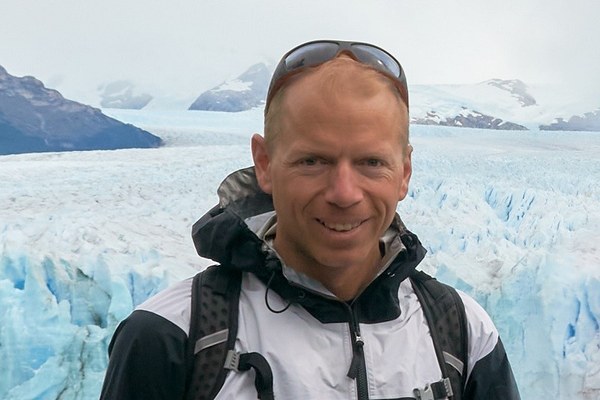
Point of view: For a cultural change in transit traffic
Trade has been the driving force behind cultural and social development in the Alpine region. Transit traffic in its current form, on the other hand, mainly benefits regions away from the Alps. To ban noise and exhaust fumes from the Alpine valleys we need more than a watered-down EU directive, says Stephan Tischler, President of CIPRA Austria.
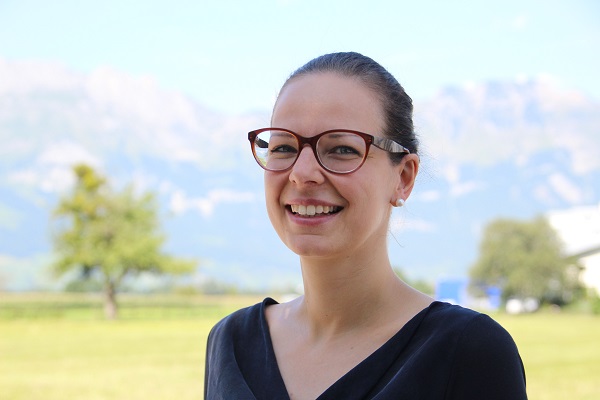
Point of view: A plea for colourful cities
Corona has strikingly shown how important accessible local recreation areas are for our well-being. Over 70 percent of the Alpine population live in cities. There is a great deal of potential for action there in particular, says Magdalena Holzer, Project Manager at CIPRA International.