Political positions of CIPRA

Resolution: Climate Protection and Climate Change Adaptation Strategies
The Alpine region is particularly affected by global climate changes, many of which are the result of man’s impact. The Alps are a particularly sensitive region and are affected all the more by the forecast changes such as the rise in annual average temperatures, the increase in extreme meteorological events, summer droughts and melting glaciers. It is CIPRA’s view that climate change represents one of the 21st century’s greatest challenges. Given the above it calls upon the European Union, the bodies of the Alpine Convention, all the Alpine states, the federal provinces, regions and cantons as well as all governmental and non-governmental authorities .. to intensify their climate protection efforts in order to reduce the greenhouse effect; .. to draw up sustainable strategies for dealing with the growing repercussions of climate change.
Resolution on the role of local government and administration in sustainable development
At a conference on the Role of Local Governments and Administrations in Sustainable Development held in 2005, representatives of the mountain regions of Central Asia, the Caucasus, the Carpathians, the Alps, the Altai and Mongolia adopted a resolution with recommendations aimed at managers involved in the development of mountain areas. In it they called for an exchange of positive experience between different mountain regions, education in sustainable development as a condition for active participation, and also for research and the transfer of technology and methodology. The resolution also contains concrete recommendations on decentralisation and reliable dialogue structures as a basis for sustainable development, sustainable economic development, and the role of local governance in the management of natural resources. It also underscores the importance of information and the role of women in sustainable development. Finally it sets out conditions for the effectiveness of alliances and conventions.
Declaration on protected areas in European mountain regions, Chambéry 2002
The Declaration on Protected Areas in European Mountain Regions emphasises the significance of biological and geological resources and water reserves in mountain regions. It stresses the necessity of targeted development and conservation measures as well as regional co-operation. Protected areas can serve as an experimental field for the development of conservation measures. Concrete steps proposed for the period 2003-2005 include the creation, in each European massif, of a mountain co-operation committee with representatives of governmental and non-governmental organisations. One of the tasks of the committees is to help disseminate information about models and methods to implement nature conservation and to transfer knowledge from research to improve the management of protected areas and sustainable development. Other important factors include encouraging partnerships, networks and joint projects as well as developing strategies for the active participation of populations.

News on Alpine Politics

NGOs demand participation in the Alpine macro-region
Observer organisations of the Alpine Convention are bewildered at their exclusion from the Alpine macro-region. They are demanding their inclusion in the ongoing process for a macro-regional Alpine strategy.
Who will shape the Alpine macro-region?
With its "Alpen.Leben" (Living in the Alps) project, CIPRA Austria is sounding out the role of the Alpine Convention for a macro-regional strategy and is asking who should actually have a say in shaping this European Union strategy for the Alps.
Boost for the macro-region Alps
The European Union is publishing its first analysis of existing macro-regions - encouraging news for current developments in the Alpine space.
Macro-region: Europe goes a step further
The European Parliament has adopted a resolution on a macro-regional strategy, while the Alpine Space Programme submitted an expert report to the European Union.

Point of view of CIPRA

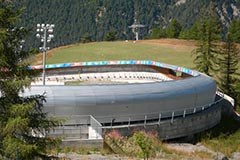
CIPRA's point of view: Torino 2006: a hard lesson - but nothing learned
The Olympic Winter Games 2006 have left a burdensome legacy. The idea is thus to close the loss-making bobsleigh and replace it with an indoor ski slope. Is Turin simply throwing good money after bad?
CIPRA's point of view:  New solidarity between the Alps and metropolitan areas
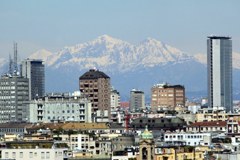
CIPRA's point of view: New solidarity between the Alps and metropolitan areas
Various political actors are pushing for the development of a macro-region for the Alps. CIPRA also says yes to an Alpine macro-region - but only within a clear framework. This offers the opportunity to make the rest of Europe aware of the issues facing its Alpine regions.
CIPRA's point of view: Alpine Convention: Italy says yes but Switzerland still says no
Italy, surprisingly, has ratified eight of nine protocols of the Alpine Convention. Only Switzerland has yet to sign up. We do not need the protocols, stated the Swiss Federal Council recently - Swiss policy is, in its view, more sustainable than in any other Alpine country.