Political positions of CIPRA

Hydropower in the Alps
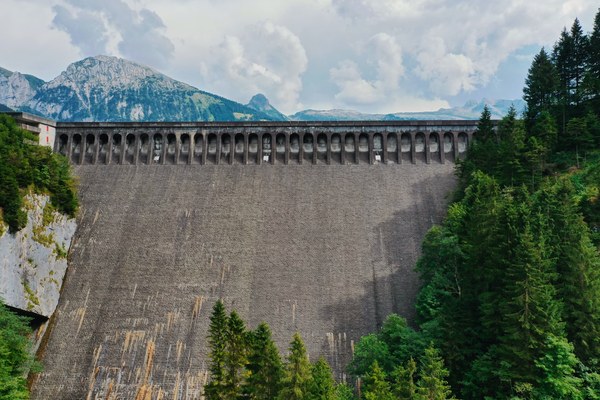
How much hydropower use is environmentally compatible and ecologically sustainable? This question has been on the minds of people in the Alpine region for decades - all the more so against the backdrop of the urgent need to move away from fossil fuels. There are currently around 21,000 hydropower plants in operation in Europe, 300 under construction and over 8,500 in the planning stage. In many places, climate change with its imponderables such as extreme floods is being countered with more dams and walls, although river widening, for example, would make more ecological sense.
Alpine landscape is not renewable!
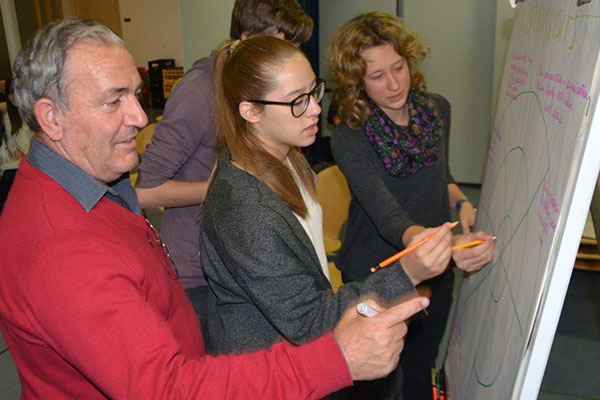
Landscape is a key to negotiating social and political issues. CIPRA has taken up these issues as part of its Alpine-wide priority theme “Landscape” 2019-2020. This position paper, which was developed in a broad and participatory process with CIPRA representatives, young Alpine women and experts from all Alpine countries, is the conclusion of this priority theme.
Solstice in winter tourism
Tourism has brought wealth to the Alps. In many regions it remains an important source of income, but lack of economic diversification is also a risk. The importance and orientation of tourism differs strongly among Alpine countries, but all of them need new strategies and approaches to cope with shifts in visitor behaviour and climate change. A socio-economic transformation is needed that takes account of tourism’s past, present and future potential.

News on Alpine Politics

Point of view: 25 years of the Alpine Convention are not enough
While we celebrate 25 years of the Alpine Convention, we still bemoan the slow pace of its implementation. For its objectives to be achieved, believes Katharina Conradin, President of CIPRA International, we have to repeatedly demand their realisation.
Change is in the air
A change of executive director at CIPRA International and at CIPRA Austria, and a new president for CIPRA Switzerland: the new faces shaping the future of CIPRA.
Alpine municipalities strengthen youth participation
If municipalities wish to introduce policies that will meet the expectations of coming generations, they have to be able to offer their young people something. The YSAM project has shown how youth participation can be strengthened in Alpine communities. A new label is being used in Switzerland to mark youth-friendly municipalities.
Alpine regional strategy on the starting blocks
The European strategy for the Alps is ready. There nevertheless remain some challenges to its effective and sustainable implementation.

Point of view of CIPRA

Point of view: We need an Alpine Ticket for public transport
Homeschooling, no public transport and closed borders: the corona crisis has revealed some aspects of life that people did not previously appreciate so much. An Alps-wide ticket for public transport could tackle all of these issues, as Rok Brišnik explains. He studies Geography and History at the University of Ljubljana/SI and is a member of the CIPRA Youth Council (CYC).
Point of view: For a cultural change in transit traffic
Trade has been the driving force behind cultural and social development in the Alpine region. Transit traffic in its current form, on the other hand, mainly benefits regions away from the Alps. To ban noise and exhaust fumes from the Alpine valleys we need more than a watered-down EU directive, says Stephan Tischler, President of CIPRA Austria.
Point of view: A plea for colourful cities
Corona has strikingly shown how important accessible local recreation areas are for our well-being. Over 70 percent of the Alpine population live in cities. There is a great deal of potential for action there in particular, says Magdalena Holzer, Project Manager at CIPRA International.