Political positions of CIPRA

New solidarity between the Alps and surrounding areas. CIPRA position paper on a European Macro-Region Strategy for the Alps
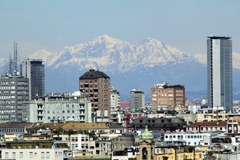
Various political actors in the Alpine space are pushing for a European strategy for a macro-region for the Alps (MRS Alps). The International Alpine Protection Commission CIPRA, with over one hundred member organisations, possesses a wide-ranging network in all Alpine countries that extends beyond the Alps and into the surrounding metropolitan areas. CIPRA is therefore actively joining the process for a Macro-Regional Strategy for the Alps, representing the interests of sustainable, eco-friendly Alpine policies. Strengthened co-operation in such a MRS Alps must take place with the Alpine regions and surrounding areas as equal partners without undermining the achievements of the Alpine Convention.
Healthy, natural forests: responding to climate change! cc.alps: CIPRA's demands for forest management
As forestry measures have long-term effects, adaptation of the forests to new climate conditions is urgently needed - but it should be initiated with great caution. The carbon storage ability of forests has to be exploited. Wood should first be used as a raw and building material; only under certain circumstances it should be used for heating. Short regional exploitation cycles are to be created. Natural forests should be fostered as they are more resilient to climate change. Forest owners who in the interest of climate protection give up part of their earnings should be compensated. Finally targeted research into practical climate adaptation measures has to become an important long-term task.
Improvements in efficiency instead of damage to the environment! cc.alps: CIPRA's demands on the subject of water
The rivers of the Alps provide 170 million people with water. Climate change will greatly reduce the availability of water in the Alps and beyond, with less rain, longer dry periods in summer and greatly reduced snowfalls in winter among the predicted consequences. The demands made of this natural resource will increase accordingly, as will competition between the various user groups. Today only about 10% of the rivers and streams of the Alps can be considered ecologically intact, i.e. they are neither polluted nor over-engineered nor compromised in terms of their flow regimes. The ecological quality of waterways and related habitats therefore calls for improvement, not further impairment. We cannot permit the last rivers to become engineered structures or depleted by the excessive abstraction of water.

News on Alpine Politics

Italy to chair Alpine Convention in 2025
Italy is preparing to chair the Alpine Convention for the period 2025-2026, while Liechtenstein and Austria will co-chair the EU Strategy for the Alpine Region (EUSALP) in 2025. Sustainability and cross-border cooperation are the focus of both initiatives.
The battle for Alpine water
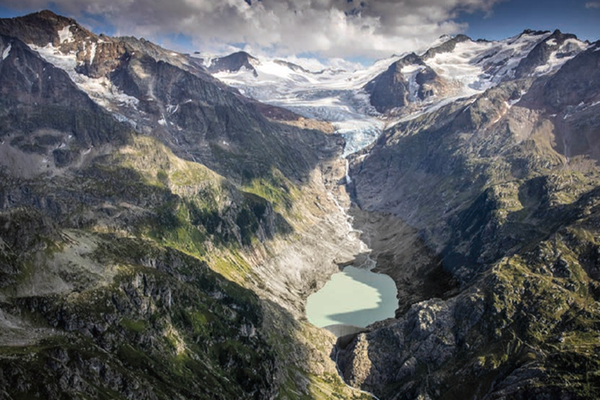
A revival of the hydropower boom: 70 years ago, many Alpine rivers were dammed for the benefit of power stations, while valuable high valleys were built over. Today, new requirements are threatening their ecological functions. In view of the dwindling glaciers and increasing utilisation demands, a distribution battle is looming.
Protecting Alpine biodiversity
In September 2024, CIPRA launched two innovative Interreg projects: LiveAlpsNature and AlpsLife. These projects are helping to protect biodiversity in the Alps and meet the growing challenges posed by the climate crisis and intensive tourism.
Point of view: Let’s prioritise youth over tourism
We want young people to stay on the land, but the demands of tourism, high property prices and the landscape as an object of speculation make this difficult. We talk about the fight against the climate and biodiversity crisis, all while shopping centres and business parks are being built in the countryside. Environmental protection and solutions to the housing crisis should be prioritised, as this would also be in the interests of young people, says Dijana Čataković from CIPRA Slovenia. She asks: Who else will be able to live in the Alps and afford to live there?

Point of view of CIPRA

Point of view: The Alps: on course for sustainability
It is time to reflect on the unique values of the Alps, emphasises the President of CIPRA International, Katharina Conradin, after her first 100 days in office. Her plea is for a common goal: the Alps as a model region for sustainability.

Point of view: Protecting the Alps – the responsibility of people
The diversity of the Alps is a challenge that at the same time holds great potential. It is up to the new German presidency of the Alpine Convention to put this into effect, states Federica Corrado, President of CIPRA Italy.

Point of view: Preserving the strongholds of the Alps
Dozens of development projects are simmering in the drawers of investors from Slovenia to France. It is thus even more important to sustain existing protected areas, says Katharina Conradin, member of the executive board of CIPRA International and executive director of Mountain Wilderness Switzerland.