
News
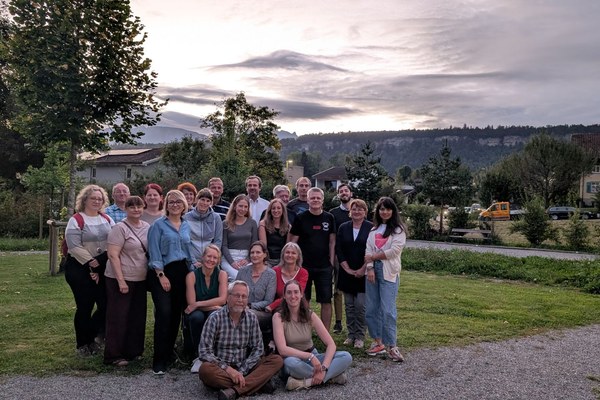
Learning from a region that spans four countries
From the Carpathians to the Alps: in mid-September 2025, partners in the Central Mountains project visited Feldkirch/A. The focus was on cross-border cooperation in tourism, spatial planning and youth participation.
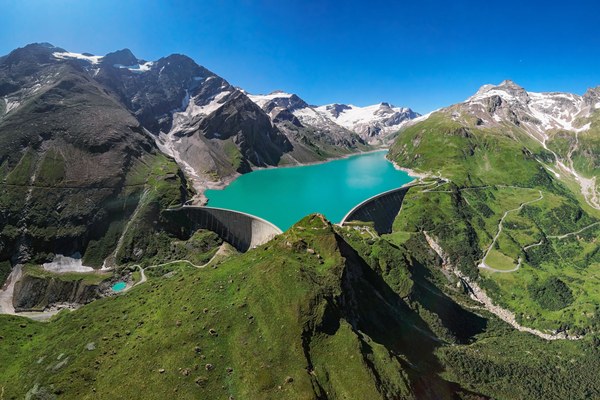
Renewable energies: Alpine Convention becomes decisive
The EU wishes to accelerate the expansion of renewable energies. In the Alps, however, this must not come at the expense of sensitive natural areas. CIPRA International has now achieved two important clarifications through legal action: as a treaty under international law, the Alpine Convention takes precedence over secondary European Union law – that is, EU regulations and EU directives; consequently, its provisions must also be complied with when implementing the Renewable Energy Directive (RED III).
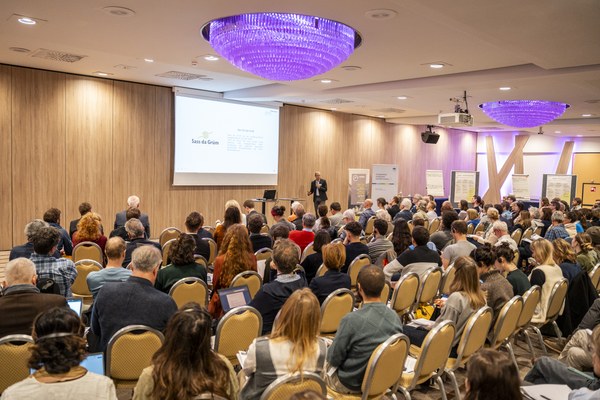
Dialogue on Alpine Spatial Planning: Proceedings of the CIPRA Annual Conference 2025
How can Alpine Spatial Planning mitigate conflicts between the energy transition and nature restoration? This question was addressed at the CIPRA Annual Conference 2025 in Salzburg, which brought together more than 160 participants. The proceedings show key insights and recommended actions – not in a concluding way, but as part of an ongoing learning process and as an impulse for further debates. They underline the shared understanding that the energy transition in the Alpine region must be approached and implemented in a cross-sectoral, interdisciplinary, and transboundary manner.
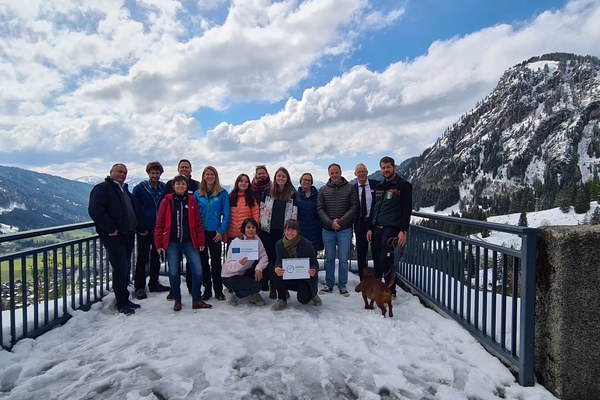
A delegation from Chartreuse visits Bad Hindelang to discuss mobility in Alpine areas
As part of the European ERASMUS+ project "DINAMO - Developing International Nature Adapted Mobility Options", CIPRA Germany and CIPRA France organised exchange study visits between two pilot territories : the Chartreuse massif in France (represented by the regional natural park and the local authority "Coeur de Chartreuse") and the municipality of Bad Hindelang in Germany.
DINAMO Erasmus+ project: a new white paper on mountain mobility
The "DINAMO" project aims to address the challenges of rural mountain mobility by encouraging cooperation between different stakeholders and stimulating creative processes through international exchanges. The main objective is to promote sustainable mobility solutions in rural mountain areas, to help them become less dependent on individual car transport.
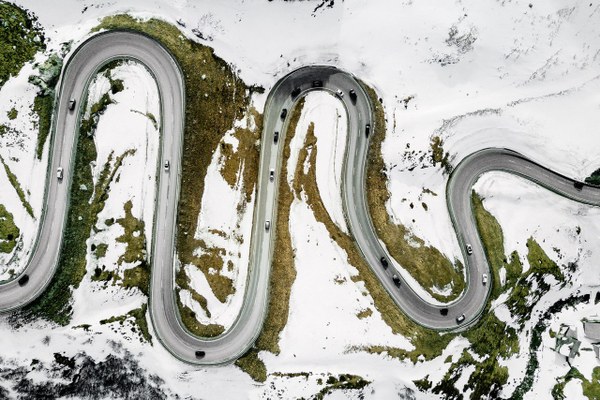
Learning about Alpine cross-mobility in the DINAMO Erasmus+ project webinars
As part of the European ERASMUS+ project "DINAMO - Developing International Nature Adapted Mobility Options", CIPRA Germany and CIPRA France organised two webinars on the topic of cross-border mobility and Alpine mobility strategies in June and July 2024.
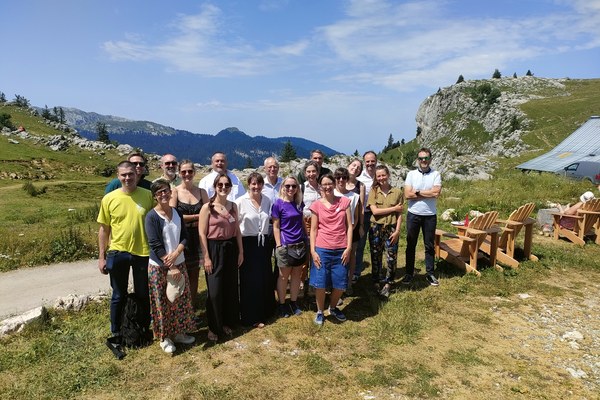
DINAMO Erasmus+ project: the return trip from Bad Hindelang to Chartreuse
As part of the European ERASMUS+ project "DINAMO - Developing International Nature Adapted Mobility Options", CIPRA Germany and CIPRA France organised exchange study visits between two pilot territories : the Chartreuse massif in France (represented by the regional natural park and the local authority "Coeur de Chartreuse") and the municipality of Bad Hindelang in Germany.

Challenges for alpine agriculture
Loss of biodiversity, climate change, migration: just some of the problems affecting the Alpine region. The concept of agroecology offers sustainable solutions - but we have to implement them together.
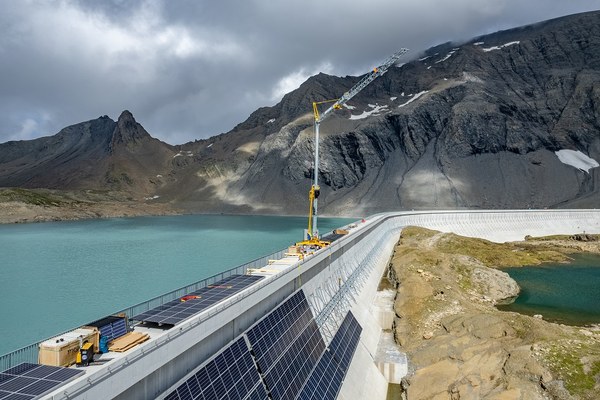
Unsuitable landscapes for energy production
The results of a recent survey from Switzerland are clear: no to energy production in almost unspoilt mountain areas. Intensively used areas around ski resorts or existing power plants would be better suited to the expansion of renewable energy.
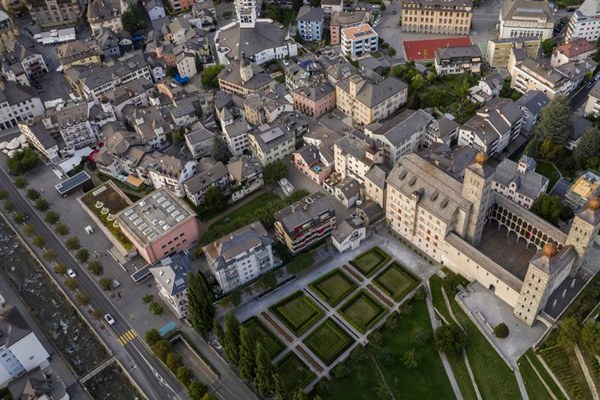
Alpine towns – key to sustainable development
The ninth Report on the State of the Alps, entitled “Alpine Towns”, was presented as part of the Swiss presidency of the Alpine Convention. It sheds light on how the Alpine settlement system hinders – or helps – the sustainable development of the Alps.

Point of view: Let’s create an “Alpine Plan” for all Alpine regions!
The Bavarian Alpine Plan celebrates its 50th anniversary in 2022. Alpine spatial planning has proven here that it is predestined to find solutions to the pressing issues of the day. Similar planning instruments are lacking in many Alpine regions, although we need them more urgently than ever, claim Paul Kuncio, Executive Director of CIPRA Austria, and Uwe Roth, Executive Director of CIPRA Germany.
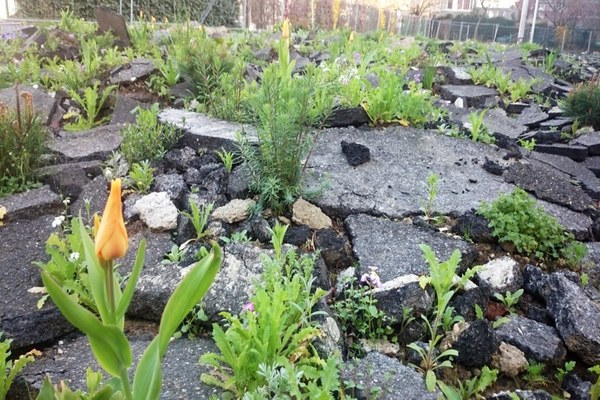
Heatwave aggravated by soil sealing
All of Europe is currently groaning under the heat – and the growing numbers of concreted-over areas are heating up the environment even more. In a background report, CIPRA's Saving:Soils project shows good examples and solutions for the sustainable use of soil and summarises current strategies in the Alpine countries.
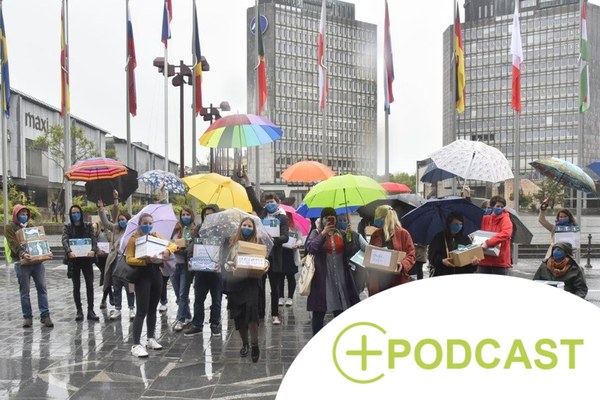
For drinkable water
In a referendum held at the beginning of July, Slovenia’s citizens voted by a clear majority in favour of preserving the shore and coastal zones. In doing so, they overturned a new law that would also have affected Alpine waters.
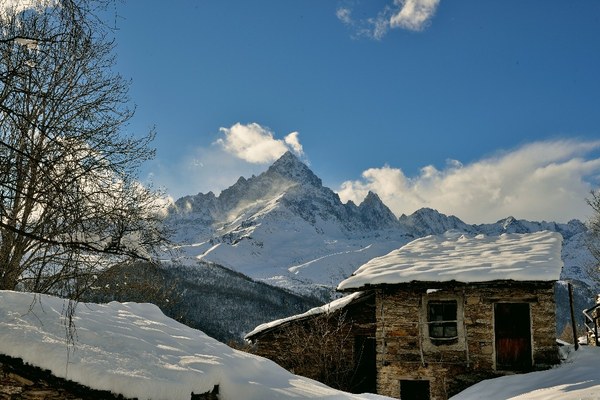
Abandoned and uncultivated
Remote mountain villages in Piedmont/I have been struggling with heavy emigration for years. The region is now supporting people moving back to the mountains. A study from Austria shows how endangered Alpine agriculture actually is.
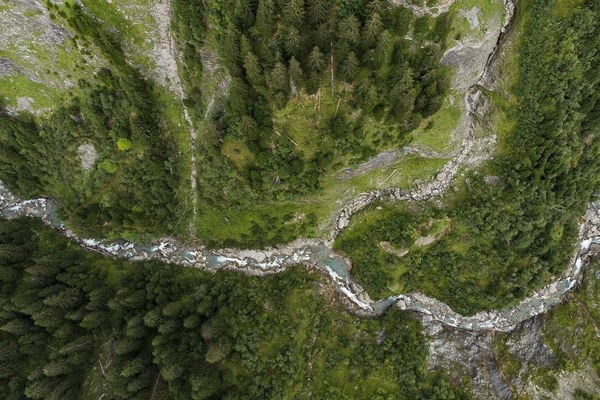
How much hydropower is ecologically sustainable ?
Renovate power plants instead of building new ones, preserve the last freshwater pearls, coordinate use and protection across countries: CIPRA has published a position paper with detailed technical demands on the use of hydropower in the Alps.
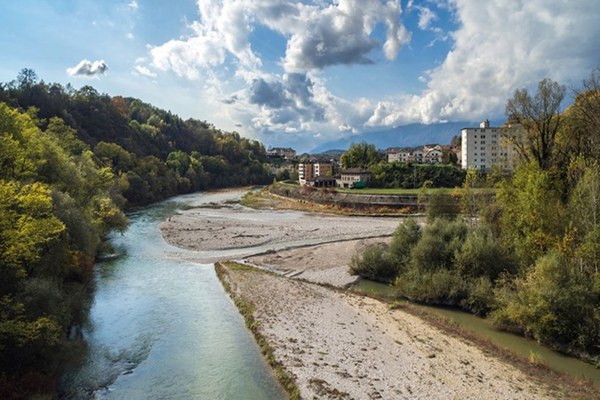
Climate protection: from plan to action
The Alps as a climate-neutral, climate-resistant region by 2050: this is the objective of the newly launched “Climate Action Plan 2.0” of the Alpine Convention. Concrete steps will now follow in such areas as mountain farming, spatial planning and biodiversity.
Point of view: A plea for colourful cities
Corona has strikingly shown how important accessible local recreation areas are for our well-being. Over 70 percent of the Alpine population live in cities. There is a great deal of potential for action there in particular, says Magdalena Holzer, Project Manager at CIPRA International.
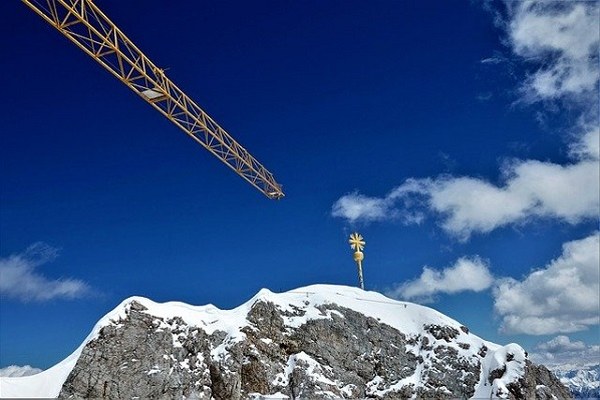
Location policy at the expense of the environment
Slovenia’s government wants to restrict the right of civil society to have a say in controversial construction projects. Other Alpine countries are also pursuing location policies at the expense of the environment.
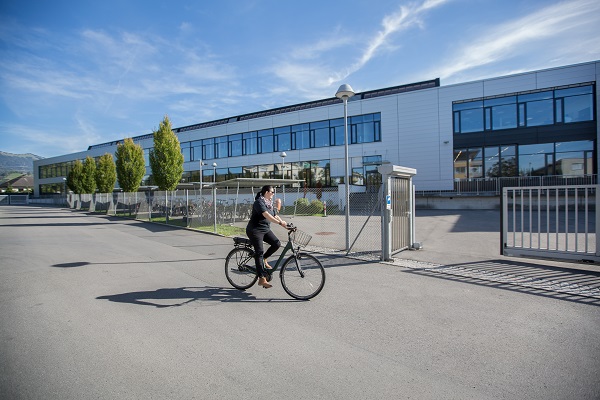
Fit for work
Change to bus, train, bike or e-bike: pilot companies in the Alpenrhein-Bodensee-Hochrhein region are testing healthy ways to work in the three-year Interreg project Amigo.
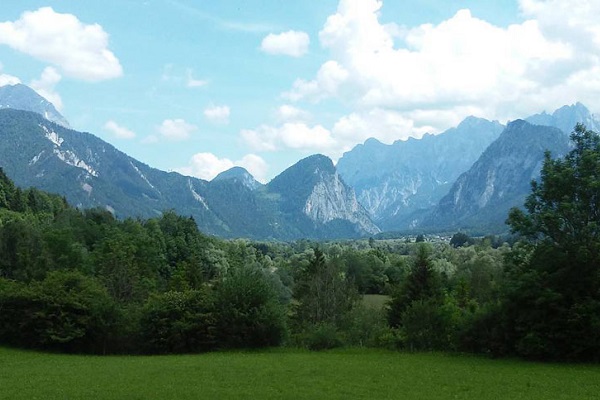
How diversity is lost
Intensive agriculture and climate change: a recent study from Austria shows how much influence both have on the loss of biodiversity in Alpine regions.
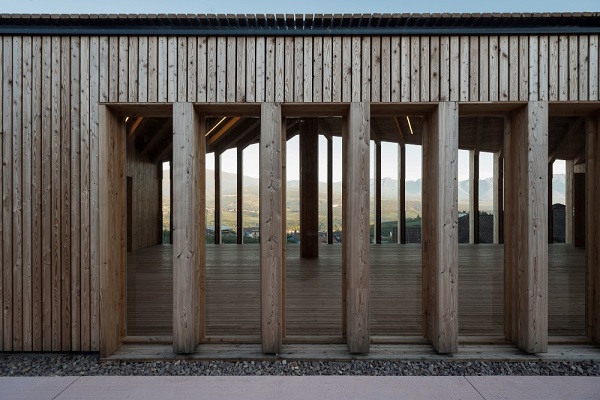
Wanted: pioneering renovations and new buildings
The fifth edition of the international architecture prize, "Constructive Alps", has been launched. Renovations and new buildings that set an example for sustainable construction in the Alps can be submitted until 14 March 2020.

Mountaineering recognized as world cultural heritage
Unesco now lists alpinism as an intangible world cultural heritage. Alpine associations from France, Switzerland and Italy submitted the application.
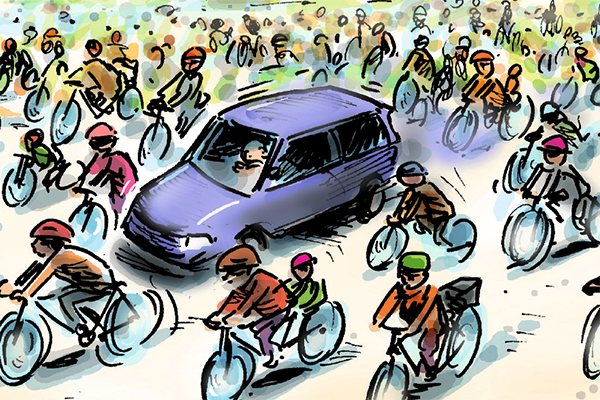
To work by car? No thanks!
There are well developed public transport systems and cycle paths in the Alpine Rhine valley, yet the majority of commuters – who number up to 50,000 a day – travel to work by car. A CIPRA project is looking for solutions in this international quadrangle.

Point of view: So the landscape has a future
The guardians of the landscape are the people who live there. They must be involved in the decision-making and development processes, says Špela Berlot, Managing Director of CIPRA Slovenia.
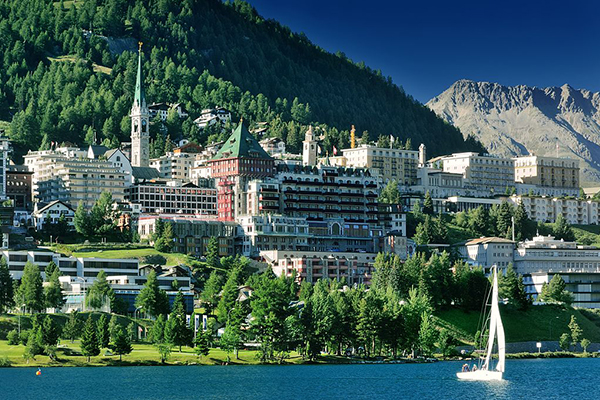
No landscape to be seen
Increasing demands for use are putting the Alpine landscape under ever more pressure. The “Urban Sprawl Initiative” is an attempt by environmentalists in Switzerland to reverse the trend. The aim is to curb the marketisation of the landscape.
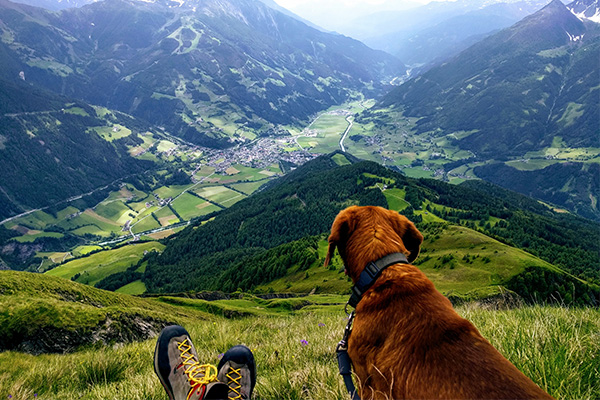
What the landscape tells us
How do we perceive changes in the landscape? Why do we feel more closely connected to some places than others? These questions are raised by CIPRA with «Re-Imagine Alps», its new interactive map of the region.
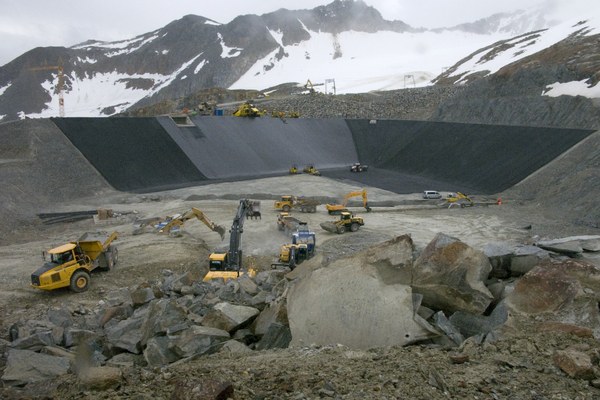
Building – a bottomless pit?
Whether it is a question of major projects or infrastructure developments in protected areas – Alpine countries such as Austria and Switzerland cannot build quickly or easily enough.
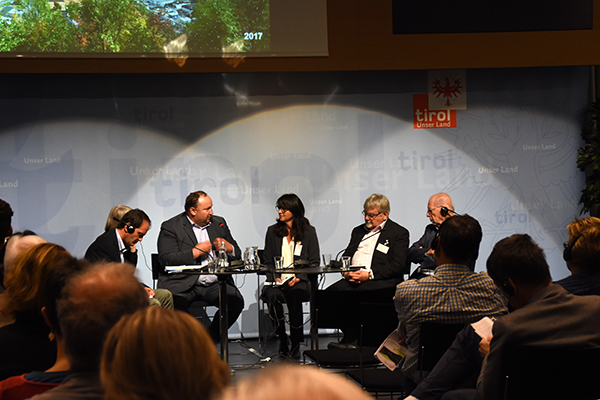
Society’s demands mark the landscape
Conflicting needs and exaggerated expectations collide when it comes to spatial planning. Its role needs to be rethought, with a move away from overall planning and a shift towards guidance and awareness-raising. This was the tenor of the CIPRA Annual Conference held on 29 and 30 September 2017 in Innsbruck, Austria.
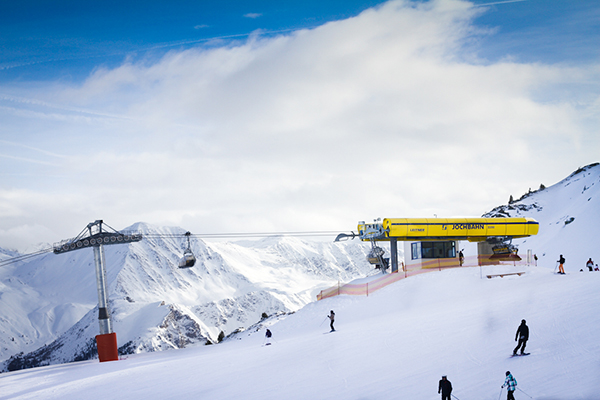
Media address expansion of winter sports
The call by CIPRA to end the constant upgrading of ski areas has found considerable support. Facts such as climate change, stagnating numbers of skiers and falling profits underline the urgency of these demands.
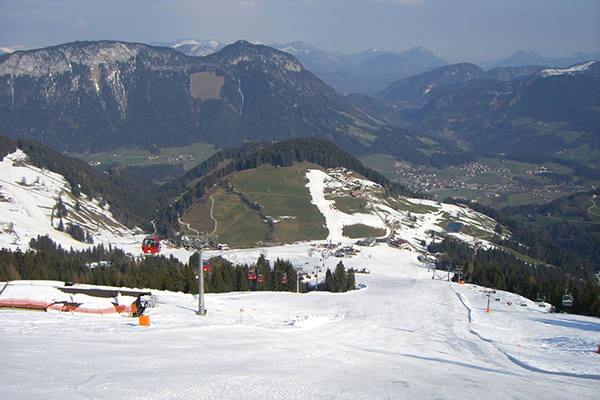
The Alps are losing their snow
A recently published study shows that winters are ever shorter and the amount of snow is decreasing. The main reason for long winters becoming more and more a thing of the past is the earlier spring thaw.