Winter sports reach a tipping point
Hydrologist Carmen de Jong warns of the ecological consequences of Alpine ski tourism. Her research shows that, without a rethink, the industry is heading for its demise.

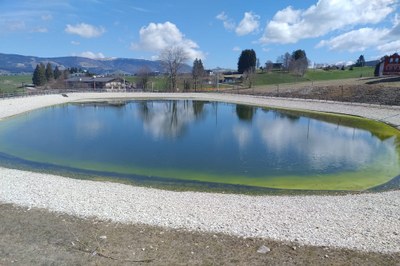
Carmen de Jong has been researching water scarcity and natural hazards in mountain regions around the world for over 35 years now. The professor of hydrology at the University of Strasbourg criticises Alpine ski tourism: “We have reached a dangerous tipping point.” The water consumption for artificial snowmaking is enormous, often even tapping into groundwater – with serious consequences for people and nature, as more than half the water is lost in the process. In Cortina d’Ampezzo, lift facilities are being built for the 2026 Winter Olympics in landslide zones, while springs are being tapped for a sporting event that is to last for only a few days, as de Jong disapprovingly points out. The destruction of protected areas and primeval forests for prestige projects is particularly alarming.
In the Austrian province of Tyrol alone, a total of 17 new snow-making facilities, including storage ponds and pumping stations, were approved between January 2024 and July 2025. Over 80 per cent of the slopes there already use artificial snow. In the Italian winter sports resort of Livigno, a 200,000 m³ reservoir is being built at over 2,500 metres above sea level for the freestyle and snowboard competitions at the 2026 Winter Olympics. In addition, over 80 new gondola and chair lifts are planned throughout the Alpine region.
Carmen de Jong also takes a critical view of glacier ski areas. Despite glacier retreat and rising costs, new facilities are being planned – an instance of “technical madness” that ignores the climate crisis. Instead, she calls for tourism that is in harmony with nature and local culture. Examples such as Austria’s Dobratsch Nature Park show that resistance to expansion can be successful. Carmen de Jong’s conclusion: Alpine ski tourism has no future. “It will come to an end before 2050 – as a consequence of climate change, water scarcity and economic risks.”
Listen to the full interview:
Download english translation of transcript
Sources and further information:
https://skinachrichten.de/tiroler-skigebiete-investieren-millionen-in-neue-schneekanonen/ (de), www.skiresort.de/lifte-bahnen/in-planung/alpen/, www.technoalpin.com/de/ueber-uns/media/technoalpin-sichert-sich-die-zentralen-beschneiungsprojekte-fuer-milano-cortina-2026/ (de), https://kempten.bund-naturschutz.de/aktuelles/artikel/alpen-natur-in-gefahr-die-folgen-von-beschneiung-und-beschneiungsbecken-in-den-alpen (de), www.umwelt.bz.it/medien/presse/wer-touristische-seilbahnen-baut-erzeugt-auch-verkehr-1059/ (de, it), www.youtube.com/watch?v=72t-ORJ4ZaM (de), www.novethic.fr/actualite/economie/economie/isr-rse/rechauffement-climatique-la-station-de-ski-de-la-plagne-ferme-definitivement-les-pistes-sur-son-glacier-historique-151995.html (fr)
Further information
Alpine water: who gets the last drop?
Alarming findings of the Glacier Caravan 2024