
News
Alpine Convention strengthens co-operation between neighbouring countries
With its new presidency, the "Ecological Network" Platform of the Alpine Convention is now continuing its work. In focus over the next two years are cross-border co-operation between neighbouring states and activities in the pilot regions.
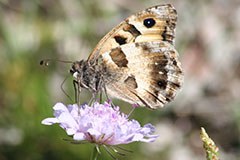
The cameras are rolling for hermits and fire salamanders
What can be done to preserve the diversity of plant and animal species in the Alps? CIPRA provides some answers in the short film "For hermits and fire salamanders - How municipalities connect habitats in the Alps". The film can be seen online and at different locations in the Alps.
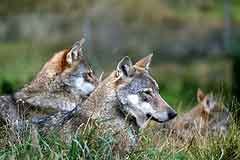
Ecological Continuum in the Alps: from 50 questions to a few concerted actions
How will demographic change affect the future of the ecological continuum? And which indicators of species and habitats can be used to assess an ecological network? These are just two of the 50 questions put together by scientists, politicians and environmentalists from all the Alpine lands.

Claire Simon takes up post as CIPRA Executive Director
CIPRA International is getting a new Executive Director. Claire Simon, 35, holds dual French-German nationality and is the first woman in 60 years to lead the organisation. Nor is that the only first.
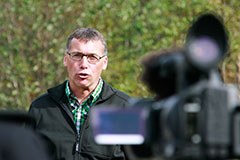
Commitment to networks for nature
CIPRA has produced a short film to show what can be done at the local level to preserve biodiversity. The spotlight on the actors in the municipalities is a source of great encouragement and strengthens them in their commitment. Let the film roll!
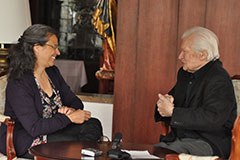
Communicate and find common ground
Working across borders for the environment – Wolfgang Burhenne, founder member of CIPRA, and Andrea Matt, Executive Director of CIPRA Liechtenstein, talk about their activities as networkers.
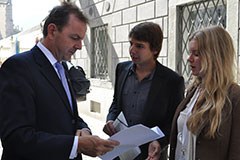
Young Alps
Everyone’s talking about the future. But usually without involving those to whom it actually belongs. CIPRA supports young people in articulating their hopes and demands.
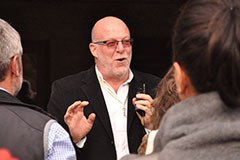
“Fact-finding trips like Climalp are some of my favourite assignments”
CIPRA communicates in four languages of the Alps and also in English. The resulting translation load is handled by several translators and interpreters. Reinhold Ferrari is one of them.
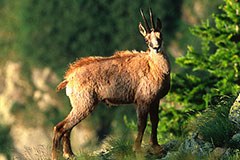
What counts for the diversity of Alpine species
An international team of researchers has decided on the 50 most important questions for the connecting of habitats in the Alpine regions. Research, support and projects should thus now all be singing in unison. What really counts for the Alpine space?
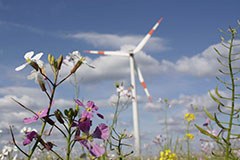
Kick-off for recharge.green project: connecting energy and nature
Concrete dams, wind turbines, tree plantations: there is often a conflict between energy production and nature conservation. The recharge.green project, now being implemented throughout the Alps, intends to give landscapes a value. A solution to the dilemma?

Bolzano sent the proposal for FP7-Smartcities-2013
The participation to the FP7 call for proposals might represent an opportunity to further enhance the activities of Bolzano towards carbon neutrality.
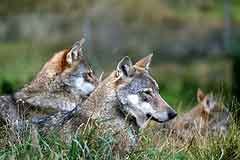
Wolves: France wants to shoot them while Switzerland celebrates new-borns
In Switzerland they are celebrating the first new generation of wolves. But where should these wolves go? A national park in the south of France has initiated a debate on this topic - with consequences for the Alps.
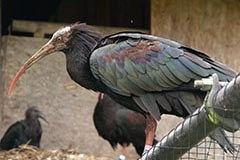
The northern bald ibis - welcome back to the wild!
Jazu is back. Last autumn he became the first wild northern bald ibis for 400 years to leave his breeding ground near Burghausen, Bavaria: in summer he found his own way back from Tuscany.

"We'll keep at it."
Virtually everyone was there. Idrija's festival hall was packed to the rafters, and the youth symphony orchestra summoned specially for the occasion was in full flow. There was plenty of drama, and the TV people were there, too. A murmur went through the 1,000-strong audience as they got to their feet and began clapping. Then a large burly man in a dark suit walked onto to the stage. Deep creases bracketed his laughing mouth like waterfalls, stretching up to his white temples. Bojan Sever, the major of the small Slovenian town in the alpine foothills, held aloft the certificate confirming their status as Alpine Town of the Year 2011. Cameras flashed and the applause redoubled. That was just over a year ago.

"CIPRA is a both a mainstay and a cornerstone"
Chris Walzer, lead partner of Econnect, on ecological networking, psychological barriers and a continuous landscape.
Oh! ...
… the bears in Trentino have finally gone too far.
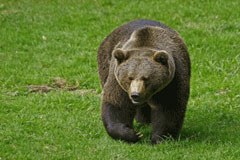
Bruin is back!
The number of bears in the province of Trento has grown, while the damage they cause has fallen significantly, states the report on bears in the province. But not all is well for Bruin and friends.
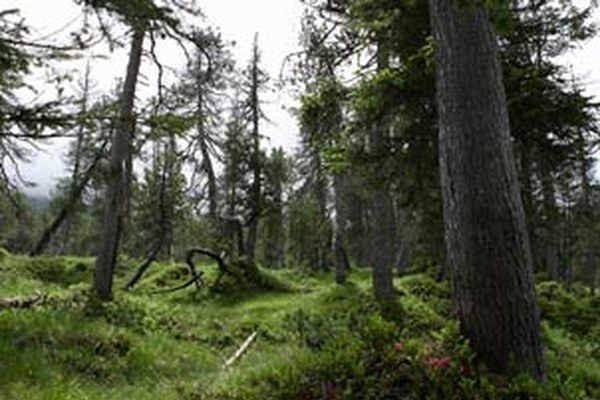
Transnational ecological networks - history, status quo and potentials
The TransEcoNet Final Symposium presented in March 2012 the results of more than three years of project work. It provided an interdisciplinary view on transnational ecological networks in Central Europe and beyond.
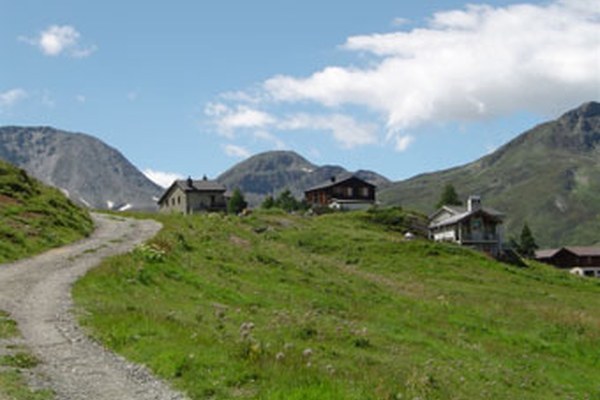
Swiss-Italian cooperation in favor of ecological connectivity
During the last Alpine Conference in March 2011 the Alpine Convention officially nominated 8 pilot regions for ecological connectivity in the Alps.
CIPRA's point of view: An appeal for the mountains
Bigger, faster, further: not even the mountains are immune to this mantra of growth. CIPRA France is thus seeking visions for a sustainable future for both people and mountains.
Liechtenstein switches the lights out
The first state in the world to go dark: in January and February Liechtenstein is conducting experiments in bird protection, energy efficiency and public safety.
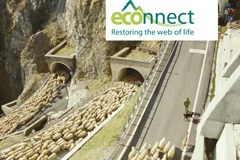
Documentation on ECONNECT results now available
The ECONNECT partners have now compiled their results in a series of publications. There are dedicated reports for ECONNECT's key target groups: all different kinds of stakeholders (final booklet), experts (synopsis, species reports, reports on legal barriers), policy makers (policy recommendations) and practitioners (implementation recommendations).
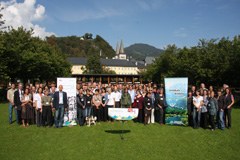
ECONNECT's results discussed at the final conference
After three years of research and fieldwork, the ECONNECT project has come to a conclusion. From 26 to 28 September political representatives of the six Alpine countries as well as experts and scientific researchers from local and international institutions attended ECONNECT's final conference in Berchtesgaden, Germany.
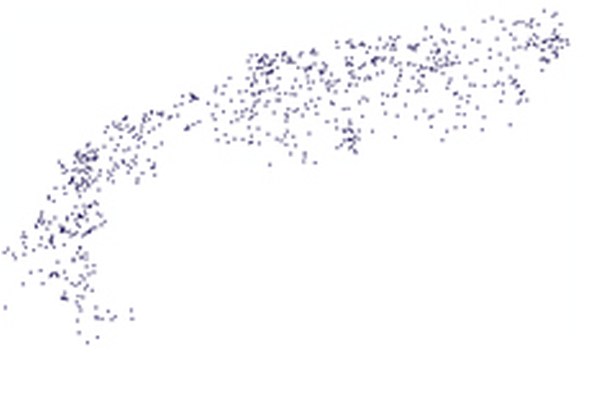
ECONNECT's battle and success with data management
In order to analyse and visualize connectivity on an alpine-wide level as well as on a regional level for the seven Pilot Areas ECONNECT partners needed geographic data.
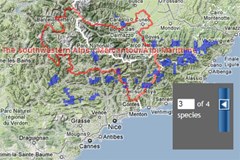
Innovative online tools to assess and visualise connectivity
Real connectivity depends on a comprehensive planning process. The complex system of interactions and mechanisms in human societies calls for an analytic and comprehensive approach.
Alpine barriers and the way they affect species
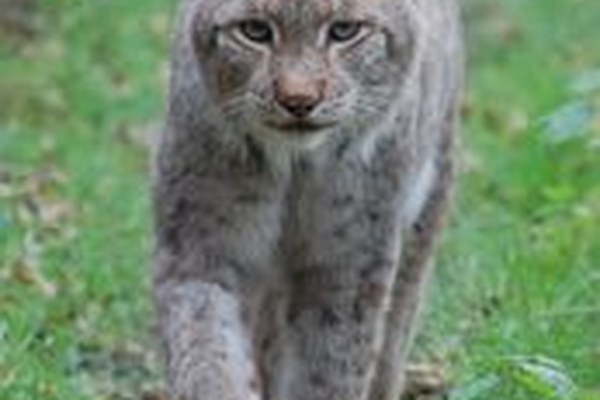
ECONNECT researchers analysed how barriers affect selected species: lynx, brown bear, wolf, red deer, black grouse, griffon vulture, bullhead and fish otter. For the terrestrial species they found out that altitude and forest availability are the major factors influencing species distribution.
The promotion of a common Legal Framework
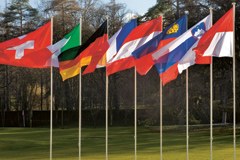
The Alps consist of eight different countries, each of which has its own legal framework. A specific working group provided an overview of the different legislations in force at various governance levels that potentially affect ecological connectivity.
Connectivity in pictures
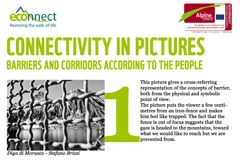
Besides classic communication tools such as newsletters and press releases ECONNECT used innovative tools to raise awareness among the general public and the stakeholders.
Benefit for wood picker, capercaillie and co.
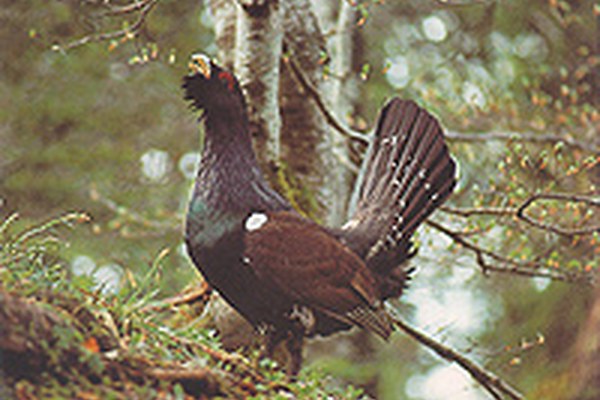
In ECONNECT's Pilot Regions a number of actions were implemented improving connectivity for selected species and habitats.
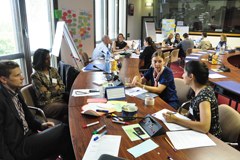
Sharing experience to strengthen green infrastructure
How can green infrastructure and its contribution to the provision of a wide range of ecosystem services be strengthened at different spatial scales? An expert workshop on 'Green infrastructure policies and projects' aimed to answer this question. The workshop took place in Brussels on 7 September 2011 and was organised by Ecologic Institute with support from GHK and Institute for European Environmental Policy.