
News
First atlas of biodiversity risk in Europe
The new "Atlas of Biodiversity Risk" is the first of its kind to describe and summarise in a comprehensive, easy-to-read and richly illustrated form the major pressures, impacts and risks of biodiversity loss on a European and global level.
55 questions on alpine ecological connectivity
A joint research project of Econnect, the Platform Ecological Network under the Alpine Convention and the Ecological Continuum Initiative aims to identify "The 55 most urgent questions concerning ecological networks in the Alps" by bringing together all "alpine actors" such as national administrations, protected areas, researchers, stakeholders and various NGOs.
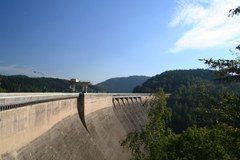
Less barriers, more nature!
Every day we build new obstacles on the migrating routes for animals and we prevent plants to spread freely. In most of the cases we are not even aware of this problem. How would it feel and look like, if our living spaces would suddenly get fragmented by obstacles we cannot easily overcome?
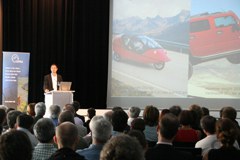
CIPRA Yearly Symposium: marginal creativity...
This year's CIPRA Symposium focuses on the socio-economic margins of the Alps. Why "margins"? Because the nearest hospital is a far away and the post office is only open in the morning; because the towns and cities are beckoning, and nature is gaining more and more ground. The prevailing process of urbanisation has little in the way of prospects to offer these mountain regions, whose potential is already low.

Photo-shooting the Alps
Time for photographers of the Alps to show off their best shots! The Permanent Secretariat of the Alpine Convention is organising a photo competition with the aim of publishing the twelve best photographs in a calendar. There will also be a special prize for each published photograph.

A milestone for alpMedia
With its current issue CIPRA's three-weekly Newsletter alpMedia is going out to more than 25'000 people throughout the Alps for the first time. CIPRA launched the alpMedia information project during the International Year of the Mountains 2002, and at that time the Newsletter was sent to just 1'700 people.
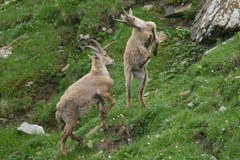
Gran Paradiso National Park: what is causing young ibexes to die out?
Since the foundation of Italy's first national park in 1922, the Alpine Ibex has been preserved from extinction for the past 100 years or so. Now the ibex population at the Gran Paradiso National Park/I is seriously at risk. Three quarters of the young animals are dying during their first year of life. In 1993 the population totalled around 5'000 animals; today the population at the Gran Paradiso National Park is just under half that number. It is still unclear what is causing the death of the young bi-ungulates.
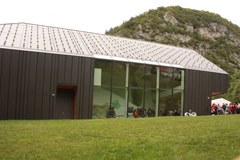
An Alpine Museum for Slovenia
In early August more than 1'000 mountaineers and mountain enthusiasts attended the opening of the Slovenian Alpine Museum (Slovenski planinski muzej - SPM) in Mojstrana/SI. The multitude of guests who attended underlines just how strong the demand is for such an institution in the Slovenian Alps. Slovenia owes its Alpine Museum first and foremost to Miro Eržen, who fought for the project for 25 years. The new Museum was officially inaugurated by the President of Slovenia Danilo Türk.
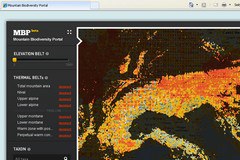
Europe's mountains: rich in biodiversity but increasingly vulnerable
In its study 10 Messages for 2010 - Mountain Ecosystems the European Environmental Agency takes a closer look at Europe's mountain regions. Compared with the lowlands, regions above the tree line are home to a richer variety of plant and animal species. The biggest threats include land abandonment, intensification of agriculture, infrastructure development, unsustainable exploitation and climate change.

New publications for networking natural environments in the Alps
A great deal has been done and achieved in recent years to set up a pan-alpine ecological network. As part of its script series the German Federal Agency for Nature Conservation (BfN) has just published a report in English entitled Implementing a Pan-Alpine Ecological Network - A Compilation of Major Approaches, Tools and Activities. It comprises for the first time various documents, publications and reports supporting the implementation of an ecological network across the alpine arc. One chapter focuses on activities in the Carpathians. The publication can provide useful information to regions beyond the Alps, too.
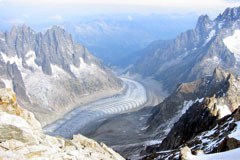
First transnational permafrost map of the Alps
The first standardised permafrost monitoring map of the Alpine Space is to be drawn up by researchers from Austria, Italy, Switzerland, France and Germany by 2011. The map will allow a better assessment of natural hazards and play an important role particularly for tourism and the growing infrastructure in the high-alpine region.

The chestnut forest plays host to a rare guest: Alliance in the Alps network of municipalities
The little bat somehow looked different. Filigree in form, brownish in colour, and with a ringed wing it huddled in the corner of the nesting box on the chestnut tree. Nicola Zambelli put on his gloves and pulled gently on the wing tip to examine the ring.
News from TransEcoNet - transnational ecological networks in Central Europe
Similar as ECONNECT, the Platform Ecological Network and the Ecological Continuum Initiative in the Alps, in Central Europe the TransEcoNet project strives for a better connection of protected and less or unprotected landscapes across national borders. One major goal of the project is to reveal local people's perception and relation to their surrounding landscape in form of a survey of oral history. This is being carried out in the form of interviews in selected project regions.
5th meeting of the Ecological Network Platform
The 5th official meeting of the Ecological Network Platform of the Alpine Convention was held in Dobbiaco/Toblach (I) on 21 April 2010. The main topic at the meeting was progress made to date in nominating a number of pioneering Alpine regions as Pilot Regions of the Alpine Convention. It is hoped that the first regions will receive official recognition at the next Alpine Conference to be held in March 2011.
Think tank workshop Dobbiaco/Toblach: Elaborating recommendations for stakeholder integration
Local connectivity projects can only be implemented if stakeholders are integrated into these activities. Potential difficulties and supportive tools were in the centre of an exchange of experiences between representatives of the ECONNECT pilot areas and other stakeholders carrying out connectivity activities. The discussions were facilitated by the Ecological Continuum Initiative in the frame of a workshop.
Communicating ecological connectivity to stakeholders made easy
What significance do water management, tourism and agriculture have for ecological networks? Can measures in the transport sector have a positive effect for ecological corridors? How shall I design my garden to be a habitat for domestic plants and animals? These questions are answered by a series of eleven fact sheets provided by the Ecological Continuum Initiative.
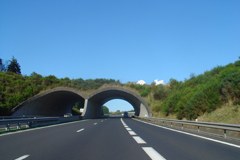
Linking-up the German roads for animals and for a better traffic safety
The German Government is developing a National Connectivity Programme which foresees to build wild animal crossings at the most important sites of migrating corridors. This year the first systematic research on ecological corridors in Germany has been finished, representing an important scientific groundwork for the implementation of the Programme.
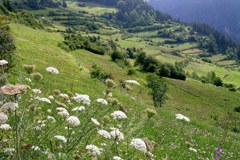
Fire for the flowering meadows
In 2010, the "Fire in the Alps" campaign once more draws our attention to a burning issue with its signal fires during the second week of August. This year, the imposing fires on the heights will burn "for the protection of the alpine flowers", as a contribution to the Year of Biodiversity 2010.

Maps and data on ECONNECT available online
The "GeoPortal" which is the central project repository for all spatial data and map products of ECONNECT is now online on http://gis.eurac.edu. Furthermore, the working group "Implementation strategy and data needs" has met to discuss the data situation at the current stage of the project.
Sharing connectivity knowledge within and beyond the Alps and visualising corridors and fragmentation
100 persons from eight European countries followed the invitation to the workshop in Grenoble, France, in November and used this opportunity for active knowledge transfer on ecological networks. The workshop discussions have helped the ECONNECT partners to agree on the appropriate methods which they are now using for modelling habitats and corridors for the whole Alps and for visualizing barriers.
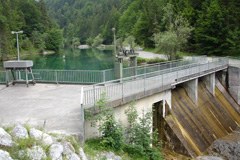
Alpine riverine landscapes: connectivity, barriers and fragmentation
How strongly is a river landscape fragmented? What are the most important barriers and obstacles in Alpine rivers? These questions are in the focus of the Institute of Ecology from University of Innsbruck within its ECONNECT activities. The results will be visualized with the help of GIS and contacts to regional watershed authorities established for the reduction of barrier impacts and restoration.

Ecological Connectivity and the Law: from barriers to instruments
Entering the second year of the ECONNECT project, the activities on legal barriers (Work Package 6) are steadily progressing. The two major fields of action are at the moment a comparative analysis of the legal frameworks of ecological connectivity in the Alps and the analysis of the legal situation in the pilot regions.
Understandable and visualised ECONNECT website
The ECONNECT website www.econnectproject.eu has recently been translated into the four project languages (French, German, Italian and Slovenian) and will soon be updated with maps.
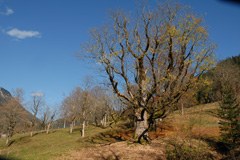
Berchtesgaden - Salzburg: Improving the ecological network of extensive grasslands
Extensively cultivated grasslands are important landscape elements for ecological connectivity in the pilot region Berchtesgaden - Salzburg. Improving these habitats will help to safeguard species such as butterflies, dragonflies or grasshoppers. This is one of the tasks of the subprojects within ECONNECT which are currently being finalised.
Rhaetian Triangle: new online tools and support for local initiatives
The Swiss National Park (SNP) is currently developing a web based tool to analyze barriers and corridors of the large pilot region Rhaetian Triangle. Furthermore, two local initiatives are concretely acting for the restoration of ecological connectivity. The new map application will allow comparing a freely defined area with other areas in the neighbourhood and identifying the fields with high need of action according to selected indices.
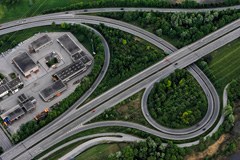
Alpi Marittime: Ecological corridors preventing car accidents
In the Italian Alpi Marittime Natural Park car crashes which involve ungulates are very common. In most cases those accidents, besides being hazardous for drivers' life, could have been avoided with a better territorial planning, a more careful infrastructure planning and a warier use of existing technologies. The Alpi Marittime natural park will make use of the new ways to help the passage for animals across busy roads, which have been tested in the Pilot region of Isère.
Northern Limestone Alps: Involving local population
In the three provinces of Upper and Lower Austria and Styria interviews with 170 stakeholders were held. People were asked about their knowledge, experience and ideas concerning the connectivity of habitats and possible barriers by using a questionnaire. These interviews aimed at receiving an overview of opinions on this theme as well as information on planned or ongoing projects dealing with ecological connectivity in the region.
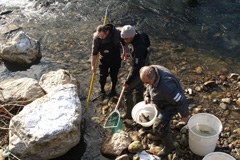
Isère Department: Tearing down the barriers
The French Isère Pilot Region is very active in the field of ecological connectivity. Besides ECONNECT, since February 2009 the region is engaged in another EU Project named "Paths of life". This project will last six years and has a budget of nine million Euro.
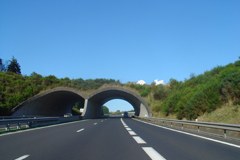
Green light for deer and lynx in the Alpine-Carpathian Corridor
In future, wild animals will be able to move more easily between the Alps and the adjoining Carpathian Mountains. That is the objective of the recently initiated cross-border project Alpine-Carpathian Corridor. The EU is providing approximately 2 million Euros for it.
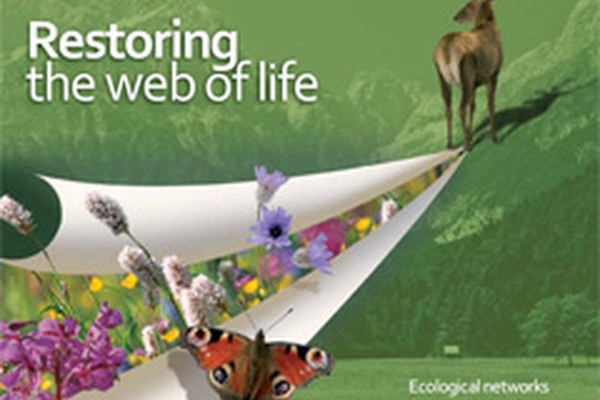
Restoring the web of life: a new brochure designed to help you understand ecological networks
What is an ecological network? How can you create one and who does it involve? What are their roles? These are just some of the questions to which the recently published brochure Restoring the web of life: ecological network for more biodiversity in the Alps provides answers.