
News
News from TransEcoNet - transnational ecological networks in Central Europe
Similar as ECONNECT, the Platform Ecological Network and the Ecological Continuum Initiative in the Alps, in Central Europe the TransEcoNet project strives for a better connection of protected and less or unprotected landscapes across national borders. One major goal of the project is to reveal local people's perception and relation to their surrounding landscape in form of a survey of oral history. This is being carried out in the form of interviews in selected project regions.
5th meeting of the Ecological Network Platform
The 5th official meeting of the Ecological Network Platform of the Alpine Convention was held in Dobbiaco/Toblach (I) on 21 April 2010. The main topic at the meeting was progress made to date in nominating a number of pioneering Alpine regions as Pilot Regions of the Alpine Convention. It is hoped that the first regions will receive official recognition at the next Alpine Conference to be held in March 2011.
Think tank workshop Dobbiaco/Toblach: Elaborating recommendations for stakeholder integration
Local connectivity projects can only be implemented if stakeholders are integrated into these activities. Potential difficulties and supportive tools were in the centre of an exchange of experiences between representatives of the ECONNECT pilot areas and other stakeholders carrying out connectivity activities. The discussions were facilitated by the Ecological Continuum Initiative in the frame of a workshop.
Communicating ecological connectivity to stakeholders made easy
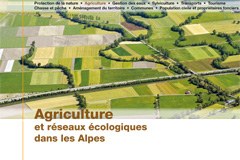
What significance do water management, tourism and agriculture have for ecological networks? Can measures in the transport sector have a positive effect for ecological corridors? How shall I design my garden to be a habitat for domestic plants and animals? These questions are answered by a series of eleven fact sheets provided by the Ecological Continuum Initiative.

What do the Julian Alps/Sl and the mountain La Salève/F have in common?
Both are examples of protected areas in the alpine bio-geographical region and are presented in the new publication of the European Commission "Natura 2000 - Protection of Biodiversity in Europe". A double page spread shows readers which animal and plant species are particularly in need of protection, how the areas are protected and what their condition in terms of preservation is.

New on-line portal for biodiversity in mountain areas
Recently, an on-line portal has been set up where those who are interested can find information on the many animal and plant species in mountain areas on an interactive digital map.
National parks in the mountains and the simulation of local participatory processes
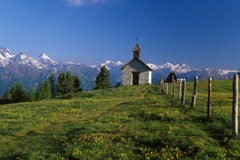
This year's first issue of the "Revue de géographie alpine" / "Journal of alpine research" presents research on protected mountain areas and the participatory processes in those areas. The five essays discuss questions such as: Do trends and political guidelines contribute to the identification of compromises and consensus, and to the rectification of previous follies in environmental policy?
Linking-up the German roads for animals and for a better traffic safety
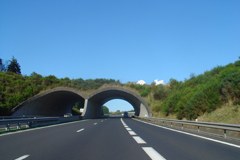
The German Government is developing a National Connectivity Programme which foresees to build wild animal crossings at the most important sites of migrating corridors. This year the first systematic research on ecological corridors in Germany has been finished, representing an important scientific groundwork for the implementation of the Programme.
Fire for the flowering meadows
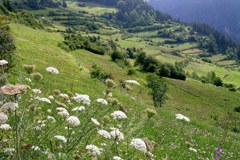
In 2010, the "Fire in the Alps" campaign once more draws our attention to a burning issue with its signal fires during the second week of August. This year, the imposing fires on the heights will burn "for the protection of the alpine flowers", as a contribution to the Year of Biodiversity 2010.

Maps and data on ECONNECT available online
The "GeoPortal" which is the central project repository for all spatial data and map products of ECONNECT is now online on http://gis.eurac.edu. Furthermore, the working group "Implementation strategy and data needs" has met to discuss the data situation at the current stage of the project.
Sharing connectivity knowledge within and beyond the Alps and visualising corridors and fragmentation
100 persons from eight European countries followed the invitation to the workshop in Grenoble, France, in November and used this opportunity for active knowledge transfer on ecological networks. The workshop discussions have helped the ECONNECT partners to agree on the appropriate methods which they are now using for modelling habitats and corridors for the whole Alps and for visualizing barriers.
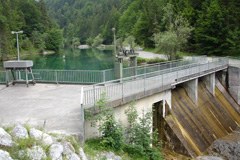
Alpine riverine landscapes: connectivity, barriers and fragmentation
How strongly is a river landscape fragmented? What are the most important barriers and obstacles in Alpine rivers? These questions are in the focus of the Institute of Ecology from University of Innsbruck within its ECONNECT activities. The results will be visualized with the help of GIS and contacts to regional watershed authorities established for the reduction of barrier impacts and restoration.

Ecological Connectivity and the Law: from barriers to instruments
Entering the second year of the ECONNECT project, the activities on legal barriers (Work Package 6) are steadily progressing. The two major fields of action are at the moment a comparative analysis of the legal frameworks of ecological connectivity in the Alps and the analysis of the legal situation in the pilot regions.
Understandable and visualised ECONNECT website
The ECONNECT website www.econnectproject.eu has recently been translated into the four project languages (French, German, Italian and Slovenian) and will soon be updated with maps.
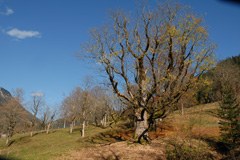
Berchtesgaden - Salzburg: Improving the ecological network of extensive grasslands
Extensively cultivated grasslands are important landscape elements for ecological connectivity in the pilot region Berchtesgaden - Salzburg. Improving these habitats will help to safeguard species such as butterflies, dragonflies or grasshoppers. This is one of the tasks of the subprojects within ECONNECT which are currently being finalised.
Rhaetian Triangle: new online tools and support for local initiatives
The Swiss National Park (SNP) is currently developing a web based tool to analyze barriers and corridors of the large pilot region Rhaetian Triangle. Furthermore, two local initiatives are concretely acting for the restoration of ecological connectivity. The new map application will allow comparing a freely defined area with other areas in the neighbourhood and identifying the fields with high need of action according to selected indices.
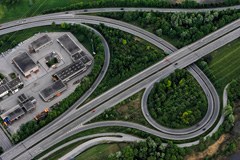
Alpi Marittime: Ecological corridors preventing car accidents
In the Italian Alpi Marittime Natural Park car crashes which involve ungulates are very common. In most cases those accidents, besides being hazardous for drivers' life, could have been avoided with a better territorial planning, a more careful infrastructure planning and a warier use of existing technologies. The Alpi Marittime natural park will make use of the new ways to help the passage for animals across busy roads, which have been tested in the Pilot region of Isère.
Northern Limestone Alps: Involving local population
In the three provinces of Upper and Lower Austria and Styria interviews with 170 stakeholders were held. People were asked about their knowledge, experience and ideas concerning the connectivity of habitats and possible barriers by using a questionnaire. These interviews aimed at receiving an overview of opinions on this theme as well as information on planned or ongoing projects dealing with ecological connectivity in the region.
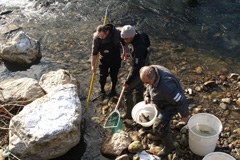
Isère Department: Tearing down the barriers
The French Isère Pilot Region is very active in the field of ecological connectivity. Besides ECONNECT, since February 2009 the region is engaged in another EU Project named "Paths of life". This project will last six years and has a budget of nine million Euro.
Austria: pressure caused by exploitation rose at the highest altitudes
All across Austria the tendency to build cableways and other skiing infrastructures inside the boundaries of protected areas and other high-value zones can be observed. The Austrian Alpine Club (OeAV) warns against the destruction of landscape and recreational resources in the Alps and demands a framework for a well-balanced territorial planning, in order to preserve the typical Alpine landscape.
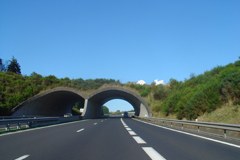
Green light for deer and lynx in the Alpine-Carpathian Corridor
In future, wild animals will be able to move more easily between the Alps and the adjoining Carpathian Mountains. That is the objective of the recently initiated cross-border project Alpine-Carpathian Corridor. The EU is providing approximately 2 million Euros for it.

Restoring the web of life: a new brochure designed to help you understand ecological networks
What is an ecological network? How can you create one and who does it involve? What are their roles? These are just some of the questions to which the recently published brochure Restoring the web of life: ecological network for more biodiversity in the Alps provides answers.
Conference searching solutions to adapt to climate change
The Berchtesgaden National Park and the Alpine Network of Protected Areas (ALPARC) organised an international conference on ecological networks and climate change. The conference "Alpine Ecological Network: a response to climate change that will preserve biodiversity?" took place in Berchtesgaden, Germany, on 15th and 16th October 2009.
International workshop on connectivity methods
More than 80 experts from all over Europe followed the invitation by the ECONNECT project to share and compare their individual experiences of fieldwork and innovative research methods regarding ecological connectivity in Grenoble, France, from the 4th to 6th of October 2009.
ECONNECT Project – Working full speed for implementing ecological networks
The ECONNECT project has completed half time of its project life. In the pilot regions the teams are highly committed with preparing the implementation of ecological networks on the ground.
Fourth meeting of the Platform
The Ecological Network Platform of the Alpine Convention held its fourth meeting on 1st December 2009 in Chamonix, France. The French Presidency presented the Platform work programme for the next two years.
Updated brochure and new eye-catcher posters on ecological networks in the Alps
Just in time for the International Year of Biodiversity, the Ecological Continuum Initiative has printed an updated version of the brochure on Ecological Networks in the Alps. With a new design, the brochure "Restoring the web of life - Ecological networks for more biodiversity in the Alps" illustrates the ecological connectivity topic and makes it understandable to a wide public.
Think tank: Bundling the Alps-wide expertise on ecological networks
As the Continuum Initiative decided to focus on further connectivity activities with long-term issues, the Continuum partners are now aiming at the preparation of follow-up projects beyond ECONNECT to ensure that the fundaments built up during this project can be used for further concerted implementation projects.
The Ecological Continuum Initiative in the International Year of Biodiversity
The International Year of Biodiversity, declared by the United Nations, represents even more encouragement for the Ecological Continuum Initiative to further develop its activities in preventing biodiversity loss in the Alps.
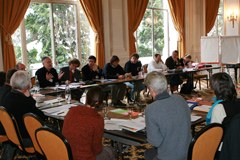
Harnessing expertise for ecological networks in the Alps
The Ecological Continuum Initiative has brought international experts together as part of a think tank whose long-term objective is to setup up an alpine-wide ecological network. The think tank provides the experts from the fields of science and practice with a framework for developing new projects to complement and follow up on existing activities such as the ECONNECT project.