
News
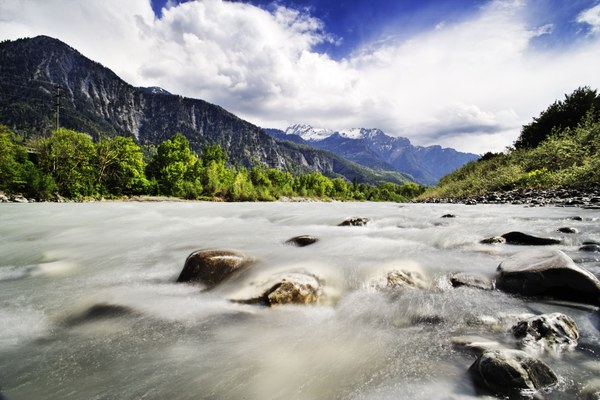
SPARE – Alpine rivers as society’s lifelines
What is the state of the Alpine rivers? How can we bring those responsible and other interested parties to committing themselves to holistic river management? The SPARE project strives to answer these and other questions. CIPRA and eight additional partners have launched the three-year project at a two-day meeting in Vienna in early February 2016.
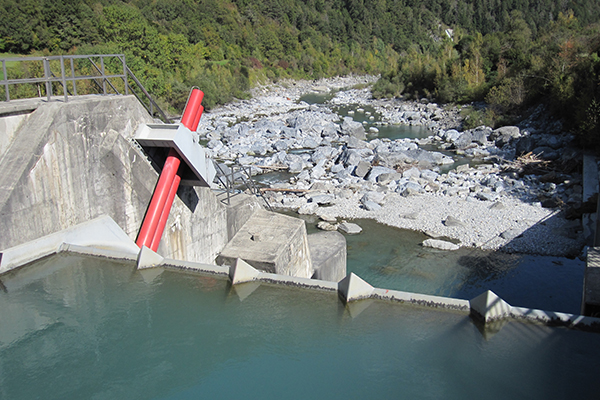
Better protection for Alpine rivers
A European legal ruling has strengthened the protection of Alpine rivers. Derogations for hydro plants or snow-making facilities are now more difficult to obtain. The politicians are up in arms.
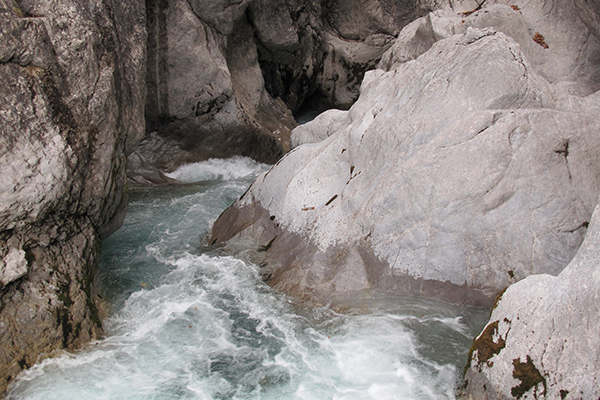
The real treasure of the Alps
A Swiss energy producer is to receive a prize for finding a successful compromise between the protection and use of water: while the head of the Upper Allgäu district authority has approved the building of a small power plant in a protected area over the head of his own officials. Two examples of the tension existing between conservation and the energy transition.
Salmon coming to the Rhine
From the Atlantic to the Alps: by 2020 the Rhine will once again be a home to salmon. These migratory fish will then be able to swim unhindered all the way to Basel -short-term by unconventional means where necessary.
"Landscape is not renewable"
Must the Alps really be squeezed to the last drop so they can contribute yet more to the energy transition? The CIPRA annual conference on "The Alps as a Water Trough" saw more passionate debate on this topic than any other.
National parks remove exotic fish species
Collecting what was released into the wild fifty years ago is the order of the day in the Gran Paradiso and Triglav National Parks, where the fish species introduced have had serious effects on the natural environment.
CIPRA's Annual Conference: "The Alps as a Water Trough"
The "blue gold" of the Alps is limited in quantity and thus in high demand for use as drinking water, snow or electricity. At its Annual Conference in Bozen/Bolzano in October 2013, CIPRA will be asking who has the right to this elixir of life and who has responsibility for it.
Alpine water resources in private hands?
The proposal from Brussels on the privatisation of water supplies is making waves on account of the content of the regulation and also the successful citizens' initiative that aims to stop it. Finally, this article explains why a joint strategy is needed, both for the Alpine space and for Europe.
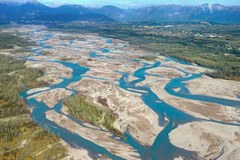
Respite for the "king of the Alpine rivers"
It looks like no gravel is to be extracted from the Tagliamento for the time being. The company that was planning to extract more than a million cubic metres of ballast between Cimano/I and the Arzino tributary has withdrawn its project.
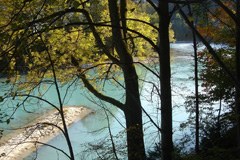
Power plant expansion on the Lech at the expense of nature conservation?
The Lech river in Bavaria/D is already being used on a massive scale for electricity generation, and only the stretch at Augsburg/D remains undeveloped. But even this section of the river could very soon become the site of a hydroelectric power plant. The expansion plans are not an isolated case; rather, they reflect a trend throughout the Alps, and one that is gathering momentum.
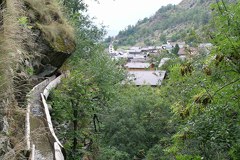
Swiss research into sustainable water use
Melting glaciers create new lakes in the Alps. This creates new tourism potential and new risks, such as floods and landslides, for the inhabitants of the valleys. Where and when are such lakes created? Who owns them and who is responsible for them?
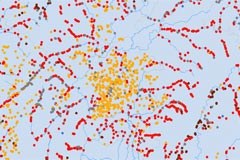
Obstacles and facilitations for the movement of fishes
An inventory of all the artificial barriers that impede the flow of rivers has found out that French rivers are interrupted by 60,000 dams, weirs, locks, mills etc. The inventory has been recently published as a online map where the works are shown divided by department, municipality or watercourse. All these works obstruct the movement of migratory aquatic organisms and the transport of sediments, thereby affecting ecosystems.
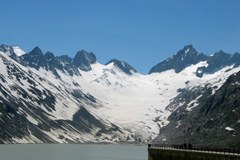
Toxic glacier melts
A new study has confirmed that melting glaciers release chemical substances that have long been banned and are not longer produced by industry. Researchers from Swiss education institutes took frozen sediment core samples from the Oberaar reservoir in the Grimsel area in Switzerland and used the layers to reconstruct the history of the lake back to when it was first established in 1953.
Report on the water resources of the Alps and climate change
An English-language report on the water household of the Alps in times of climate change was recently published under the title "Regional Climate Change and Adaptation - The Alps Facing the Challenge of Changing Water Resources". The authors consider specific options for adaptation to changes in the availability of water in the Alpine region, including the keys to success and the obstacles to be overcome.
II. Report on the State of the Alps feels the pulse of the Alpine watercourses
The Standing Secretariat of the Alpine Convention and an international group of experts under the joint chairmanship of Austria and Germany have compiled the 2nd Report on the State of the Alps focusing on "Water and Water Management Issues".
Is climate change drying up the Alps?
The Alpine range will continue to fulfil its role as central Europe's water tower in the future. But not without restrictions, according to the forecasts of a current study by a group of 20 experts commissioned by the European Environment Agency (EEA).
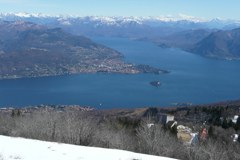
Early warning system for water scarcity in the Alps
The kick-off for the cross-border project "ALP-WATER-SCARCE: Water Management Strategies against Water Scarcity in the Alps" took place in Annecy/F in mid-October as part of the INTERREG Alpine Space Programme.
Latest issue of the Journal of Alpine Research
The latest publication in the bilingual series Journal of Alpine Research comprises four specialist articles on different topical issues. The first feature deals with the rivalry for public commodities, illustrated with the specific example of an irrigation system in northern Italy.
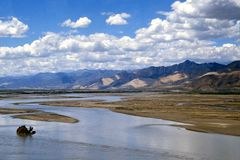
Water resources under threat in the Himalayas
Climate change is threatening the water reserves of East Asia. An estimated 50 percent of the water from the Himalayas comes from glaciers, permafrost zones and the snowmelt.
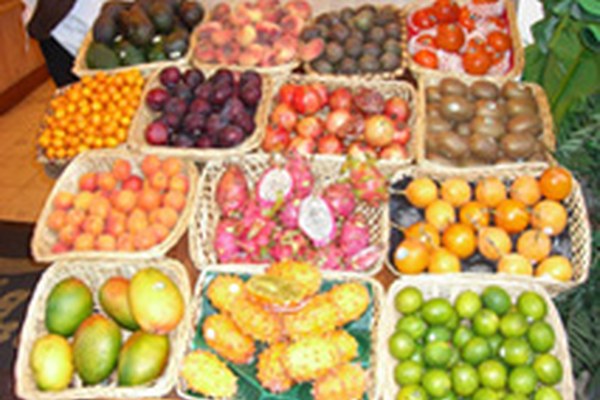
Rail tunnel ground water to heat a tropical greenhouse
In the future, the ground water that drains from the Lötschberg Base Tunnel at a temperature of 20°C will be piped into a tropical greenhouse which is to be built at the northern portal in Frutigen/CH to produce fish and tropical fruit, and also to heat the administration building.
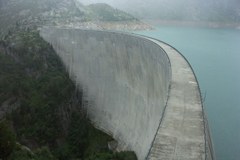
New publication on mountain dams
The new March issue of the bilingual magazine La revue de géographie alpine / Journal of Alpine Research looks at impoundment dams and new challenges in mountain areas.
Award for sustainable projects in water management
This year again Swiss Re, a major reinsurance company, presented its ReSource Award. This Award is bestowed to innovative projects in water management as part of an annual competition.
Swiss Mountain Award 2008
The Swiss Mountain Award is to be presented this year for the fourth time in a row by the Government Conference of the Mountain Cantons.
Economic and ecological effects of artificial snow
A new study by the Swiss Federal Institute for Forest, Snow and Landscape Research (WSL) highlights the effects of technical snow-making systems on the regional economy, the use of resources and the environment.
Swiss Mountain Water Award 2007
This year again, the Swiss Mountain Water Award initiated by the Government Conference of the Mountain Cantons is to be held for the third year running since 2005, with prize money worth CHF 50,000.
Rainfall can trigger earthquakes
A new study shows causal links between rainfall and earth tremors.
Slovenia: plans for a series of hydraulic power plants
Slovenia has granted concessions for the planning of a series of power plants along the Mura, Drava and Sava rivers. The International Committee for the Protection of the Mura River Unsere Mur - Nasa Mura, founded in spring 2006, is opposing this threat to precious river landscapes of the Alps and pre-Alps.
International events on "Water in the Mountains"
The 2nd "Water in Mountains" International Congress on "Integrated Management of High Watersheds - Implementing the European Water-Framework Directive" is to be held in Megève/F from 20 to 22 September 2006.
Water consumption high despite dry spells
(27.01.2006) According to data from Arpa Piemonte the Piedmont region/IT had only half the amount of its usual rainfall last year (430 mm). The consequences of this dry spell now include a lack of drinking water and low water levels in the region's lakes.
New issue of the Journal of Alpine Research series
The latest issue of the Revue de Géographie Alpine series comprises five specialist articles on a variety of topics. One article examines the causes of flooding and the measures that are necessary to prevent it based on the example of the Isère/F region while another article focuses on sustainable water management in general.