
News
ECONNECT's battle and success with data management
In order to analyse and visualize connectivity on an alpine-wide level as well as on a regional level for the seven Pilot Areas ECONNECT partners needed geographic data.
Innovative online tools to assess and visualise connectivity
Real connectivity depends on a comprehensive planning process. The complex system of interactions and mechanisms in human societies calls for an analytic and comprehensive approach.
Alpine barriers and the way they affect species
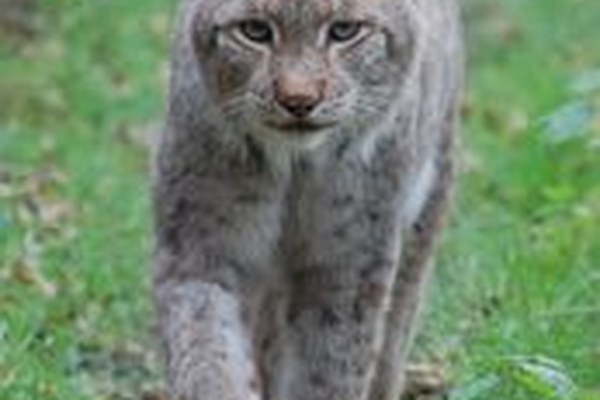
ECONNECT researchers analysed how barriers affect selected species: lynx, brown bear, wolf, red deer, black grouse, griffon vulture, bullhead and fish otter. For the terrestrial species they found out that altitude and forest availability are the major factors influencing species distribution.
The promotion of a common Legal Framework
The Alps consist of eight different countries, each of which has its own legal framework. A specific working group provided an overview of the different legislations in force at various governance levels that potentially affect ecological connectivity.
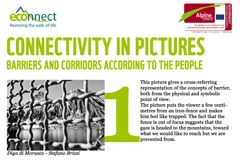
Connectivity in pictures
Besides classic communication tools such as newsletters and press releases ECONNECT used innovative tools to raise awareness among the general public and the stakeholders.
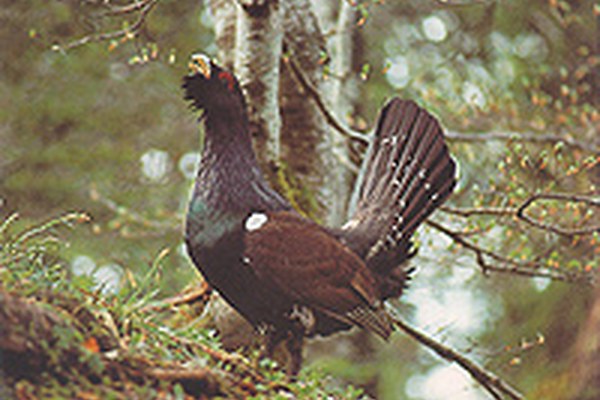
Benefit for wood picker, capercaillie and co.
In ECONNECT's Pilot Regions a number of actions were implemented improving connectivity for selected species and habitats.
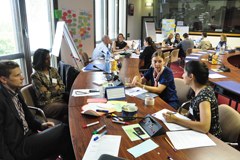
Sharing experience to strengthen green infrastructure
How can green infrastructure and its contribution to the provision of a wide range of ecosystem services be strengthened at different spatial scales? An expert workshop on 'Green infrastructure policies and projects' aimed to answer this question. The workshop took place in Brussels on 7 September 2011 and was organised by Ecologic Institute with support from GHK and Institute for European Environmental Policy.
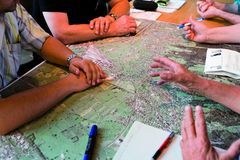
One step further towards ecological connectivity in France
The French law on ecological networks ("trame verte et bleue") has recently been updated with two decrees, which asses and divide the implementation roles of the state and the regions. Further information: www.actu-environnement.com/ae/news
Life+ Projects increasing ecological connections along the Alps-Apennines corridor and in Lapland
In the frame of the LIFE+ Nature & Biodiversity programme 2010 two projects regarding ecological connectivity have been implemented. The objective of the project in Lombardy, Italy, is to increase the functionality of the ecological corridor between the Alps and the Apennines.
NGOs send joint message on the EU biodiversity strategy
A group of 22 nature conservation NGOs, joined in The European Habitat Forum EHF, have expressed their beliefs that increased political effort is required at EU and Member State level to meet the new EU biodiversity target of halting the loss of biodiversity and ecosystem services in the EU by 2020.
From ecological islands to connected landscapes
Many animals live in particular outside of protected areas; most persons are not aware of the importance of ecological networks; a functioning economy needs biodiversity. These are the most important findings of ECONNECT. The Alpine-wide project came to its end in November 2011 after a bit more than three years of work.
The Alps are renewed in Poschiavo
On what sort of resources are the Alps building their future? Can climate change be an opportunity? What ought to be done to ensure that young people have prospects? The Alpine Week being held in the Swiss valley of Val Poschiavo from 5 to 8 September 2012 aims to discuss just how renewable the Alps actually are.
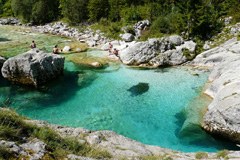
Soča valley soon under water?
The proposal was made by Slovenia's Ministry of Economic Affairs just before the summer break. Five hydroelectric power plants are to be built on the Soča river and its tributaries, the Ucja and Idrijca.
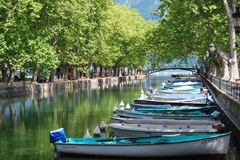
Annecy is the Alpine Town of the Year 2012
For years now the French town of Annecy has been pursuing a policy of sustainability. As a reward for its efforts the principal town of the Haute-Savoie département and its 53,000 inhabitants have been nominated as the Alpine Town of the Year 2012.
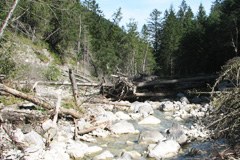
Green electricity for Liechtenstein
As of next year the electricity flowing out of Liechtenstein's power sockets will be sourced exclusively from renewable energies, but only in private households that do not insist on the previous mix of nuclear energy and fossil fuels.

Eight new nature parks in Switzerland
The first national park in the Alps was established in the Engadine in 1914. Since then there have been very few efforts in Switzerland to create other protected areas.
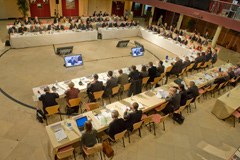
The Alpine Region as a macro-region?
The EU already has a macro-region strategy for the Danube Region and the Baltic Sea. So why not also for the Alpine Region? At the beginning of July, the Arge Alp Working Group advocated a resolution calling for a "macro-region for the Alps".
Climate plan for South Tyrol
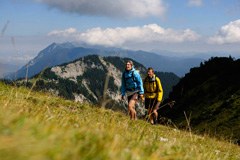
The Province of Bolzano wants to become more energy efficient by 2050. Every inhabitant of the Province currently produces around five tonnes of carbon dioxide. The aim is to cut that figure to a mere 1.5 tonnes over the next forty years.
From road to rail - getting it to work
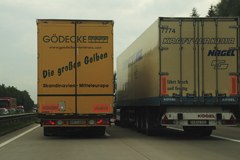
Crossing Exchange, emissions trading or a differentiated toll system for the Alps: these transport policy instruments could ensure that in future there are fewer HGVs trucking through the Alps - providing the instruments apply to the Alpine region as a whole.
First solar-powered bus now on the road
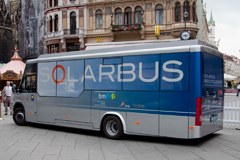
Since July Europe's first ever electric bus powered exclusively by solar energy has been operating in Perchtoldsdorf/A. The public transport bus seats up to 35 passengers.
Respite for the "king of the Alpine rivers"
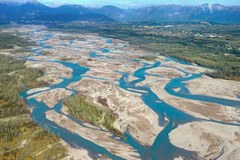
It looks like no gravel is to be extracted from the Tagliamento for the time being. The company that was planning to extract more than a million cubic metres of ballast between Cimano/I and the Arzino tributary has withdrawn its project.
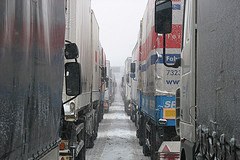
Eurovignette III: no HGV toll for the Alps
In the future haulage companies in the EU could have to pay for environmental damage. The EP Transport Committee has agreed to the proposal. But environmental organisations feel the proposal does not go far enough - especially in the Alps.
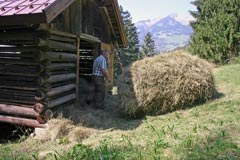
Common Agricultural Policy for the Alps
A new Common Agricultural Policy (CAP) is being negotiated in Brussels/BE. And as the CAP is also to take account of the particular conditions of agriculture in the Alps, in April the ministers of the Alpine states drew up a declaration at the International Mountain Region Conference in Oberammergau/D.

The spectacle of a new Mont Blanc cable car
Ground-breaking ceremony for Courmayeur/I's new cable car up to the Pointe Helbronner: Over a four-year construction period the glass and steel colossus, which is set to cost over EUR 100 million, is to replace the installation built in the 1940s and 1950s - and showcase the Mont Blanc even more magnificently.
Belgian support for the protection of the Alps
Established in Belgium at the start of the year, the ALPY Association "Alpen en Pyreneeën, Ontdekken en Ondersteunen" is committed to sustainable development in the Pyrenees and the Alps.
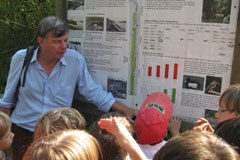
New tool for custom-made connectivity solutions
Do you want to facilitate the migration of animals within and between their habitats? There are many different ways to do this. Whether you are a farmer, a mayor or leading a tourist company: the detailed search of the new online "measures catalogue" shows you possible activities to improve ecological connectivity that are adapted to your individual situation.
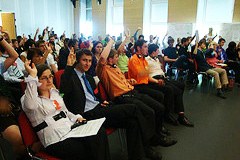
Youth Parliament of the Alpine Convention convened in Herisau
The outcome of the event held from March 29 to April 1 is a 13-page resolution catalogue. It illustrates how important young people feel about being able to shape a viable future for the alpine region. "Transport and Transit" was the theme of this year's meeting.
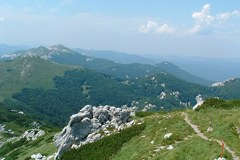
Dinaric Alps Conference: laying the foundations for the protection of the Dinaric Alps
The countries of the Dinaric Alps met in Brdo near Kranj, Slovenia, on March 8 and 9 for the first ever Dinaric Alps Conference. Concurrently the ministers of the Alpine states convened at the 11th Alpine Conference.
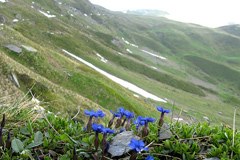
Loss of biodiversity in the mountains particularly severe
A study carried out across Europe using new measurement methods has shown that climate change impacting particularly heavily on plants in mountain regions. The vastly different mountain ecosystems are being recorded on a very small and accurate scale using special computer models.
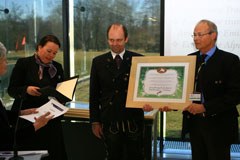
Five Econnect pilot regions officially rewarded at the Alpine Conference
On 8 March 2011 the Alpine Conference has officially recognised and rewarded eight Alpine regions - among which five Econnect pilot regions - for their exemplary work aiming at the creation of an alpine ecological network.