
Positions
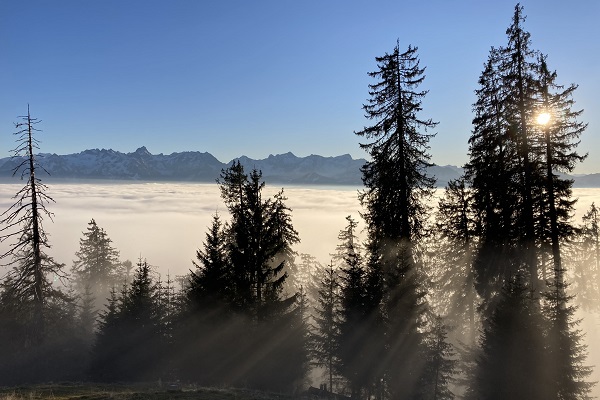
Alpine landscape is not renewable!
Landscape is a key to negotiating social and political issues. CIPRA has taken up these issues as part of its Alpine-wide priority theme “Landscape” 2019-2020. This position paper, which was developed in a broad and participatory process with CIPRA representatives, young Alpine women and experts from all Alpine countries, is the conclusion of this priority theme.

Solstice in winter tourism
Tourism has brought wealth to the Alps. In many regions it remains an important source of income, but lack of economic diversification is also a risk. The importance and orientation of tourism differs strongly among Alpine countries, but all of them need new strategies and approaches to cope with shifts in visitor behaviour and climate change. A socio-economic transformation is needed that takes account of tourism’s past, present and future potential.
cc.alps: CIPRA Demands on Nature Protection
When climate changes, nature feels it. Mountain areas are particularly sensitive, and the greatest losses in terms of plant and animal species may occur precisely there. According to scientific estimates, almost every second plant species in the Alps is threatened with extinc-tion by 2100. For the flora with the highest number of varieties in Central Europe this would be an enormous loss. Because of global warming, also well-known animal species such as the Alpine ibex, the snow grouse and the mountain hare will experience far worse living con-ditions in the Alps.
Declaration on protected areas in European mountain regions, Chambéry 2002
The Declaration on Protected Areas in European Mountain Regions emphasises the significance of biological and geological resources and water reserves in mountain regions. It stresses the necessity of targeted development and conservation measures as well as regional co-operation. Protected areas can serve as an experimental field for the development of conservation measures. Concrete steps proposed for the period 2003-2005 include the creation, in each European massif, of a mountain co-operation committee with representatives of governmental and non-governmental organisations. One of the tasks of the committees is to help disseminate information about models and methods to implement nature conservation and to transfer knowledge from research to improve the management of protected areas and sustainable development. Other important factors include encouraging partnerships, networks and joint projects as well as developing strategies for the active participation of populations.