
Demands
The countries in the Alps must take all the necessary measures to slow down climate change. At the same time they must prepare for global warming and mitigate its consequences. Intelligent, sustainable action is essential. All programmes must be checked for sustainability: are they environmentally and socially acceptable? Are the benefits greater than the negative consequences? Climate protection is a matter of life and death for the Alps – but nothing is gained if this triggers other environmental problems. CIPRA demands actions in the key areas of energy, protection of nature, transport, building and renovation, tourism, spatial planning, agriculture, forestry, water and energy self-sufficiency at the regional level.
cc.alps compacts
Through the project “cc.alps” CIPRA investigated climate measures in the Alps. CIPRA brought together climate protection and climate adaptation activities in the Alps (hereinafter these activities are defined as climate measures) and analysed what effects these climate measures have on the environment, economy and society. The “CIPRA compact” collection within cc.alps features various theme books that deal critically with climate measures in the Alps. The collection comprises the fields of activity: energy, building and construction, energy self-sufficient regions, spatial planning, transport, tourism, nature protection, agriculture, forestry and water. Read More…
Climate change: cc.alps looked many steps further
With the recently published compact "Water in climate change" the project "cc.alps - climate change: looking one step further" has come to an end. In the last four years, CIPRA International together with a wide range of experts and practitioners has shown what intelligent climate activities should look like. Read More…

Healthy, natural forests: responding to climate change! cc.alps: CIPRA's demands for forest management
As forestry measures have long-term effects, adaptation of the forests to new climate conditions is urgently needed - but it should be initiated with great caution. The carbon storage ability of forests has to be exploited. Wood should first be used as a raw and building material; only under certain circumstances it should be used for heating. Short regional exploitation cycles are to be created. Natural forests should be fostered as they are more resilient to climate change. Forest owners who in the interest of climate protection give up part of their earnings should be compensated. Finally targeted research into practical climate adaptation measures has to become an important long-term task. Read More…

Improvements in efficiency instead of damage to the environment! cc.alps: CIPRA's demands on the subject of water
The rivers of the Alps provide 170 million people with water. Climate change will greatly reduce the availability of water in the Alps and beyond, with less rain, longer dry periods in summer and greatly reduced snowfalls in winter among the predicted consequences. The demands made of this natural resource will increase accordingly, as will competition between the various user groups. Today only about 10% of the rivers and streams of the Alps can be considered ecologically intact, i.e. they are neither polluted nor over-engineered nor compromised in terms of their flow regimes. The ecological quality of waterways and related habitats therefore calls for improvement, not further impairment. We cannot permit the last rivers to become engineered structures or depleted by the excessive abstraction of water. Read More…

cc.alps: CIPRA's demands for agriculture
The agricultural sector is directly affected by climate change impacts but it also contributes to the release of greenhouse gases (GHG) and rising concentrations of GHG in the atmosphere. A sustainable climate response strategy in the field of agriculture involves anticipating, planning and long-term thinking from farm level to transnational level. Prominent fields of activity are sustainable land and soil management, sustainable water management, managing manure and soil carbon as well as organic agriculture as an overall strategy. As agriculture is a highly subsidized economic sector, subvention policy can be used as a lever to guide the sector to sustainability and climate neutrality. Read More…
cc.alps climate project: win-win with science
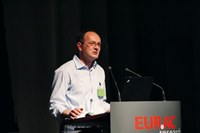
Swiss economic geographer Bruno Abegg has been working with CIPRA for three years. A scientist and a political organisation – how can that work? “It is a clash between two ways of thinking,” says the 45-year-old, which is precisely what he finds so exciting. As the scientific director of the cc.alps project he examines the way in which regions, communities and businesses in the Alps are responding to climate change. CIPRA campaigns to ensure that climate response measures are sustainable. “My research work has always been application-oriented,” says Abegg, “which is why it’s important to me that my findings flow into practical work for the environment.” Read More…
Only climate-friendly tourism is sustainable: cc.alps - CIPRA’s demands for tourism in climate change
Climate change is a major challenge to Alpine tourism. It has to adapt to climate change and at the same time become more climate-friendly. There is a particularly large potential for reduction of CO2 emissions in the key areas of traffic and energy. Tourism is a branch of the economy which is heavily subsidized. Therefore public policy can and must direct developments towards sustainability through the support given to tourism. The present discussion about developments in the tourism industry is dominated by the large chair lift companies which are essentially fixed on ski tourism and the maintenance of the status quo. But focusing only on snow and skiing means promoting a capital-intensive, highly technological form of Alpine tourism and a monoculture. This is neither climatologically nor environmentally sustainable. Read More…
cc.alps: CIPRA Demands – Energy self-sufficient regions
Not having to depend on energy imports: this vision holds great fascination for many regions. Self-sufficiency is “in.” There are already many very positive approaches and examples of attempts to go down this road. At the heart of all the concepts is the idea of meeting demand through regional renewable sources of energy, saving energy and using energy more efficiently. Anyone who systematically takes this approach in an attempt to create an energy self-sufficient region changes the face of their region and its structures – to the benefit of their own economy, society and the environment. Read More…
cc.alps showcases future mobility in the Alps
In September CIPRA focused on the issue of sustainable mobility and transport as part of cc.alps and co-organised two events on these topics. Read More…
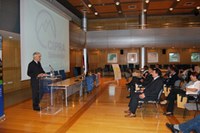
cc.alps is on the move throughout the Alps!
Showcasing cc.alps results and raising the awareness of target groups at events throughout the Alps remains firmly on the agenda for 2010, too. Read More…
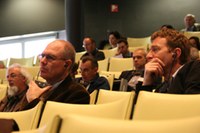
"Cool heads in the hothouse!" Interview with a cc.alps award winner
"30 per cent are 'converts' from cars to public transport!" Switzerland's IG bus alpin community of interests picked up one of prizes worth EUR 10,000 in the cc.alps competition. cc.alps team member Christine Székely spoke to Samuel Bernhard, the IG bus alpin project manager, about the successful project. Read More…

cc.alps on the international climate stage
In 2009 the cc.alps project team attended a wide range of international events where it presented the results of the project. Read More…
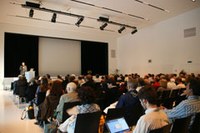
"Cool heads in the hothouse!": Interview with a cc.alps award winner
"Everyone wants to do their bit!" On 6 November 2008 CIPRA rewarded the seven best measures submitted to the cc.alps competition. The Oberallgäu municipality of Wildpoldsried/D won one of the three main prizes for its activities in the area of energy efficiency. Andrea Skiba from the cc.alps team spoke to the Mayor of Wildpoldsried, Arno Zengerle, about their success. Read More…

New content for www.cipra.org/cc.alps
The cc.alps website now offers additional in-depth content in the form of Compacts. Regular updates and additions are planned. For each topic, CIPRA has drawn up a list of demands, which can be downloaded separately from its website at www.cipra.org/de/cc.alps/ergebnisse (de/fr/it/sl). Read More…
cc.alps to continue in 2010
The cc.alps project continues in 2010 with a focus on more in-depth research and dissemination of the knowledge generated, above all by promoting specific projects at the municipal level, and also by organising and participating in international events. Read More…
cc.alps: CIPRA Demands on Spatial Planning
The Alps are different. The Alpine range is characterized by special features that need to be taken into account in spatial development and climate protection. Read More…
cc.alps: CIPRA demands on transport
Transport, in particular by car and truck, is one of the main causes of climate change. In the Alpine countries transport accounts for more than 25 percent of the release of greenhouse gases and is of special importance in the increase of these gases since 1990. A wrong development, running counter to the political objective to reduce exhaust emissions. In the Alps, the percentage of journeys made by car is higher than European average. Read More…
cc.alps: CIPRA Demands on Nature Protection
When climate changes, nature feels it. Mountain areas are particularly sensitive, and the greatest losses in terms of plant and animal species may occur precisely there. According to scientific estimates, almost every second plant species in the Alps is threatened with extinc-tion by 2100. For the flora with the highest number of varieties in Central Europe this would be an enormous loss. Because of global warming, also well-known animal species such as the Alpine ibex, the snow grouse and the mountain hare will experience far worse living con-ditions in the Alps. Read More…
cc.alps: CIPRA Demands on Energy
In order to limit global warming, first of all it is important that we use energy more efficiently. Yet this will not be enough for operating in a way that climate can sustain. We must radically change our energy consumption and our consumption of energy-intensive goods and services. Experience shows that consumption only goes down when clear political signals are sent - which include legislative initiatives, rewarding energy saving and punishing waste. The switch from fossil to renewable energies must be forced - but not to the detriment of nature. Biomass production, the installation of wind power turbines and new hydroelectric power stations in the Alps hide many potential conflicts. The environmental, social and economic consequences of climate projects must be carefully assessed and compared. Read More…
cc.alps concentrates on raising awareness during the second half of 2009!
The Swiss MAVA Foundation for Nature is making further funding available to the CIPRA cc.alps Project in the second half of 2009. Read More…
The Climate in the Alps is much prized - CIPRA Competition cc.alps: win prizes worth up to €20,000 each
Prizes worth a total of €100,000 await the best measures aimed at a sustainable approach to the consequences of climate change in the Alpine region. CIPRA, the International Commission for the Protection of the Alps, has just launched this competition as part of its cc.alps Project. Read More…
The Alps as a Model Climate Region: cc.alps shows how it's done
Climate change is affecting the Alps more than other regions of Europe. That's why in many areas measures are now being adopted and prepared to reduce, or adapt to, climate change. CIPRA's new project "cc.alps" is designed to help ensure that these climate response measures are in keeping with the principle of sustainable development as far as possible. Read More…