
Search
2903 items matching your search terms.
Transnational ecological networks - history, status quo and potentials
The TransEcoNet Final Symposium presented in March 2012 the results of more than three years of project work. It provided an interdisciplinary view on transnational ecological networks in Central Europe and beyond.
News
Swiss want to see fewer second homes
Most Swiss people have approved the "Stop the never-ending building of second homes" initiative, providing mountain communities with more protection for landscapes. But the building moratorium is not universally popular.
News
Alps overrun by traffic
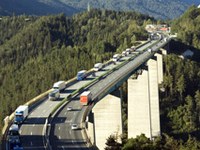
Never before have such large quantities of goods been transported through Switzerland as in 2011. The title of "Transit Route Number 1", however, goes to the Brenner Pass.
News
Healthy, natural forests: responding to climate change! cc.alps: CIPRA's demands for forest management
As forestry measures have long-term effects, adaptation of the forests to new climate conditions is urgently needed - but it should be initiated with great caution. The carbon storage ability of forests has to be exploited. Wood should first be used as a raw and building material; only under certain circumstances it should be used for heating. Short regional exploitation cycles are to be created. Natural forests should be fostered as they are more resilient to climate change. Forest owners who in the interest of climate protection give up part of their earnings should be compensated. Finally targeted research into practical climate adaptation measures has to become an important long-term task.
Position
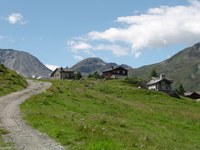
Swiss-Italian cooperation in favor of ecological connectivity
During the last Alpine Conference in March 2011 the Alpine Convention officially nominated 8 pilot regions for ecological connectivity in the Alps.
News
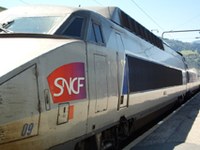
Lyon-Turin: Environment Ministry gives bad marks
Criticism of the planned Lyon-Turin rail line is growing: environmental organisations have rejected the megaproject, as has the conservative UMP party in Savoy. The French Environment Ministry is now also expressing doubts.
News
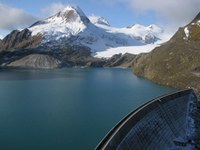
CIPRA's point of view: Water on!
Austria's checklist for the building of hydroelectric power plants is technically sound, offering transparency for building permits, but no protection for ecologically intact waters.
News
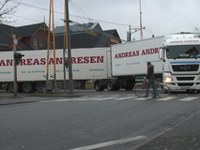
Are XXL trucks coming to the Alps next?
The European Union is seeking advice on authorising "gigaliners". These 25-metre trucks are intended to promote climate protection - at the expense of rail transport and infrastructure.
News
CIPRA receives the Dutch Sustainability Award
In an on-line ballot, Dutch mountaineers voted CIPRA the 2012 Sustainability Organisation of the Year. This is the first time the Sustainability Award has been made by the Royal Dutch Mountaineering and Climbing Club.
Press/Media release
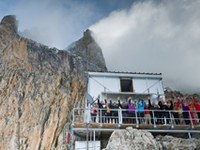
CIPRA's point of view: An appeal for the mountains
Bigger, faster, further: not even the mountains are immune to this mantra of growth. CIPRA France is thus seeking visions for a sustainable future for both people and mountains.
News
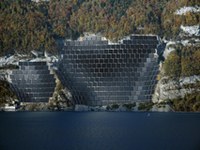
Solar installations in Switzerland: innovative yet infuriating
Solar modules on ski lifts and mountain-slopes: the legacy of Fukushima and rising electricity prices mean that creative solutions are needed for power production. We offer a summary of Swiss megaprojects and world premieres.
News
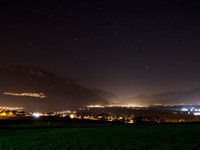
Liechtenstein switches the lights out
The first state in the world to go dark: in January and February Liechtenstein is conducting experiments in bird protection, energy efficiency and public safety.
News

Improvements in efficiency instead of damage to the environment! cc.alps: CIPRA's demands on the subject of water
The rivers of the Alps provide 170 million people with water. Climate change will greatly reduce the availability of water in the Alps and beyond, with less rain, longer dry periods in summer and greatly reduced snowfalls in winter among the predicted consequences. The demands made of this natural resource will increase accordingly, as will competition between the various user groups. Today only about 10% of the rivers and streams of the Alps can be considered ecologically intact, i.e. they are neither polluted nor over-engineered nor compromised in terms of their flow regimes. The ecological quality of waterways and related habitats therefore calls for improvement, not further impairment. We cannot permit the last rivers to become engineered structures or depleted by the excessive abstraction of water.
Position
Documentation on ECONNECT results now available
The ECONNECT partners have now compiled their results in a series of publications. There are dedicated reports for ECONNECT's key target groups: all different kinds of stakeholders (final booklet), experts (synopsis, species reports, reports on legal barriers), policy makers (policy recommendations) and practitioners (implementation recommendations).
News
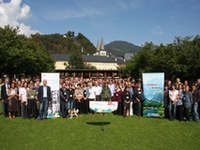
ECONNECT's results discussed at the final conference
After three years of research and fieldwork, the ECONNECT project has come to a conclusion. From 26 to 28 September political representatives of the six Alpine countries as well as experts and scientific researchers from local and international institutions attended ECONNECT's final conference in Berchtesgaden, Germany.
News
ECONNECT's battle and success with data management
In order to analyse and visualize connectivity on an alpine-wide level as well as on a regional level for the seven Pilot Areas ECONNECT partners needed geographic data.
News
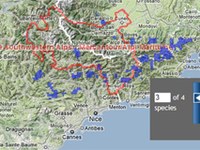
Innovative online tools to assess and visualise connectivity
Real connectivity depends on a comprehensive planning process. The complex system of interactions and mechanisms in human societies calls for an analytic and comprehensive approach.
News

Alpine barriers and the way they affect species
ECONNECT researchers analysed how barriers affect selected species: lynx, brown bear, wolf, red deer, black grouse, griffon vulture, bullhead and fish otter. For the terrestrial species they found out that altitude and forest availability are the major factors influencing species distribution.
News

The promotion of a common Legal Framework
The Alps consist of eight different countries, each of which has its own legal framework. A specific working group provided an overview of the different legislations in force at various governance levels that potentially affect ecological connectivity.
News
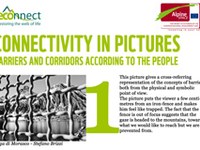
Connectivity in pictures
Besides classic communication tools such as newsletters and press releases ECONNECT used innovative tools to raise awareness among the general public and the stakeholders.
News
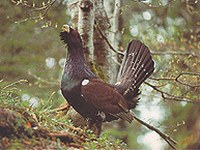
Benefit for wood picker, capercaillie and co.
In ECONNECT's Pilot Regions a number of actions were implemented improving connectivity for selected species and habitats.
News
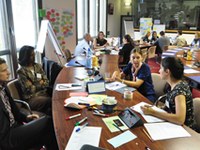
Sharing experience to strengthen green infrastructure
How can green infrastructure and its contribution to the provision of a wide range of ecosystem services be strengthened at different spatial scales? An expert workshop on 'Green infrastructure policies and projects' aimed to answer this question. The workshop took place in Brussels on 7 September 2011 and was organised by Ecologic Institute with support from GHK and Institute for European Environmental Policy.
News
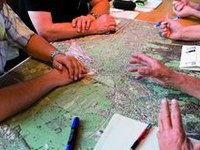
One step further towards ecological connectivity in France
The French law on ecological networks ("trame verte et bleue") has recently been updated with two decrees, which asses and divide the implementation roles of the state and the regions. Further information: www.actu-environnement.com/ae/news
News
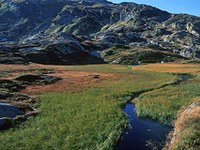
Life+ Projects increasing ecological connections along the Alps-Apennines corridor and in Lapland
In the frame of the LIFE+ Nature & Biodiversity programme 2010 two projects regarding ecological connectivity have been implemented. The objective of the project in Lombardy, Italy, is to increase the functionality of the ecological corridor between the Alps and the Apennines.
News
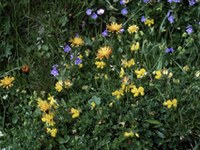
NGOs send joint message on the EU biodiversity strategy
A group of 22 nature conservation NGOs, joined in The European Habitat Forum EHF, have expressed their beliefs that increased political effort is required at EU and Member State level to meet the new EU biodiversity target of halting the loss of biodiversity and ecosystem services in the EU by 2020.
News
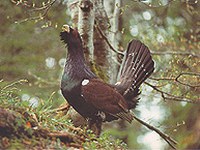
From ecological islands to connected landscapes
Many animals live in particular outside of protected areas; most persons are not aware of the importance of ecological networks; a functioning economy needs biodiversity. These are the most important findings of ECONNECT. The Alpine-wide project came to its end in November 2011 after a bit more than three years of work.
News
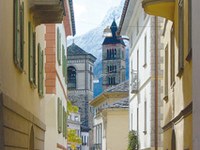
The Alps are renewed in Poschiavo
On what sort of resources are the Alps building their future? Can climate change be an opportunity? What ought to be done to ensure that young people have prospects? The Alpine Week being held in the Swiss valley of Val Poschiavo from 5 to 8 September 2012 aims to discuss just how renewable the Alps actually are.
News
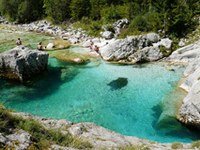
Soča valley soon under water?
The proposal was made by Slovenia's Ministry of Economic Affairs just before the summer break. Five hydroelectric power plants are to be built on the Soča river and its tributaries, the Ucja and Idrijca.
News
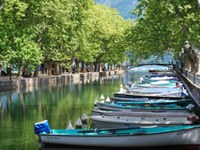
Annecy is the Alpine Town of the Year 2012
For years now the French town of Annecy has been pursuing a policy of sustainability. As a reward for its efforts the principal town of the Haute-Savoie département and its 53,000 inhabitants have been nominated as the Alpine Town of the Year 2012.
News
Green electricity for Liechtenstein
As of next year the electricity flowing out of Liechtenstein's power sockets will be sourced exclusively from renewable energies, but only in private households that do not insist on the previous mix of nuclear energy and fossil fuels.