
Search
315 items matching your search terms.
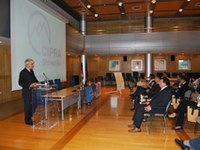
cc.alps showcases future mobility in the Alps
In September CIPRA focused on the issue of sustainable mobility and transport as part of cc.alps and co-organised two events on these topics.
News
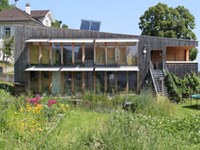
climalp video: living in a plus-energy house
CIPRA's climalp project demonstrates that energy-efficient houses built using regionally sourced timber are highly beneficial when it comes to living comfort, the climate, and the regional economy. A recent video featuring the single-family home of the Götz family built in Switzerland's Rhine valley in 2004 illustrates what sustainable, climate-friendly building can look like in practice.
News
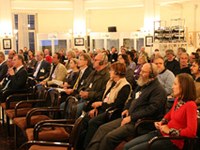
CIPRA Yearly Symposium 2010: "The Alps Adapting to Change"
CIPRA's 54th Yearly Symposium was held in Semmering/A (14-16 October 2010) to the motto of "The Alps Adapting to Change - Peripheral Regions Between Wasteland and Hope". It clearly showed that decision-makers are only now beginning to perceive the problems remote areas within the Alps are faced with. Unsurprisingly there were no patent remedies to the problems these areas have to contend with - indeed the circumstances and claims to exploitation in individual regions of the Alps are far too diverse and need to be countered in just as many ways. What remains is a need for debate and action for a sustainable, future-orientated development of peripheral rural regions in the Alps.
News
European mountain areas: focusing on trendsetting projects
In mid-September 350 experts and interested participants from 23 countries gathered in Lillehammer/NO to discuss the implementation of innovative projects in European mountain areas. By now in the mountains of Europe there are already multiple trendsetting projects in progress. One of the conclusions reached by the experts is that a better usage needs to be made of that potential, and that it also needs to be expanded further.
News
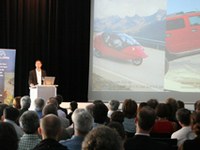
CIPRA Yearly Symposium: marginal creativity...
This year's CIPRA Symposium focuses on the socio-economic margins of the Alps. Why "margins"? Because the nearest hospital is a far away and the post office is only open in the morning; because the towns and cities are beckoning, and nature is gaining more and more ground. The prevailing process of urbanisation has little in the way of prospects to offer these mountain regions, whose potential is already low.
News
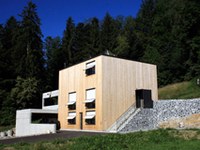
Discovering common ground
Liechtenstein is a small country, so you’re always bumping into people. And although everybody sort of knows everybody else, they don’t really. Energy-efficient construction is a bit like that. Or rather, it was until October 2009. It was then that CIPRA, which is better known for using its climalp project (see box) to circulate know-how on energy-efficient construction and renovation throughout the Alps, brought its own people together for a change.
News
Towards happy shrinking
Always more - the world will become better and better as long as material well-being grows. Nobody asks what this costs…until the system collapses. The present financial and economic crisis is giving us a taste of it. The Alps are now among the losers, but could be among the winners if they rise to the challenge. Must growth in principle be rejected?
News
New compacts on Transport and Spatial Planning now online
The assessments of climate response measures for the areas of Transport and Spatial Planning have been available online since the end of February. Both background reports (or "compacts") can be downloaded from www.cipra.org/en/cc.alps (de, en).
News
The new CIPRA compacts Traffic and Spatial Planning are on-line
The results of the climate protection measures taken in the areas of 'Traffic' and 'Spatial Planning' are now accessible on-line. At www.cipra.org/en/cc.alps (de/en) both of the background reports - so-called 'CIPRA compacts' - 'Traffic and Climate Change' and 'Spatial Planning and Climate Change' can be downloaded.
News
Modern architecture in the Alps
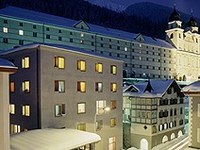
The building methods which have typically been used in Alpine regions have always focused on the needs of the population living there and the necessities of survival. It is therefore an architectural style which has been dictated by the limitations and peculiarities of the regions themselves. The old buildings which are today considered typical or traditional are not the result of informed decisions, but the consequences of necessity. The different settlements, houses, stables, places of worship and outbuildings were built not according to particular architectural styles or personal tastes, but as a consequence of binding criteria and based on a balance which had to be struck. So is there such a thing as a modern architecture in the Alps? Additional relevant material on the issue can be found in other language versions of this page.
Dossier
The construction industry as a key to the problem of climate change
The information provided through cc.alps is now available in the form of focussed background reports called Compacts, which can be downloaded from the CIPRA website at www.cipra.org/de/cc.alps/ergebnisse/compacts . The first three Compacts - on Energy, Nature Protection, and Construction and Refurbishment - address their subjects with reference to climate change in the Alpine context. The authors list and analyse activities relating to climate change mitigation and adaptation, assessing them for sustainability, explaining the conflicts of interest involved, and presenting examples of good practice.
News
cc.alps: CIPRA Demands on Spatial Planning
The Alps are different. The Alpine range is characterized by special features that need to be taken into account in spatial development and climate protection.
Position
New builds to meet tough climate requirements by 2020
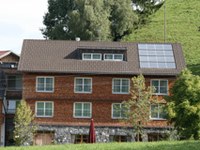
From 2020 new builds in the EU will have to comply with tough energy balance requirements. Last week representatives of the European Parliament and EU states agreed that new builds should in future have virtually zero greenhouse gas emissions. Any remaining energy requirements should also be met essentially from renewable sources. These stipulations are to come into force two years earlier for public buildings.
News
New builds to meet tough climate requirements by 2020
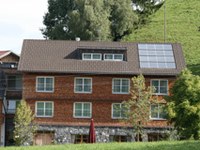
From 2020 new builds in the EU will have to comply with tough energy balance requirements. Last week representatives of the European Parliament and EU states agreed that new builds should in future have virtually zero greenhouse gas emissions. Any remaining energy requirements should also be met essentially from renewable sources. These stipulations are to come into force two years earlier for public buildings.
News
AlpHouse combines traditional trades & crafts and energy efficiency
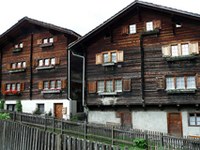
The new three-year Alpine Space Project entitled AlpHouse was launched in early October. AlpHouse strives to enhance the competitiveness of SMEs, especially in the area of trades & crafts, by providing them with the knowledge, skills and tools for top-quality renovations of old buildings in the Alpine region.
News
Latest edition of the Journal of Alpine Research now available online
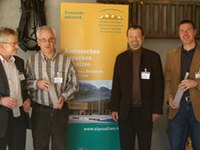
The latest edition of the international and multidisciplinary "Journal of Alpine Research" is now available online under the title "Mountain Regions as Referents for Collective Action".
News
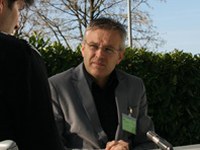
A cool head in conversation: Norbert Lantschner, Director of the ClimateHouse Agency in Bolzano/I "The cleanest energy is the energy I don't need"
The ClimateHouse Agency in Bolzano has won one of the seven prizes of the CIPRA's cc.alps Competition for its energy saving initiatives. We spoke to its Director, Norbert Lantschner at our "Cool Heads in the Hothouse" conference.
News
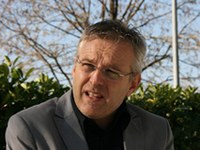
Energy-efficient buildings under discussion
The Director of the Passive House Institute in Darmstadt/Germany, Wolfgang Feist, and the Director of the ClimateHouse Agency in Bolzano/I, Norbert Lantschner, have responded to questions about energy-efficient construction in interviews.
News
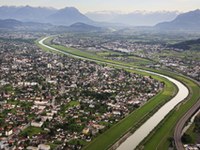
Latest update on ecological networks in the Alpine region
CIPRA has just expanded and updated its online dossier on "Relevant Instruments Relating to Ecological Networks in the Alpine Region".
News
Discussion on territorial cohesion in Europe
Discussion of the European Commission's Green Paper on Territorial Cohesion entitled "Territorial Diversion as Strength" has been underway since October 2008.
News
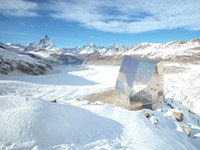
Glittering mountain hut in the Monte Rosa massif
Construction work began last week on the new Monte Rosa Hut at the foot of the Dufourspitze above Zermatt/CH. The hut, which resembles a glittering rock crystal, is being built by the Swiss Alpine Club in the framework of the 150th anniversary of the Swiss Federal Institute of Technology.
News
Obligatory rentals for planned Swiss resort
The Egyptian entrepreneur Samih Sawiris does not want the resort he is planning in Andermatt/CH to become a ghost town. His solution: anyone who purchases a house or apartment as a second home must sign a contract agreeing to rent the property whenever they are not in residence.
News
Knowledge transfer - new pillar of regional development?
The latest issue of the bilingual (fr/en) Revue de Géographie Alpine (RGA) deals with the subject of knowledge management and knowledge transfer in the regional context.
News
Geotourism Challenge - public voting for the winning projects
This year the American National Geographic Society launched the "Geotourism Challenge: Celebrating Places/Changing Lives", a new competition designed to find and promote pioneers in the field of geotourism.
News
Collaboration in regional development
The last workshop in the series "Disseminating knowledge - networking people" is being held in St. Gall/CH on 3 April 2008 on the subject of "Collaboration in regional development".
News
Monitoring tool and strategies for regional development
The DIAMONT Interreg IIIB project (for Data Infrastructure for the Alps. Mountain Orientated Network Technology) came to an end with a conference in Innsbruck/A on February 1.
News
Eco-building zone promotes demographic growth
The tiny Grisons community of Flerden/CH has succeeded in attracting new residents to its mountain village - and done so ecologically. In 2003 the community created an 8,500 m² energy-saving housing area for new builds erected according to ecological principles.
News
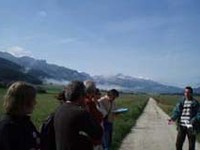
International workshop series "Disseminating Knowledge - Networking People" Rural-urban co-operation: A challenge for the Alpine region
The eighth workshop in the series on "Disseminating Knowledge - Networking People" was held in Autrans on June 4 and 5 and focused on the subject of regional concepts and rural-urban co-operation. The organisers, CIPRA France and the further education organisation Association de Formation des Ruraux aux Activités du Tourisme, provided an opportunity for an exchange of views on the shift in relations between rural and urban areas.
News
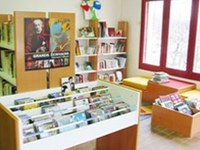
International Workshop: Services for people living in rural mountain areas
The next workshop of the international series "Disseminating knowledge - connecting people" of Future in the Alps is dedicated to the topic of innovation, community use and participation relating to services for people living rural mountain areas.
News
Pyrenean ski resort to be revived
The Municipality of Vielha in the Spanish Pyrenees has given the go-ahead for the construction of more than 500 apartments and 1,700 parking spaces in the ski resort of La Tuca. The resort was forced to shut down in 1989 as the lack of snow meant it was no longer viable. But now the ski resort is to be brought back to life with the new project.