
Search
2903 items matching your search terms.
AlpInnoCT
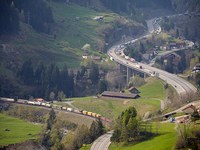
[Project completed] The Alps are a sensitive ecosystem that has to be protected from pollutant emissions and climate change. The alpine road freight transport has enormous ecological and sociocultural effects on the alpine habitat. Most actors such as forwarders, port operators, administrations and consumers, are aware of these negative effects and they are working on their own technical or regulatory solutions. However, a constructive and participatory dialogue between all involved actors, in order to promote sustainable freight transport within the Alps, has not been established so far.
CIPRA Project
Urban regions show the way forward
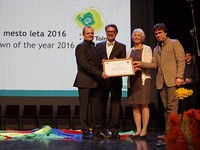
The “Alpine Town of the Year” association is celebrating its 20th anniversary. A brief summary of the facts shows that throughout the past years Alpine cities have been pioneers of sustainable development in the Alps.
News
Solstice in winter tourism
Tourism has brought wealth to the Alps. In many regions it remains an important source of income, but lack of economic diversification is also a risk. The importance and orientation of tourism differs strongly among Alpine countries, but all of them need new strategies and approaches to cope with shifts in visitor behaviour and climate change. A socio-economic transformation is needed that takes account of tourism’s past, present and future potential.
Position
Winter tourism – a destination shaping change
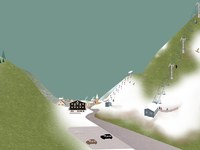
What are the challenges facing winter tourism in these times of climate change and new patterns of visitor behaviour? CIPRA takes a fictional resort and presents the possible decisions and their consequences: the interactive presentation is accompanied by a web dossier and a position paper.
News
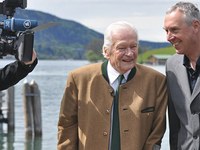
CIPRA mourns Wolfgang Burhenne
The nature conservationist and environmental campaigner Wolfgang Burhenne, whose activities took him all round the world, died on 6 January 2017. The 93-year old was a co-founder and the first secretary-general of CIPRA.
News
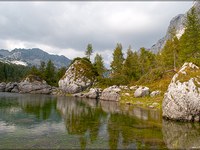
Foundations laid for Triglav National Park
It has taken 16 years, but the management plan for Slovenia’s only national park is now ready. The participatory process has ensured that it is broad-based in nature.
News
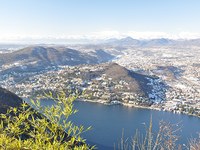
Open Alps 2017
The end of 2016 saw the announcement of the winners of the 2017 “Open Alps” human rights award. This honour is given to individuals or groups who actively work for the rights of refugees, immigrants, socially disadvantaged persons and threatened minorities in Europe.
News
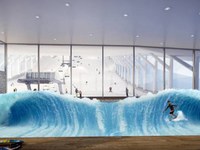
Sad, but true
Tignes, located in the French Alps, is responding to the retreat of glaciers, and thus of the available ski pistes, with a very special project of its own:
News
Mountain Research and Development, Vol 36, No 4: Mountains of Our Future Earth
Papers emerged from the 2015 Perth III mountain conference and contribute to Future Earth. The first 3 present a tool to compare mountain photos, gender-sensitive participatory agroforestry, and social impact assessment; others explore seedling regeneration, ecosystem services, visitors’ use of energy, in-migration dynamics, environmental impacts of migration, and farmers’ decision-making. The last 3 are review-based agendas for future mountain research
Publication

New project financing ensures a sound basis
Migration, youth participation, mobility, spatial planning: CIPRA International has recently received assurances for the financing of projects in these areas. Here is an overview.
News
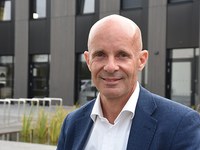
Point of view: Adaptation to climate change is inevitable
Despite progress in international climate policy, a rise in temperatures is inevitable. An adaptation now will save costs later, states Wolfgang Pfefferkorn, project manager for climate and energy at CIPRA International. Alpine regions are leading the way.
News
The Alpine Convention declares itself in favour of the “Green Economy”
How should a sustainable economy in the Alpine region look? The Alpine conference held in Grassau, Germany, in October 2016 adopted a report on this topic: its implementation will show how well-suited it actually is.
News
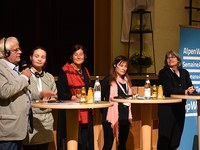
Taking small steps together
Last week’s AlpWeek held in Grassau/DE saw the focus on people and their relations with the Alps. The topics of migration and youth participation were particular subjects of discussion.
News
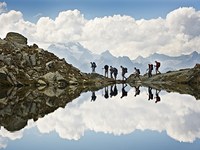
On foot through the Alps
From June to September 2017 the “whatsalp” group of mountain enthusiasts will be crossing the Alps from east to west, documenting the changes to the Alpine regions as they go. CIPRA will be accompanying them as a project partner.
News
Media address expansion of winter sports
The call by CIPRA to end the constant upgrading of ski areas has found considerable support. Facts such as climate change, stagnating numbers of skiers and falling profits underline the urgency of these demands.
News
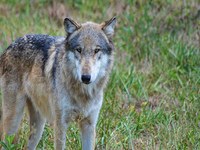
Wolves once more in the firing line
Downgrading the protected status of the wolf, control, even wolf-free zones: these are some of the demands of the Alpine farming federations in the Alpine regions as part of the fitness check conducted on the Fauna Flora Habitat (FFH) directive. Nature conservation organisations respond.
News
Oh...
…”Ah! Eh! Ih! Oh! Uh!” comes a rough voice from the loudspeaker. He said nothing for 5,300 years: but now Ötzi, the famous Man from the Ice, has found his voice again.
News
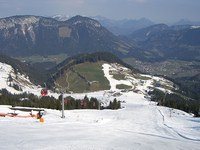
The Alps are losing their snow
A recently published study shows that winters are ever shorter and the amount of snow is decreasing. The main reason for long winters becoming more and more a thing of the past is the earlier spring thaw.
News
2. Workshop
At the second workshop of the project "I-LivAlps" in Lecco from 2-4th September 2016, participants discussed about the future of winter tourism in the Alps. These are the presentations:
Document
Point of view: A strategy for people in the Alps
The European strategy for the Alps is intended to create new relationships between Alpine regions and the surrounding areas. This however requires oversight to ensure the reconciliation of interests as well as sustainable development, says Andreas Pichler, director of CIPRA international.
News
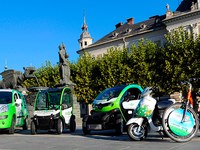
The Alpine Convention in action
Urban areas are not often directly thought of in connection with the Alpine Convention - “the Alps are mountains, not cities” is the refrain. The Austrian city of Klagenfurt contradicts such views.
News
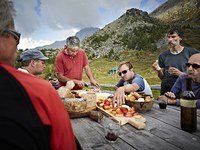
Of ruins, deer and people
How do migration and depopulation, spatial planning or climate change affect quality of life? The various aspects of the relationships between the Alps and the people who live, work and relax there are the focus of AlpWeek 2016, to be held from 11 to 15 October 2016 in Grassau, Germany. It is being staged by leading Alpine-wide organisations, including CIPRA.
Press/Media release
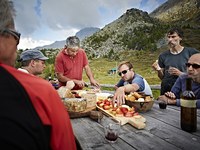
Rendezvous of friends of the Alps
Migration and depopulation, perspectives of traditional crafts, climate change, health. These are some of the topics that will be discussed during the AlpWeek 2016. The meeting is being planned for October by leading Alpine-wide organisations, including CIPRA.
News
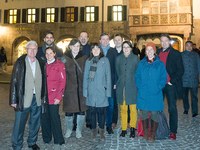
Joint commitment to the Alpine space
The interaction between CIPRA International and the “Alliance in the Alps” goes back to the foundation of the latter in 1997. The basis for co-operation has now been renewed at a strategy meeting.
News
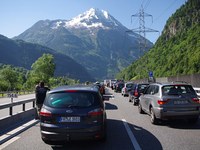
No free ride from Italy to Germany
The European Union does not want to finance the Alemagna motorway: but the Italian Veneto Region is insisting on the road link to Germany.
News
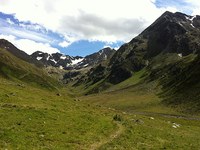
Rock ptarmigan may continue to nest
No ski lifts or pistes may be built on the mountain slopes of the Vallaccia Valley in Italy. This decision of the Lombardy Administrative Court now overturns the authorisation granted by the Italian Council of Ministers.
News
Strange but true...
This is the story of why all mountains may soon be covered with sawdust in summer.
News
AlpES
[Project completed] Ecosystems and their services go beyond national borders and need a transnational approach for their dynamic protection, sustainable use, management and risk prevention. As a basis for joint action, public authorities, policy makers, NGOs, researchers and economic actors – the AlpES target groups – need a common understanding of ecosystem services, comparable information on their status and support in using appropriate tools for integrating them in their fields of work.