Alpine Politics

For more than 70 years, CIPRA has been working to promote sustainable policies for the Alps, looking ahead, putting tomorrow’s challenges on the political agenda and taking policymakers to task.

For a good life in the Alps, it is important to guarantee a balance between economic interests and the needs of the local populations and nature. CIPRA helps to bridge this gap on the political stage. The protocols of the Alpine Convention offer guidance. In combination with other tools, they empower the political actors to adopt appropriate measures.

The tools of Alpine policy

  • The Alpine Convention is an international treaty involving the countries of the Alps and the European Union. As co-initiator, CIPRA helped to create a fundamental requirement: an international political body for sustainable development and protection for the Alps. CIPRA contributes expertise in the Compliance Committee and the working groups.
  • As a mountain chain at the heart of Europe, the Alps are strongly impacted by the policies of the EU. The EU strategy for the Alpine Region (EUSALP) is being established to strengthen future cooperation between the Alps and the surrounding regions and cities. CIPRA and its partners are calling for civil society to be involved in this process.
  • In its core activities and beyond, CIPRA is working in national and transnational political bodies for a good life in the Alps.

CIPRA’s vision

  • A strong civil society
    Cities, municipalities, regions and countries of the Alps communicate their experiences and learn from one another. They involve the people in the planning processes and take account of the ideas and visions of young people. They set the framework conditions needed for all three pillars of sustainability – economy, nature and society – to be strengthened in equal measure.
  • A vibrant Alpine Convention
    The Alpine Convention provides a framework for these endeavours. It is an active clearing house. Keen use is made of its various platforms and working groups, while the Compliance Committee provides effective monitoring of observance of its provisions.
  • A responsible response
    The 14 million residents of the Alps can count on the solidarity of the 56 million people living in the surrounding regions – and vice-versa. All these people are aware of the special value of the Alps as a living space for human beings and the flora and fauna.

Alpine Convention

For more than 60 years, CIPRA has been working to promote sustainable policies for the Alps, looking ahead, putting tomorrow’s challenges on the political agenda and taking policymakers to task. More

Macroregional Strategy

The EU strategy for the Alpine Region (EUSALP) is to strengthen future cooperation between the Alps and the surrounding cities and regions. CIPRA and its partners are calling for civil society to be involved in the process. More

Sustainable development goals
In its Agenda 2030, the United Nations has formulated a total of 17 goals for sustainable development. What do they mean for the Alps? More

CIPRA's Positions

CIPRA regards it as one of its core tasks to comment on current topics and developments. Its broad support as an umbrella organisation with more than 100 member associations in the Alpine region justifies it. Please check the other language versions for more position papers!

Only climate-friendly tourism is sustainable: cc.alps - CIPRA’s demands for tourism in climate change
Climate change is a major challenge to Alpine tourism. It has to adapt to climate change and at the same time become more climate-friendly. There is a particularly large potential for reduction of CO2 emissions in the key areas of traffic and energy. Tourism is a branch of the economy which is heavily subsidized. Therefore public policy can and must direct developments towards sustainability through the support given to tourism. The present discussion about developments in the tourism industry is dominated by the large chair lift companies which are essentially fixed on ski tourism and the maintenance of the status quo. But focusing only on snow and skiing means promoting a capital-intensive, highly technological form of Alpine tourism and a monoculture. This is neither climatologically nor environmentally sustainable.
cc.alps: CIPRA Demands – Energy self-sufficient regions
Not having to depend on energy imports: this vision holds great fascination for many regions. Self-sufficiency is “in.” There are already many very positive approaches and examples of attempts to go down this road. At the heart of all the concepts is the idea of meeting demand through regional renewable sources of energy, saving energy and using energy more efficiently. Anyone who systematically takes this approach in an attempt to create an energy self-sufficient region changes the face of their region and its structures – to the benefit of their own economy, society and the environment.
cc.alps: CIPRA Demands on Spatial Planning
The Alps are different. The Alpine range is characterized by special features that need to be taken into account in spatial development and climate protection.

News on Alpine politics

Reliable partnerships right across the Alps
CIPRA Austria, CIPRA Germany, CIPRA South Tyrol. Right now the cable car industry is all about superlatives. Indeed, the “world’s greatest glacier ski area” is to be created by linking up the ski resorts in the Austrian Pitztal and Ötztal valleys.
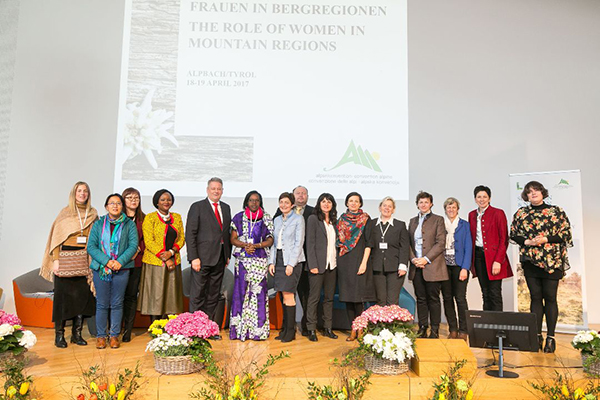
Alpine Convention puts equality on the agenda
With a women’s conference and a declaration, the Austrian presidency has placed a new topic on the agenda of the Alpine Convention – and raised expectations. But where do things go from here?
No ski-lift connection permitted in nature reserve
The Federal State of Upper Austria gave its legal opinion on the expansion of the “Höss-Wurzeralm” ski area in April. The matter is now on file.
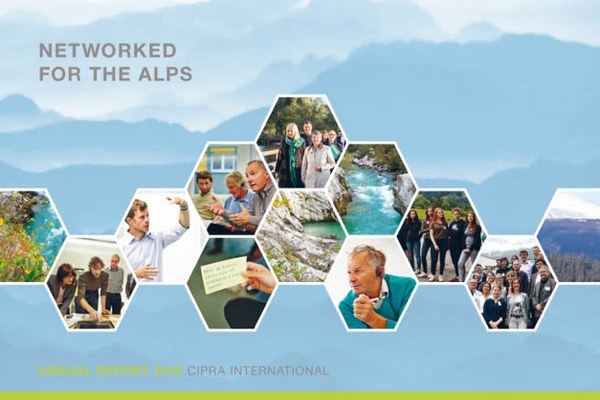
Networked for the Alps
CIPRA is a small organisation that can boast a large network. Its annual report shows how this permits people to tackle the challenges facing the Alps together.

Point of Views of CIPRA

Point of view: Winter Games need to face reality
Major events promise modernity, revitalisation and global visibility. In the Alps, however, these promises are now being made in territories marked by the climate crisis, depopulation and, at the same time, growing tourist pressure. Looking closely at Milan-Cortina 2026, what emerges is not only a celebration of sport, but one of the largest public and infrastructure investment programmes ever concentrated in the Alpine area – with effects that are set to continue well beyond the time of the competitions, says Vanda Bonardo, president of CIPRA Italy.
Point of view: Every drop counts
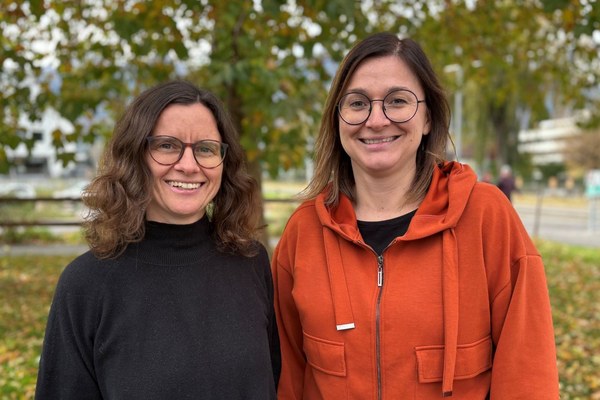
Discussing, eating and laughing together, forging ideas, identifying problems, discovering projects and meeting inspiring people: commitment is contagious, according to Anna Mehrmann and Maya Mathias from CIPRA International, who organised the second Liechtenstein Future Forum Alps on the topic of water in 2025.
Point of view: Climate protection requires clear legislation!
Glacier melt, disappearing permafrost, more frequent rockfalls and mudslides: temperatures in the Alpine region are rising faster than the global average – with dramatic consequences for nature and people. That is why decisive climate protection laws are now needed at regional and national level, demands Elisabeth Ladinser, chair of the South Tyrolean Umbrella Organisation for Nature and Environmental Protection and president of CIPRA South Tyrol.
Point of view: Holidays have a lasting impact
Holidays mean time out, a change of scenery, relaxation. But where and how we spend our holidays doesn’t just affect us; it also has an impact on other people, regions, the climate and nature. Magdalena Holzer, project manager at CIPRA International, is convinced that travelling is a decision that brings with it with great responsibility.
Point of view: Let’s plan the energy transition and restoration together!
Alpine spatial planning can help to resolve the contradictions between restoration and the expansion of renewable energy. This requires joint efforts involving the interests of the population and environmental organisations, says Paul Kuncio, Executive Director of CIPRA Austria.
Point of view: Let’s prioritise youth over tourism
We want young people to stay on the land, but the demands of tourism, high property prices and the landscape as an object of speculation make this difficult. We talk about the fight against the climate and biodiversity crisis, all while shopping centres and business parks are being built in the countryside. Environmental protection and solutions to the housing crisis should be prioritised, as this would also be in the interests of young people, says Dijana Čataković from CIPRA Slovenia. She asks: Who else will be able to live in the Alps and afford to live there?