Point of view: Winter Games need to face reality
Major events promise modernity, revitalisation and global visibility. In the Alps, however, these promises are now being made in territories marked by the climate crisis, depopulation and, at the same time, growing tourist pressure. Looking closely at Milan-Cortina 2026, what emerges is not only a celebration of sport, but one of the largest public and infrastructure investment programmes ever concentrated in the Alpine area – with effects that are set to continue well beyond the time of the competitions, says Vanda Bonardo, president of CIPRA Italy.

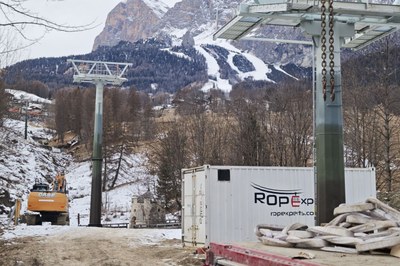
The iconic image of the slopes and medals is accompanied by the less celebrated image of construction sites and artificial snow cannons: in Cortina, up to 98 litres of water per second will be drawn from the Boite stream. This technical fact becomes a metaphor: while we celebrate snow sports, we have to artificially produce what should be their natural foundation. The Winter Olympics need to face reality and rethink their business model in an era when winter is receding.
The Olympic model continues to present itself as an engine of development, despite the IOC's rethinking and the “no” votes of Alpine cities that have deemed the economic, environmental and social costs unsustainable. The price tag for works related to Milan-Cortina exceeds €3.5 billion, which becomes approximately €6 billion when organisation and related interventions are included. Only a limited portion directly concerns the competitions; the rest is largely “legacy”, especially permanent infrastructure. This is where the decisive game is played: what will remain, for whom, and at what price for already fragile ecosystems and communities.
Independent analyses point to a lack of transparency, delays and uncertainties about costs and environmental impacts. In a country in debt and facing resource shortages, sustainability cannot be reduced to an umbrella term suitable for dossiers and ceremonies. It must become an operational, measurable constraint, capable of guiding choices and being accountable to citizens.
The Alps are not just a backdrop, but a laboratory for the future. Milan-Cortina 2026 can be either a showcase or a fault line: between development and limitation, between global flows and local microcosms, between the rhetoric of legacy and the need for climate and social resilience. The decisive challenge is not only played out in the spotlight, but also underground, where natural resources, community rights and questions about the meaning of a development model – that, today more than ever, must contend with the ecological boundaries of the mountains – all intersect.
Further information