Alpine Politics

For more than 70 years, CIPRA has been working to promote sustainable policies for the Alps, looking ahead, putting tomorrow’s challenges on the political agenda and taking policymakers to task.

For a good life in the Alps, it is important to guarantee a balance between economic interests and the needs of the local populations and nature. CIPRA helps to bridge this gap on the political stage. The protocols of the Alpine Convention offer guidance. In combination with other tools, they empower the political actors to adopt appropriate measures.

The tools of Alpine policy

  • The Alpine Convention is an international treaty involving the countries of the Alps and the European Union. As co-initiator, CIPRA helped to create a fundamental requirement: an international political body for sustainable development and protection for the Alps. CIPRA contributes expertise in the Compliance Committee and the working groups.
  • As a mountain chain at the heart of Europe, the Alps are strongly impacted by the policies of the EU. The EU strategy for the Alpine Region (EUSALP) is being established to strengthen future cooperation between the Alps and the surrounding regions and cities. CIPRA and its partners are calling for civil society to be involved in this process.
  • In its core activities and beyond, CIPRA is working in national and transnational political bodies for a good life in the Alps.

CIPRA’s vision

  • A strong civil society
    Cities, municipalities, regions and countries of the Alps communicate their experiences and learn from one another. They involve the people in the planning processes and take account of the ideas and visions of young people. They set the framework conditions needed for all three pillars of sustainability – economy, nature and society – to be strengthened in equal measure.
  • A vibrant Alpine Convention
    The Alpine Convention provides a framework for these endeavours. It is an active clearing house. Keen use is made of its various platforms and working groups, while the Compliance Committee provides effective monitoring of observance of its provisions.
  • A responsible response
    The 14 million residents of the Alps can count on the solidarity of the 56 million people living in the surrounding regions – and vice-versa. All these people are aware of the special value of the Alps as a living space for human beings and the flora and fauna.

Alpine Convention

For more than 60 years, CIPRA has been working to promote sustainable policies for the Alps, looking ahead, putting tomorrow’s challenges on the political agenda and taking policymakers to task. More

Macroregional Strategy

The EU strategy for the Alpine Region (EUSALP) is to strengthen future cooperation between the Alps and the surrounding cities and regions. CIPRA and its partners are calling for civil society to be involved in the process. More

Sustainable development goals
In its Agenda 2030, the United Nations has formulated a total of 17 goals for sustainable development. What do they mean for the Alps? More

CIPRA's Positions

CIPRA regards it as one of its core tasks to comment on current topics and developments. Its broad support as an umbrella organisation with more than 100 member associations in the Alpine region justifies it. Please check the other language versions for more position papers!

Solstice in winter tourism
Tourism has brought wealth to the Alps. In many regions it remains an important source of income, but lack of economic diversification is also a risk. The importance and orientation of tourism differs strongly among Alpine countries, but all of them need new strategies and approaches to cope with shifts in visitor behaviour and climate change. A socio-economic transformation is needed that takes account of tourism’s past, present and future potential.
Transport sufficiency: Towards a new sustainable mobility culture
CIPRA Position on the mobility of goods and people in the Alps
Appeal: Climate change mitigation now!
An appeal from the Alpine municipalities and their inhabitants to the participants of COP 21

News on Alpine politics

Alps in Motion: new Alpine-wide Day of Action
The Alpine Fire is being reimagined. With Alps in Motion, CIPRA Switzerland and CIPRA International are launching an Alpine-wide Day of Action on 29 August 2026.
Generational change at CIPRA International
After seven eventful years at the helm of CIPRA International, Kaspar Schuler is taking well-deserved retirement. His former deputy, Jakob Dietachmair, takes over as Executive Director, while Magdalena Holzer becomes the new Deputy Director. There are also changes at CIPRA Austria: Paul Kuncio is moving to CIPRA International as Policy Officer.
To learn more about local governance & quality of life in the Alps, to simply take part in the discussion, or to share your community's example ... Join us!
The Interreg Alpine Space project GOVQoL - Empowering local governance of Alpine communities for a better quality of life is pleased to invite you to a series of online seminars we will be organising in February and March 2026!
Working together for the future of the Alps
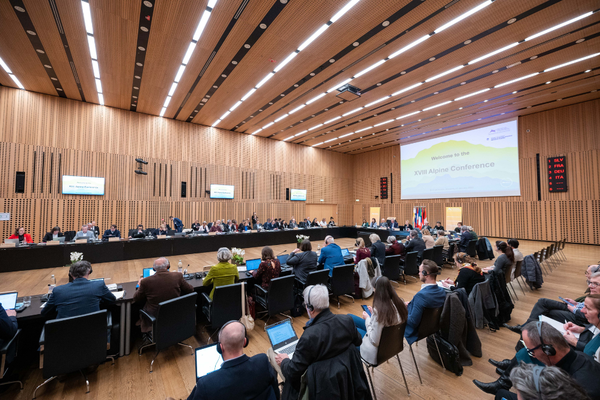
On the 22nd of January the Slovenian Presidency of the Alpine Convention hosted the Alpine Conference in Brdo/SI. A central theme was the quality of life in the Alpine region, which is also the subject of the tenth Report on the State of the Alps.

Point of Views of CIPRA

CIPRA's point of view: Torino 2006: a hard lesson - but nothing learned
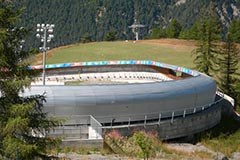
The Olympic Winter Games 2006 have left a burdensome legacy. The idea is thus to close the loss-making bobsleigh and replace it with an indoor ski slope. Is Turin simply throwing good money after bad?
CIPRA's point of view:  New solidarity between the Alps and metropolitan areas
CIPRA's point of view: New solidarity between the Alps and metropolitan areas
Various political actors are pushing for the development of a macro-region for the Alps. CIPRA also says yes to an Alpine macro-region - but only within a clear framework. This offers the opportunity to make the rest of Europe aware of the issues facing its Alpine regions.
CIPRA's point of view: Alpine Convention: Italy says yes but Switzerland still says no
Italy, surprisingly, has ratified eight of nine protocols of the Alpine Convention. Only Switzerland has yet to sign up. We do not need the protocols, stated the Swiss Federal Council recently - Swiss policy is, in its view, more sustainable than in any other Alpine country.
CIPRA's point of view:  60 years of CIPRA
CIPRA's point of view: 60 years of CIPRA
The International Commission for the Protection of the Alps, CIPRA, has reason to celebrate. On 5 May this umbrella organisation, containing some one hundred members from all countries in the Alps, will turn 60.
CIPRA's point of view:  Knowing how to shape the climate
CIPRA's point of view: Knowing how to shape the climate
We should discharge no more greenhouse gases than the natural systems in the Alps, such as forests or moorlands, can absorb - CIPRA's vision, set out in its annual report, argues for sustained climate protection.
CIPRA's point of view:  Water on!
CIPRA's point of view: Water on!
Austria's checklist for the building of hydroelectric power plants is technically sound, offering transparency for building permits, but no protection for ecologically intact waters.