Alpine Politics

For more than 70 years, CIPRA has been working to promote sustainable policies for the Alps, looking ahead, putting tomorrow’s challenges on the political agenda and taking policymakers to task.

For a good life in the Alps, it is important to guarantee a balance between economic interests and the needs of the local populations and nature. CIPRA helps to bridge this gap on the political stage. The protocols of the Alpine Convention offer guidance. In combination with other tools, they empower the political actors to adopt appropriate measures.

The tools of Alpine policy

  • The Alpine Convention is an international treaty involving the countries of the Alps and the European Union. As co-initiator, CIPRA helped to create a fundamental requirement: an international political body for sustainable development and protection for the Alps. CIPRA contributes expertise in the Compliance Committee and the working groups.
  • As a mountain chain at the heart of Europe, the Alps are strongly impacted by the policies of the EU. The EU strategy for the Alpine Region (EUSALP) is being established to strengthen future cooperation between the Alps and the surrounding regions and cities. CIPRA and its partners are calling for civil society to be involved in this process.
  • In its core activities and beyond, CIPRA is working in national and transnational political bodies for a good life in the Alps.

CIPRA’s vision

  • A strong civil society
    Cities, municipalities, regions and countries of the Alps communicate their experiences and learn from one another. They involve the people in the planning processes and take account of the ideas and visions of young people. They set the framework conditions needed for all three pillars of sustainability – economy, nature and society – to be strengthened in equal measure.
  • A vibrant Alpine Convention
    The Alpine Convention provides a framework for these endeavours. It is an active clearing house. Keen use is made of its various platforms and working groups, while the Compliance Committee provides effective monitoring of observance of its provisions.
  • A responsible response
    The 14 million residents of the Alps can count on the solidarity of the 56 million people living in the surrounding regions – and vice-versa. All these people are aware of the special value of the Alps as a living space for human beings and the flora and fauna.

Alpine Convention

For more than 60 years, CIPRA has been working to promote sustainable policies for the Alps, looking ahead, putting tomorrow’s challenges on the political agenda and taking policymakers to task. More

Macroregional Strategy

The EU strategy for the Alpine Region (EUSALP) is to strengthen future cooperation between the Alps and the surrounding cities and regions. CIPRA and its partners are calling for civil society to be involved in the process. More

Sustainable development goals
In its Agenda 2030, the United Nations has formulated a total of 17 goals for sustainable development. What do they mean for the Alps? More

CIPRA's Positions

CIPRA regards it as one of its core tasks to comment on current topics and developments. Its broad support as an umbrella organisation with more than 100 member associations in the Alpine region justifies it. Please check the other language versions for more position papers!

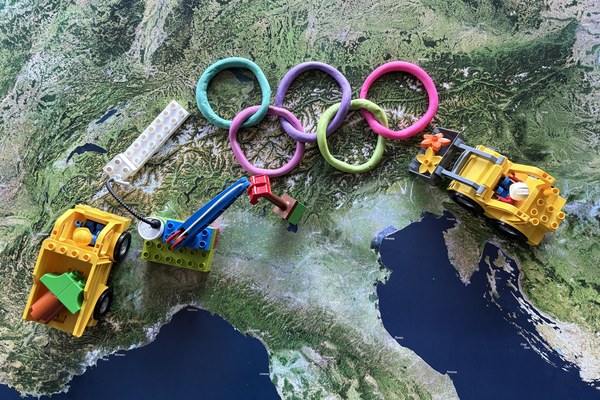
Winter Olympics: the Alps are more than just a playground
Major, global sports events have the power to fascinate and inspire. Winter sports hold a special place in the Alps, with their deep-rooted tradition and passionate following. We however believe that, as they currently stand, the Winter Olympic Games are neither environmentally nor socially acceptable. Despite promises of reform, recent developments such as the preparations for Milano-Cortina 2026 and the 2030 Games in France, as well as the “privileged candidacy” of Switzerland for the Winter Games 2038, all prove that the Olympic model remains unsustainable. In recent decades, referendums (e.g. in Innsbruck, Sion, Munich, Grisons) have several times demonstrated that large segments of the population are no longer willing to pay the price of the Winter Olympics.
Open Letter: Protect the Alps from Excessive Transit Traffic
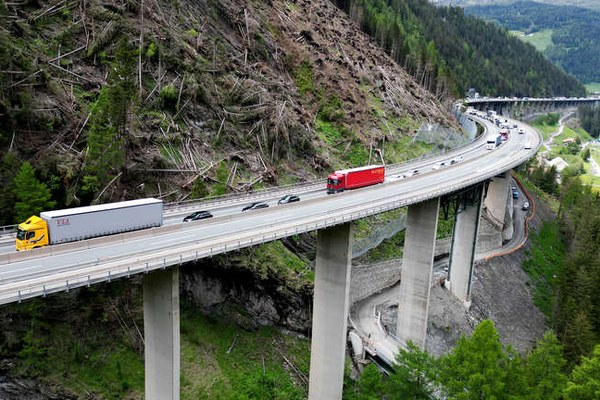
The Alpine region is under increasing pressure — from the climate crisis, air pollution, and ever-growing traffic volumes. Numerous organisations, led by CIPRA International, have therefore addressed an open letter to Commissioner Apostolos Tzitzikostas and the transport ministers of the Alpine countries.
Position: Transport and mobility in the Alps
In its new 40-page position paper, CIPRA outlines sustainable mobility in the Alpine region with the least possible negative impact of transport on the environment and people. In addition to travel, the paper also addresses commuter traffic, long-distance traffic and freight transport - supplemented with facts, concrete measures and good examples.

News on Alpine politics

Mobile in the Alps
Mobile in the Alps
By rail, by road, by mountain path: numerous CIPRA projects show just how diverse sustainable mobility can be.
Climate crisis makes mountains crumble
Rockfalls and rockslides are nothing new in the Alps, but dwindling permafrost is making the situation even worse – for mountaineering and for villages.
Ill-chosen incentives may fuel transit
More e-trucks instead of a shift to rail: a new EU directive could further fuel the burden of freight traffic through the Alps.
How much is nature worth?
Alpine pastures that provide us with food. Trees that provide a pleasant microclimate. Alpine landscapes that heal and touch. At the beginning of July 2021, around 100 participants from all Alpine countries discussed the benefits and value of nature in the Alpine region at CIPRA’s Annual Conference in Biella/I.

Point of Views of CIPRA

Point of view: For a cultural change in transit traffic
Trade has been the driving force behind cultural and social development in the Alpine region. Transit traffic in its current form, on the other hand, mainly benefits regions away from the Alps. To ban noise and exhaust fumes from the Alpine valleys we need more than a watered-down EU directive, says Stephan Tischler, President of CIPRA Austria.
Point of view: A plea for colourful cities
Corona has strikingly shown how important accessible local recreation areas are for our well-being. Over 70 percent of the Alpine population live in cities. There is a great deal of potential for action there in particular, says Magdalena Holzer, Project Manager at CIPRA International.
Point of view: The mountains, a safe place
During the lockdown due to the corona pandemic, mountain areas have gained in importance as places of retreat. In order to be able to fulfil this role better in the future, they must be strengthened and digitally networked, demands Vanda Bonardo, President of CIPRA Italy.
Point of view: A building plan for a resilient society
The corona crisis has broken our lives into pieces: relationships, working models, leisure and consumerism are loose building blocks. It is still unclear how we will reassemble them. We now have the chance to draw up a new building plan that is fit for the future, says Barbara Wülser, Co-Executive Director of CIPRA International.
Point of view: Water needs no borders – do we?
So far, sufficient water is available in the Alpine regions. If there is to be enough for everyone in the future, despite climate change, water must be treated as a common Alpine resource across national borders, says Marion Ebster, Project Manager at CIPRA International.
Point of view: For glaciers without a circus
The largest glacier ski resort in the Alps is to be built in Tyrol, Austria - on already melting glaciers. The planned connection of the ski areas in Pitztal and Ötztal goes against all reason, says Kaspar Schuler, Co-Manager of CIPRA International.