Political positions of CIPRA

Make the Alps energy self-sufficient! CIPRA-demands - Energy self-sufficient regions
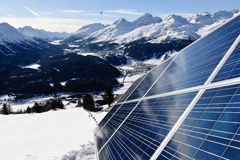
Not having to depend on energy imports: this vision holds great fascination for many regions. Self-sufficiency is "in." There are already many very positive approaches and examples of attempts to go down this road. At the heart of all the concepts is the idea of meeting demand through regional renewable sources of energy, saving energy and using energy more efficiently. Anyone who systematically takes this approach in an attempt to create an energy self-sufficient region changes the face of their region and its structures - to the benefit of their own economy, society and the environment.
cc.alps: CIPRA's demands for agriculture
The agricultural sector is directly affected by climate change impacts but it also contributes to the release of greenhouse gases (GHG) and rising concentrations of GHG in the atmosphere. A sustainable climate response strategy in the field of agriculture involves anticipating, planning and long-term thinking from farm level to transnational level. Prominent fields of activity are sustainable land and soil management, sustainable water management, managing manure and soil carbon as well as organic agriculture as an overall strategy. As agriculture is a highly subsidized economic sector, subvention policy can be used as a lever to guide the sector to sustainability and climate neutrality.
Only climate-friendly tourism is sustainable: cc.alps - CIPRA’s demands for tourism in climate change
Climate change is a major challenge to Alpine tourism. It has to adapt to climate change and at the same time become more climate-friendly. There is a particularly large potential for reduction of CO2 emissions in the key areas of traffic and energy. Tourism is a branch of the economy which is heavily subsidized. Therefore public policy can and must direct developments towards sustainability through the support given to tourism. The present discussion about developments in the tourism industry is dominated by the large chair lift companies which are essentially fixed on ski tourism and the maintenance of the status quo. But focusing only on snow and skiing means promoting a capital-intensive, highly technological form of Alpine tourism and a monoculture. This is neither climatologically nor environmentally sustainable.

News on Alpine Politics

Point of view: Avoiding transport collapse together
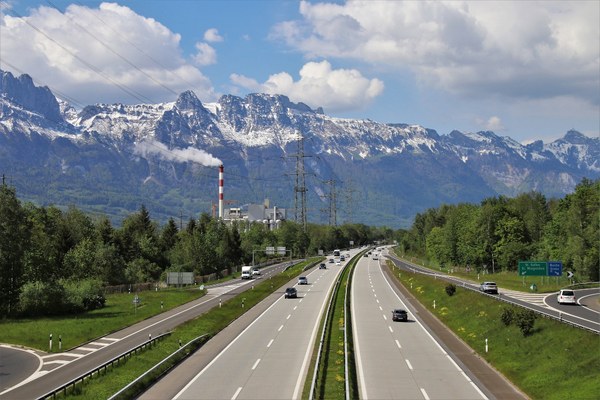
As regards the growing volume of individual and transit traffic, it can be stated that neither regional nor national perspectives will lead to solutions. We have to find them together, because the Alps lie in the midst of Europe. This geographical truism is central to an understanding of transport policy problems in the Alps so as to avoid transport collapse, says Kaspar Schuler, Executive Director of CIPRA International.
Hidden CO2 emitters
Hidden CO2 emitters
Climate protection measures are expensive, which is why they are regularly criticised and rejected. How then can it be that at the same time the Alpine states are spending billions on environmentally harmful subsidies?
Alpine Policy 2023: the Slovenian-Swiss year
This year, Slovenia and Switzerland will play a decisive role in shaping international cooperation between states and regions in the Alps: Slovenia is taking over the presidency of the Alpine Convention, while Switzerland is the first non-EU country to chair the Eusalp, the EU Strategy for the Alpine Region.
Unsuitable landscapes for energy production
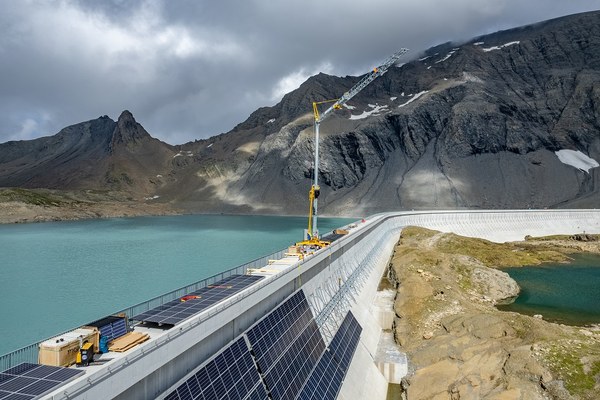
The results of a recent survey from Switzerland are clear: no to energy production in almost unspoilt mountain areas. Intensively used areas around ski resorts or existing power plants would be better suited to the expansion of renewable energy.

Point of view of CIPRA

Point of view: Winter Games need to face reality
Major events promise modernity, revitalisation and global visibility. In the Alps, however, these promises are now being made in territories marked by the climate crisis, depopulation and, at the same time, growing tourist pressure. Looking closely at Milan-Cortina 2026, what emerges is not only a celebration of sport, but one of the largest public and infrastructure investment programmes ever concentrated in the Alpine area – with effects that are set to continue well beyond the time of the competitions, says Vanda Bonardo, president of CIPRA Italy.
Point of view: Every drop counts
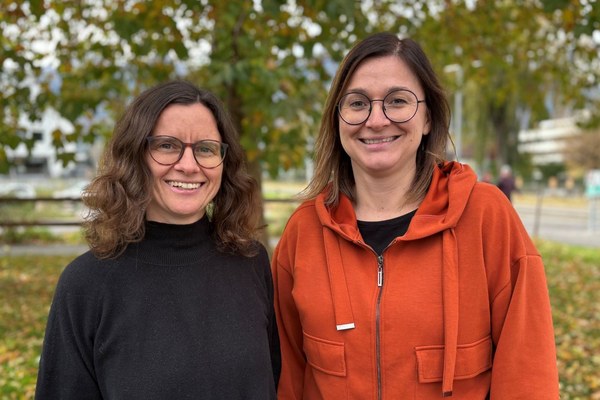
Discussing, eating and laughing together, forging ideas, identifying problems, discovering projects and meeting inspiring people: commitment is contagious, according to Anna Mehrmann and Maya Mathias from CIPRA International, who organised the second Liechtenstein Future Forum Alps on the topic of water in 2025.
Point of view: Holidays have a lasting impact
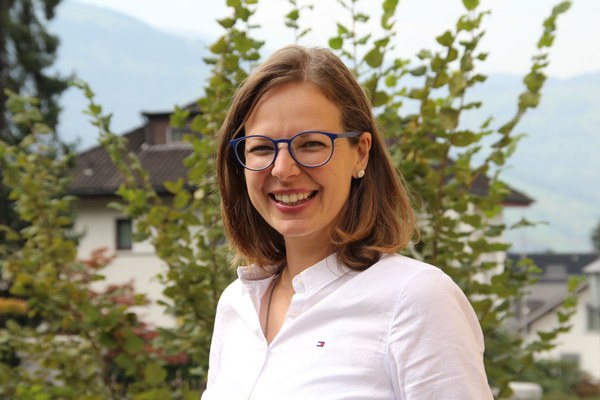
Holidays mean time out, a change of scenery, relaxation. But where and how we spend our holidays doesn’t just affect us; it also has an impact on other people, regions, the climate and nature. Magdalena Holzer, project manager at CIPRA International, is convinced that travelling is a decision that brings with it with great responsibility.