Political positions of CIPRA

cc.alps: CIPRA Demands – Energy self-sufficient regions
Not having to depend on energy imports: this vision holds great fascination for many regions. Self-sufficiency is “in.” There are already many very positive approaches and examples of attempts to go down this road. At the heart of all the concepts is the idea of meeting demand through regional renewable sources of energy, saving energy and using energy more efficiently. Anyone who systematically takes this approach in an attempt to create an energy self-sufficient region changes the face of their region and its structures – to the benefit of their own economy, society and the environment.
cc.alps: CIPRA Demands on Spatial Planning
The Alps are different. The Alpine range is characterized by special features that need to be taken into account in spatial development and climate protection.
cc.alps: CIPRA demands on transport
Transport, in particular by car and truck, is one of the main causes of climate change. In the Alpine countries transport accounts for more than 25 percent of the release of greenhouse gases and is of special importance in the increase of these gases since 1990. A wrong development, running counter to the political objective to reduce exhaust emissions. In the Alps, the percentage of journeys made by car is higher than European average.

News on Alpine Politics

Alps in Motion: new Alpine-wide Day of Action
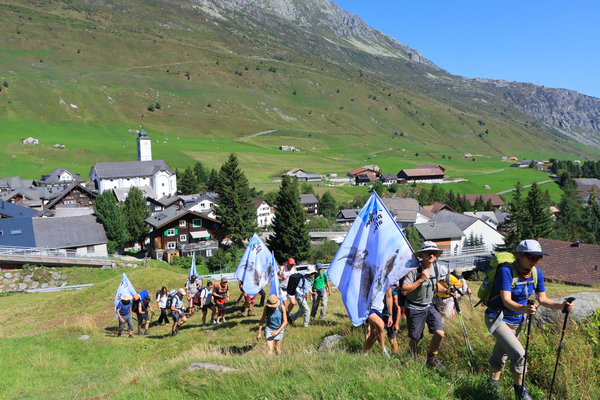
The Alpine Fire is being reimagined. With Alps in Motion, CIPRA Switzerland and CIPRA International are launching an Alpine-wide Day of Action on 29 August 2026.
Generational change at CIPRA International
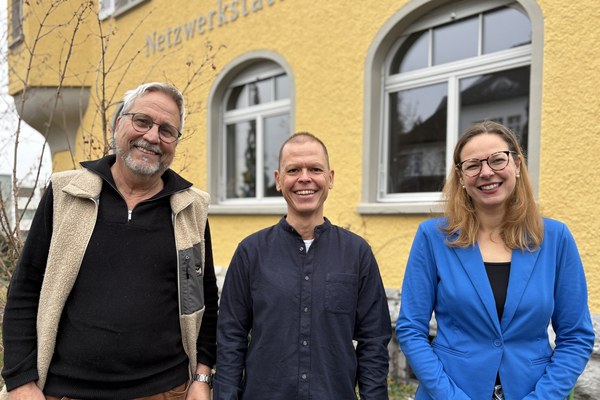
After seven eventful years at the helm of CIPRA International, Kaspar Schuler is taking well-deserved retirement. His former deputy, Jakob Dietachmair, takes over as Executive Director, while Magdalena Holzer becomes the new Deputy Director. There are also changes at CIPRA Austria: Paul Kuncio is moving to CIPRA International as Policy Officer.
Working together for the future of the Alps
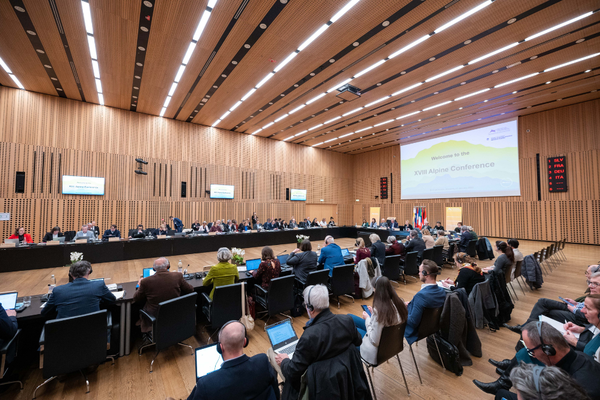
On the 22nd of January the Slovenian Presidency of the Alpine Convention hosted the Alpine Conference in Brdo/SI. A central theme was the quality of life in the Alpine region, which is also the subject of the tenth Report on the State of the Alps.
Point of view: Let’s plan the energy transition and restoration together!
Alpine spatial planning can help to resolve the contradictions between restoration and the expansion of renewable energy. This requires joint efforts involving the interests of the population and environmental organisations, says Paul Kuncio, Executive Director of CIPRA Austria.

Point of view of CIPRA

Point of view: The mountains, a safe place
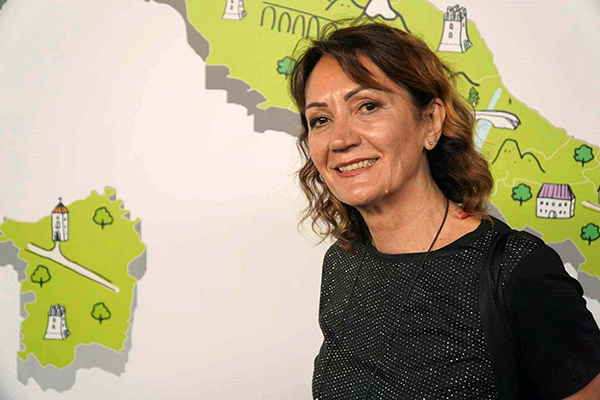
During the lockdown due to the corona pandemic, mountain areas have gained in importance as places of retreat. In order to be able to fulfil this role better in the future, they must be strengthened and digitally networked, demands Vanda Bonardo, President of CIPRA Italy.
Point of view: A building plan for a resilient society
The corona crisis has broken our lives into pieces: relationships, working models, leisure and consumerism are loose building blocks. It is still unclear how we will reassemble them. We now have the chance to draw up a new building plan that is fit for the future, says Barbara Wülser, Co-Executive Director of CIPRA International.
Point of view: Water needs no borders – do we?
So far, sufficient water is available in the Alpine regions. If there is to be enough for everyone in the future, despite climate change, water must be treated as a common Alpine resource across national borders, says Marion Ebster, Project Manager at CIPRA International.