Political positions of CIPRA

Action Plan on Climate Change in the Alps
The Action Plan following the Ministers' Declaration of Alpbach rests on the joint commitments taken by the Alpine countries which fall under the Framework Convention on climate change and the Kyoto Protocol. This Action Plan is part of the ongoing discussions to reach a comprehensive and ambitious post-2012 agreement and takes into account the commitments made in this regard by the European Union. Its aim is to go beyond the general framework to offer concrete measures that are specific to the Alps by promoting, both in terms of mitigation and adaptation, themes and measures that could be the subject of regional co-operations in the frame of the Alpine Convention, and by taking into account actions that are already in place on a national, regional and local level. The Action Plan on Climate contributes to both the global effort aiming at reducing greenhouse effect following international commitments by the Contracting Parties and to the quality of life of Alpine populations for present and future generations.
Factsheet to the „Eurovignette III“
The International Commission for the Protection of the Alps (CIPRA International) very much welcomes the fact that the EU now intends to set a course that reflects the true costs of transport and is taking a first step by amending Directive 2006/38/EC ("Eurovignette III"). The Directive must also relieve the burden on the Alpine region, which is particularly sensitive ecologically and whose population has to bear particularly high external costs; it must also contribute more to sustainability in freight transport. One important step is a sound directive on transport infrastructure costs, i.e. one that includes the efficient and consistent allocation of all relevant costs. Everyone stands to benefit from its success: the population, with a healthier, safer and better quality of life, and the transport industry, with more reliable transit routes. Indeed, the risks affect the local population as much as they affect those travelling through.
Schaan Memorandum on the Future in the Alps
The future belongs to those who shape it. In the Alps countless initiatives involving thousands of activists are working to do just that. Yet many are unaware of the fact that elsewhere other people are working on precisely the same problems as they are. This is where the Future in the Alps, a project launched by CIPRA, the International Commission for the Protection of the Alps, comes into play. The scope of the project is to collect practical experience throughout the Alps, classify it and make it available to those who need it. It consists of a phase of collating knowledge and good projects, called alpKnowhow, a phase of processing and disseminating it, called alpService, and an implementation phase, called alpPerformance. CIPRA itself is not a research body, nor is it an educational institution; it is a non-governmental organisation, so it is mainly concerned with the questions of what the results of alpKnowhow mean politically and what demands can be derived from these results. To answer these questions CIPRA representatives from seven countries convened in Schaan/Liechtenstein on 8 and 9 December 2006. The demands and political conclusions on all topics are set out in the present Schaan Memorandum on the Future in the Alps.

News on Alpine Politics

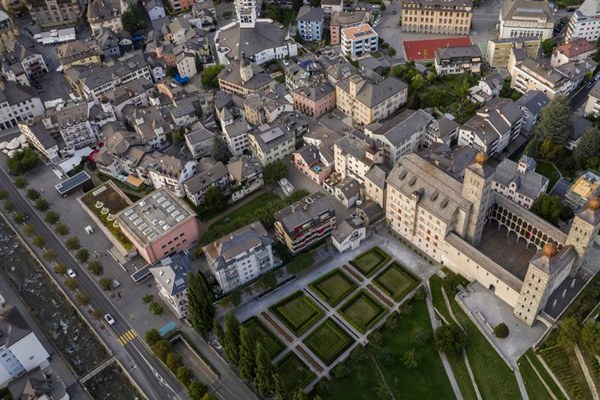
Alpine towns – key to sustainable development
The ninth Report on the State of the Alps, entitled “Alpine Towns”, was presented as part of the Swiss presidency of the Alpine Convention. It sheds light on how the Alpine settlement system hinders – or helps – the sustainable development of the Alps.
Alliance for climate-neutral Alpine transport
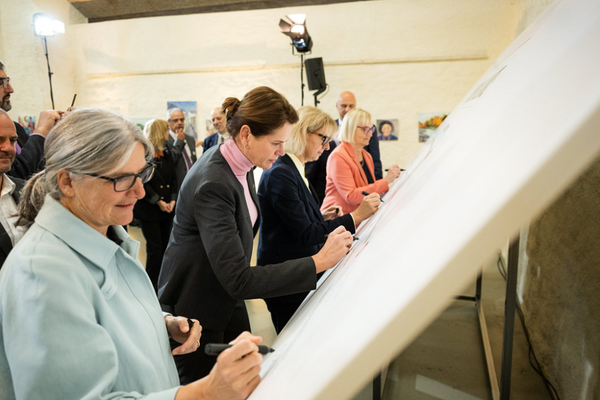
Seven of eight signatory states to the Alpine Convention today signed a progressive action plan for climate-neutral mobility by 2050 in Brig/CH. CIPRA International contributed to the almost two-year development of the action plan with proposals for the “Simplon Alliance”.
Making change possible
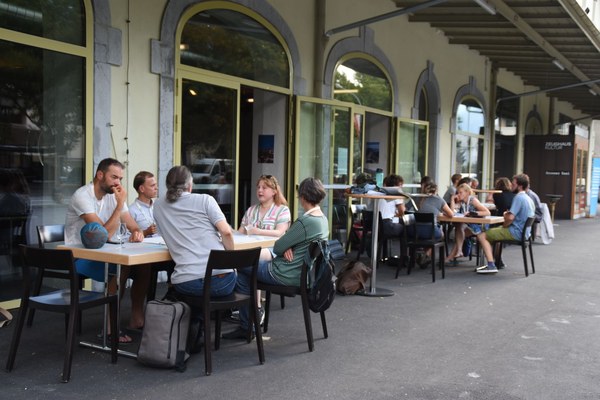
Inspirational inputs, heated discussions, fruitful exchanges and excursions into the impressive Valais region in and around the Alpine town of Brig-Glis/CH: AlpWeek 2022, held in early September in Brig-Glis/CH, was all about “Change in the Alps”.
Point of view: Let’s create an “Alpine Plan” for all Alpine regions!
The Bavarian Alpine Plan celebrates its 50th anniversary in 2022. Alpine spatial planning has proven here that it is predestined to find solutions to the pressing issues of the day. Similar planning instruments are lacking in many Alpine regions, although we need them more urgently than ever, claim Paul Kuncio, Executive Director of CIPRA Austria, and Uwe Roth, Executive Director of CIPRA Germany.

Point of view of CIPRA

Point of view: Winter Games need to face reality
Major events promise modernity, revitalisation and global visibility. In the Alps, however, these promises are now being made in territories marked by the climate crisis, depopulation and, at the same time, growing tourist pressure. Looking closely at Milan-Cortina 2026, what emerges is not only a celebration of sport, but one of the largest public and infrastructure investment programmes ever concentrated in the Alpine area – with effects that are set to continue well beyond the time of the competitions, says Vanda Bonardo, president of CIPRA Italy.
Point of view: Every drop counts
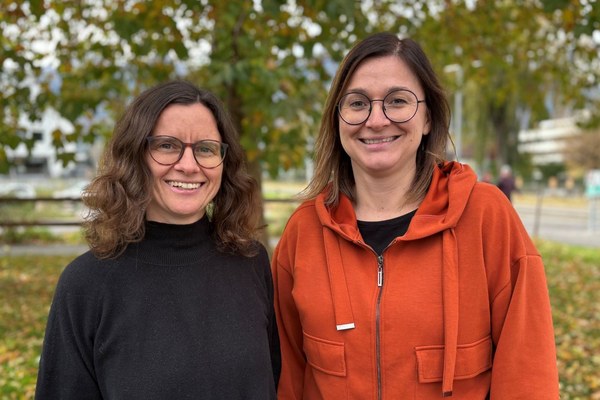
Discussing, eating and laughing together, forging ideas, identifying problems, discovering projects and meeting inspiring people: commitment is contagious, according to Anna Mehrmann and Maya Mathias from CIPRA International, who organised the second Liechtenstein Future Forum Alps on the topic of water in 2025.
Point of view: Holidays have a lasting impact
Holidays mean time out, a change of scenery, relaxation. But where and how we spend our holidays doesn’t just affect us; it also has an impact on other people, regions, the climate and nature. Magdalena Holzer, project manager at CIPRA International, is convinced that travelling is a decision that brings with it with great responsibility.