Political positions of CIPRA

Friends-of-Nature Wildhaus Declaration: tourism and sustainability in the 21st century
Tourism needs an intact natural environment, a vibrant cultural life, and a fair partnership between visitors and visited. As an economic sector, tourism is directly dependent on sustainability. The Declaration calls upon the tourism industry, the tourism regions, governments and individual tourists to curb the consumption of natural resources and reduce the burden of traffic caused by tourism traffic. It also calls on tourism to contribute towards eliminating poverty and to implement a sustainable destination and transport policy for the environment.
Berchtesgaden Declaration on regional co-operation in mountain regions 2002
At the end of June 2002 a conference on international co-operation between the mountain regions of the world was held in Berchtesgaden. The participants at the conference presented ten fundamental principles for regional co-operation. The principles underscore the key responsibility of governments and the need for regional co-operation to ensure the sustainable and proper management of mountain regions. Equal rights, decentralisation and the involvement of resident populations are essential in achieving sustainable development. Measures aimed at establishing cross-border partnerships and networks for the exchange of experience and the dissemination of knowledge are of crucial importance in bringing regional co-operation to life. The Declaration is aimed at governments, the international community, the private sector and NGOs.
Vienna Declaration by the Regional Conference on Transport and the Environment 1997
The Declaration was adopted by the governments of the member states of the UN Economic Commission for Europe. The states pledge to take steps aimed at reducing the negative impact of transport and traffic on the environment and on health. Energy-efficient and ecological vehicles and fuels as well as efficient and sustainable transport systems are to be encouraged and sensitive regions protected. The UNECE members are also planning to encourage the safe transport of hazardous substances and adopt measures aimed at protecting water resources from pollution. Annexed to the Declaration is a programme with a description of potential measures and solutions in the area of transport and the environment. http://www.unece.org/doc/ece/rcte/ece.rcte.conf..2.final.e.pdf

News on Alpine Politics

Alps in Motion: new Alpine-wide Day of Action
The Alpine Fire is being reimagined. With Alps in Motion, CIPRA Switzerland and CIPRA International are launching an Alpine-wide Day of Action on 29 August 2026.
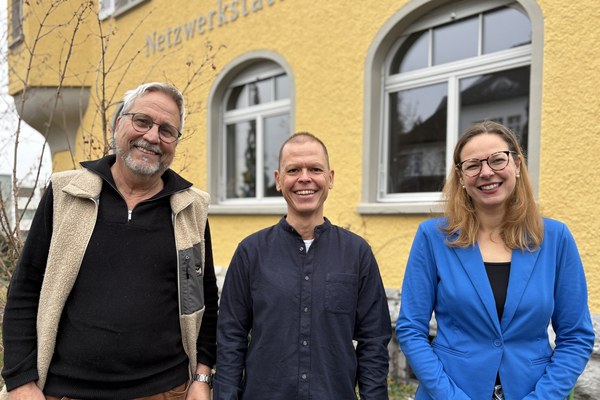
Generational change at CIPRA International
After seven eventful years at the helm of CIPRA International, Kaspar Schuler is taking well-deserved retirement. His former deputy, Jakob Dietachmair, takes over as Executive Director, while Magdalena Holzer becomes the new Deputy Director. There are also changes at CIPRA Austria: Paul Kuncio is moving to CIPRA International as Policy Officer.
Working together for the future of the Alps
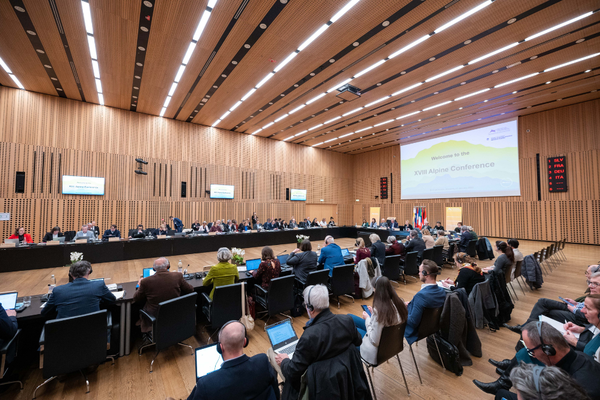
On the 22nd of January the Slovenian Presidency of the Alpine Convention hosted the Alpine Conference in Brdo/SI. A central theme was the quality of life in the Alpine region, which is also the subject of the tenth Report on the State of the Alps.
Point of view: Let’s plan the energy transition and restoration together!
Alpine spatial planning can help to resolve the contradictions between restoration and the expansion of renewable energy. This requires joint efforts involving the interests of the population and environmental organisations, says Paul Kuncio, Executive Director of CIPRA Austria.

Point of view of CIPRA

CIPRA's point of view: Torino 2006: a hard lesson - but nothing learned
The Olympic Winter Games 2006 have left a burdensome legacy. The idea is thus to close the loss-making bobsleigh and replace it with an indoor ski slope. Is Turin simply throwing good money after bad?
CIPRA's point of view:  New solidarity between the Alps and metropolitan areas
CIPRA's point of view: New solidarity between the Alps and metropolitan areas
Various political actors are pushing for the development of a macro-region for the Alps. CIPRA also says yes to an Alpine macro-region - but only within a clear framework. This offers the opportunity to make the rest of Europe aware of the issues facing its Alpine regions.
CIPRA's point of view: Alpine Convention: Italy says yes but Switzerland still says no
Italy, surprisingly, has ratified eight of nine protocols of the Alpine Convention. Only Switzerland has yet to sign up. We do not need the protocols, stated the Swiss Federal Council recently - Swiss policy is, in its view, more sustainable than in any other Alpine country.