
Positions
Winter Olympics: the Alps are more than just a playground
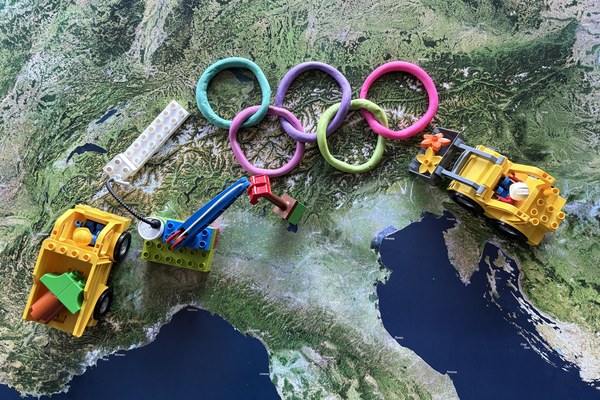
Major, global sports events have the power to fascinate and inspire. Winter sports hold a special place in the Alps, with their deep-rooted tradition and passionate following. We however believe that, as they currently stand, the Winter Olympic Games are neither environmentally nor socially acceptable. Despite promises of reform, recent developments such as the preparations for Milano-Cortina 2026 and the 2030 Games in France, as well as the “privileged candidacy” of Switzerland for the Winter Games 2038, all prove that the Olympic model remains unsustainable. In recent decades, referendums (e.g. in Innsbruck, Sion, Munich, Grisons) have several times demonstrated that large segments of the population are no longer willing to pay the price of the Winter Olympics.
Position: Transport and mobility in the Alps
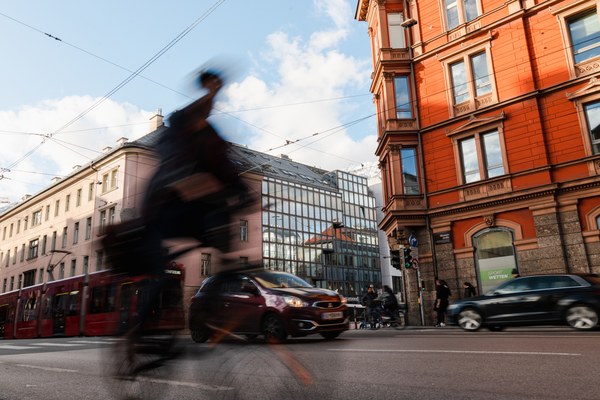
In its new 40-page position paper, CIPRA outlines sustainable mobility in the Alpine region with the least possible negative impact of transport on the environment and people. In addition to travel, the paper also addresses commuter traffic, long-distance traffic and freight transport - supplemented with facts, concrete measures and good examples.

Solstice in winter tourism
Tourism has brought wealth to the Alps. In many regions it remains an important source of income, but lack of economic diversification is also a risk. The importance and orientation of tourism differs strongly among Alpine countries, but all of them need new strategies and approaches to cope with shifts in visitor behaviour and climate change. A socio-economic transformation is needed that takes account of tourism’s past, present and future potential.

Only climate-friendly tourism is sustainable: cc.alps - CIPRA’s demands for tourism in climate change
Climate change is a major challenge to Alpine tourism. It has to adapt to climate change and at the same time become more climate-friendly. There is a particularly large potential for reduction of CO2 emissions in the key areas of traffic and energy. Tourism is a branch of the economy which is heavily subsidized. Therefore public policy can and must direct developments towards sustainability through the support given to tourism. The present discussion about developments in the tourism industry is dominated by the large chair lift companies which are essentially fixed on ski tourism and the maintenance of the status quo. But focusing only on snow and skiing means promoting a capital-intensive, highly technological form of Alpine tourism and a monoculture. This is neither climatologically nor environmentally sustainable.
Friends-of-Nature Wildhaus Declaration: tourism and sustainability in the 21st century
Tourism needs an intact natural environment, a vibrant cultural life, and a fair partnership between visitors and visited. As an economic sector, tourism is directly dependent on sustainability. The Declaration calls upon the tourism industry, the tourism regions, governments and individual tourists to curb the consumption of natural resources and reduce the burden of traffic caused by tourism traffic. It also calls on tourism to contribute towards eliminating poverty and to implement a sustainable destination and transport policy for the environment.