
Search
190 items matching your search terms.
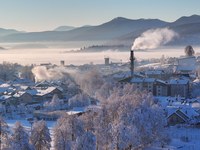
Heating of buildings and air quality 2.0
The project represents a continuation of efforts to reduce air pollution resulting from improper combustion in individual furnaces. Particular attention is paid to the use of outdated wood biomass combustion devices, which contribute significantly to emissions of particles that are harmful to health.
CIPRA Project
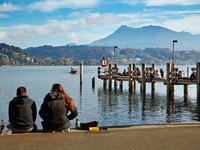
H2Opportunities: Working together for a sustainable future for Alpine water
Water is one of our most precious resources – and it is increasingly threatened by the climate crisis. The new CIPRA project “H2Opportunities” aims to share knowledge and initiate a dialogue on fair water management in the Alps.
News
Renovation Days
The leading event dedicated to innovative approaches in the renovation of the built environment
Event

H2Opportunities
Water is one of our most precious resources and is under serious threat from the climate crisis. The project “H2Opportunities – Opening dialogues on a sustainable Alpine water future” shares knowledge and encourages discussion about fair water management.
CIPRA Project
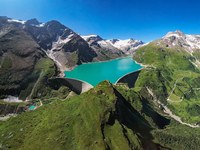
Renewable energies: Alpine Convention becomes decisive
The EU wishes to accelerate the expansion of renewable energies. In the Alps, however, this must not come at the expense of sensitive natural areas. CIPRA International has now achieved two important clarifications through legal action: as a treaty under international law, the Alpine Convention takes precedence over secondary European Union law – that is, EU regulations and EU directives; consequently, its provisions must also be complied with when implementing the Renewable Energy Directive (RED III).
News
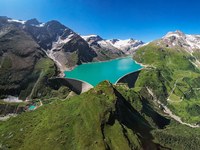
Renewable energies: Alpine Convention becomes decisive
The EU wishes to accelerate the expansion of renewable energies. In the Alps, however, this must not come at the expense of sensitive natural areas. CIPRA International has now achieved two important clarifications through legal action: as a treaty under international law, the Alpine Convention takes precedence over secondary European Union law – that is, EU regulations and EU directives; consequently, its provisions must also be complied with when implementing the Renewable Energy Directive (RED III).
Press/Media release
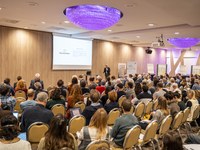
Dialogue on Alpine Spatial Planning: Proceedings of the CIPRA Annual Conference 2025
How can Alpine Spatial Planning mitigate conflicts between the energy transition and nature restoration? This question was addressed at the CIPRA Annual Conference 2025 in Salzburg, which brought together more than 160 participants. The proceedings show key insights and recommended actions – not in a concluding way, but as part of an ongoing learning process and as an impulse for further debates. They underline the shared understanding that the energy transition in the Alpine region must be approached and implemented in a cross-sectoral, interdisciplinary, and transboundary manner.
News
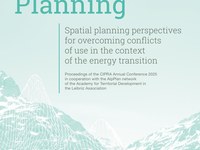
Alpine Spatial Planning: Spatial planning perspectives for overcoming conflicts of use in the context of the energy transition
The proceedings of the CIPRA Annual Conference 2025 summarise the participatively developed results, conclusions, and normative policy and planning recommendations on the role of Alpine spatial planning in the context of current EU requirements for nature restoration and the expansion of renewable energies.
CIPRA Publication
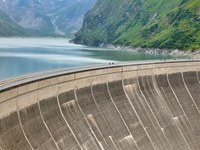
Controversial dams
New dams for electricity and water supply are being planned across the Alpine region. Environmental organisations are warning of irreversible damage to the Alpine environment and calling for a rethink in favour of nature-friendly alternatives.
News
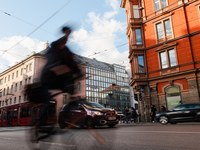
Position: Transport and mobility in the Alps
In its new 40-page position paper, CIPRA outlines sustainable mobility in the Alpine region with the least possible negative impact of transport on the environment and people. In addition to travel, the paper also addresses commuter traffic, long-distance traffic and freight transport - supplemented with facts, concrete measures and good examples.
Position

Point of view: Let’s plan the energy transition and restoration together!
Alpine spatial planning can help to resolve the contradictions between restoration and the expansion of renewable energy. This requires joint efforts involving the interests of the population and environmental organisations, says Paul Kuncio, Executive Director of CIPRA Austria.
News

FutureForum Alps 2025
“H2O: precious, powerful, scarce”: How is the climate crisis affecting the alpine water resources? What will it take to ensure that we continue to have sufficient water as a habitat and resource in the future? These and other questions will be addressed at the Liechtenstein FutureForum Alps.
CIPRA Event

Point of view: The Alps are not an endless source of energy!
Solar, wind and hydropower are helping us become less dependent on fossil fuels such as coal, oil and gas. This can also be done without sacrificing the last biodiversity hotspots in the Alps, says Isabella Helmschrott, Executive Director of CIPRA Switzerland.
News
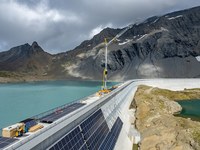
Unsuitable landscapes for energy production
The results of a recent survey from Switzerland are clear: no to energy production in almost unspoilt mountain areas. Intensively used areas around ski resorts or existing power plants would be better suited to the expansion of renewable energy.
News
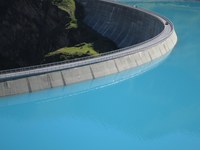
Alps in transition
The ecological transition is already happening in the Alps – and we are in the middle of it. The AlpWeek 2022 from 5 to 7 September 2022 in Brig-Glis/CH will bring together citizens and decision-makers to discuss the many aspects of transformation in the Alps. CIPRA is co-organiser of the international event.
Press/Media release
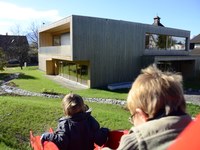
Rebuild instead of build
The Austrian municipality of Zwischenwasser on the edge of the Rhine valley is rebuilding instead of building – and doing so at the highest architectural level.
Good practice
Kick-Off Italian EUSALP-Presidency 2022
The EU Strategy for the Alpine Region EUSALP, launched in 2015, aims at developing the Alpine region as an attractive, innovative, competitive and green region in the heart of Europe. The focus lies on economic growth and innovation, mobility and connectivity, as well as environmental protection and energy. After the successful French presidency, the autonomous provinces of Bolzano-South Tyrol and Trento will take over the presidency for Italy for the year 2022.
Event
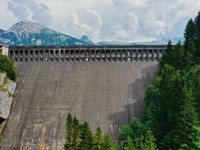
Hydropower in the Alps
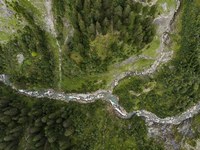
How much hydropower use is environmentally compatible and ecologically sustainable? This question has been on the minds of people in the Alpine region for decades - all the more so against the backdrop of the urgent need to move away from fossil fuels. There are currently around 21,000 hydropower plants in operation in Europe, 300 under construction and over 8,500 in the planning stage. In many places, climate change with its imponderables such as extreme floods is being countered with more dams and walls, although river widening, for example, would make more ecological sense.
Position
How much hydropower is ecologically sustainable ?
Renovate power plants instead of building new ones, preserve the last freshwater pearls, coordinate use and protection across countries: CIPRA has published a position paper with detailed technical demands on the use of hydropower in the Alps.
News

Point of view: Water will not tolerate resistance
Extreme weather conditions are also increasingly affecting the Alps. The climate crisis is driving this development. Can more and more dams, barriers or power stations solve the problem and at the same time satisfy the growing hunger for energy? We must work with the power of water rather than against it, says Kaspar Schuler, CIPRA’s Executive Director and co-author of CIPRA’s new position paper on hydropower.
News
Climate protection: from plan to action
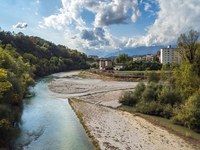
The Alps as a climate-neutral, climate-resistant region by 2050: this is the objective of the newly launched “Climate Action Plan 2.0” of the Alpine Convention. Concrete steps will now follow in such areas as mountain farming, spatial planning and biodiversity.
News
CO2 legislation: more courage needed
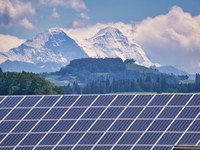
While the new CO2 law in Switzerland has for the time being failed, a climate protection alliance is forming in Bavaria; Austria is discussing a climate protection law; and in France the Climate Council is taking courageous decisions.
News
Darkness is worth protecting
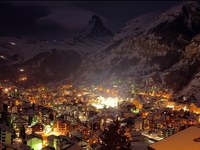
Insect mortality, fewer pollinated plants, disoriented migratory birds, disturbed sleeping rhythms: the worldwide increase in light pollution has an enormous impact on flora, fauna and humans – including in the Alpine region.
News
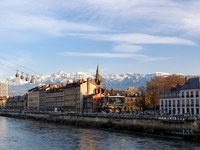
With the Alps at our backs
The French city of Grenoble aims to become the 2022 “European Green Capital”. It can play its biggest trump card in the build-up to this coveted award: the Alps.
News

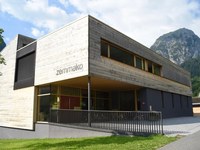
Awards for attractive, well-built constructions
At the end of October 2017 in Bern, Switzerland, Constructive Alps crowned the winning projects, demonstrating that Alpine architecture can not only be pleasing on the eye, but sustainable too.
News

Turning risks into opportunities
On this October afternoon in the Swiss region of Surselva, the hotel in Vals is a hive of activity as a group of people discuss and gesticulate in German and Romansh. They’re engaged in an exchange of views on the opportunities, risks, and future of the valley in the wake of climate change.
News

Point of view: Adaptation to climate change is inevitable
Despite progress in international climate policy, a rise in temperatures is inevitable. An adaptation now will save costs later, states Wolfgang Pfefferkorn, project manager for climate and energy at CIPRA International. Alpine regions are leading the way.
News
Point of view: Switzerland needs help with its climate policy
Switzerland was formerly a leading light in environmental policy. Today, sadly, it does not even have a plan for implementing the goals of the Paris climate agreement, says Hans Weber, executive director of CIPRA Switzerland.
News
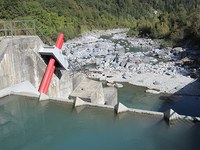
Better protection for Alpine rivers
A European legal ruling has strengthened the protection of Alpine rivers. Derogations for hydro plants or snow-making facilities are now more difficult to obtain. The politicians are up in arms.