
Search
83 items matching your search terms.
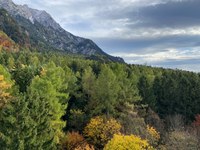
Act now to protect forests: sign the #HandsOffNature petition!
More than 40 percent of the Alpine region is covered by forests. They are not only a defining feature of the landscape, but also a cornerstone of Alpine livelihood, providing building materials, supporting biodiversity, and delivering essential ecosystem services.
News
When nature loses, we all lose
The air we breathe, the water we drink, the food we eat, the safety of our homes – all depend on strong environmental laws. Right now, those protections are under attack. Once they’re gone, we hand the keys of our future to those who see nature only as a resource to exhaust. In the EU, environmental laws are being gutted, under the promise of “simplification” of the legal system. But in reality, these changes will only profit greed, while endangering the lives of all.
News
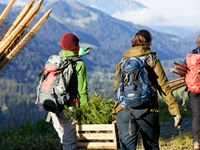
Climate crisis: solutions from nature
A recent report with CIPRA involvement shows how nature-based solutions can help to tackle the climate crisis across the Alps.
News
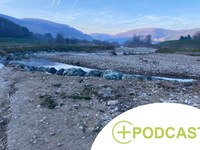
Too much water, too little water: excursion to the Vienna Woods
How do drones detect illegal campfires? How do settlements protect themselves from the next flood? What do forest fires have in common with avalanches? At the end of November 2024, an excursion to the Vienna Woods Biosphere Reserve by participants in the MultiBios project looked for answers.
News
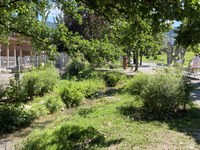
Nature-based solutions and their governance structures in the Alpine region
In view of the global challenges of climate change and biodiversity loss, the use of nature-based solutions (NbS) is becoming increasingly important. On behalf of the German Federal Environment Agency, ifuplan (lead) and CIPRA International are preparing a report on “Nature-based solutions and governance structures in the Alpine region”. The aim of the report is to analyse the potential of various NbS in the Alpine region and the governance mechanisms behind them that ensure their success. Based on this, their transferability to other Alpine regions will be analysed and recommendations for action formulated.
CIPRA Project
Green light for Nature Restoration in the EU
The majority of EU environment ministers voted in favour of the Nature Restoration Law on 17 June 2024. The decisive factor was the courageous and foresighted last-minute approval by Austria's Environment Minister.
News
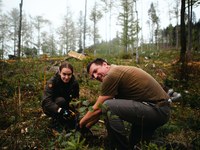
A management model for Jelovica
Restoring a damaged forest and other good practices: The JeloviZa project implemented a management model for a sensible natural area in Slovenia.
Press/Media release
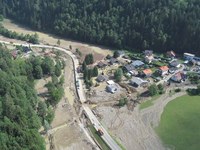
After the flood
What role could biosphere reserves play in dealing with climate risks? This was the subject of an international workshop organised by the MultiBios project in Bad Kleinkirchheim/A at the beginning of April 2024, which included a site visit to the Gegendtal valley that was affected by heavy rainfall and flooding two years ago.
News
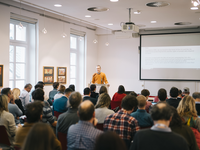
The role of forests in climate change
What role will forests play in the future in the face of climate change? At the end of 2023, CIPRA Slovenia co-organized a meeting of various interest groups on this topic. Experts agreed on the need to designate more areas where forests are left unmanaged.
News
Short story: The sheet of paper
We present one of the five short stories that won an award in the short story competition as part of the "Reading mountains (Berge lesen)" festival 2023in Vaduz.
News
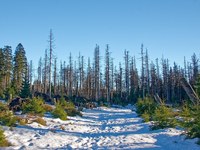
Mountain forests and climate change
The consequences of climate change are also becoming apparent in the forests of the Alps. In South Tyrol/I and East Tyrol/A this year has seen an explosive spread of pests. What looks like frightening devastation might present a long-term opportunity, however.
News
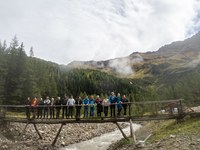
Ideas for Jelovica from Pinzgau
Preserving the region’s natural and cultural heritage: this is the aim of the project on the Slovenian karst plateau of Jelovica. In mid-September 2022, the Slovenian partners of the “JeloviZA” project travelled to the Austrian Pinzgau region to gain inspiration from the Hohe Tauern National Park region.
News
JeloviZA
[Project completed] The JeloviZA project aims to improve the condition of ecosystems and conserve certain species in the Slovenian Natura 2000 site Jelovica. Six project partners are working on a management plan for the area, which will include nature conservation, tourism and regional development.
CIPRA Project
Ideas for Jelovica from Pinzgau
Preserving the region’s natural and cultural heritage: this is the aim of the project on the Slovenian karst plateau of Jelovica. In mid-September 2022, the Slovenian partners of the “JeloviZA” project travelled to the Austrian Pinzgau region to gain inspiration from the Hohe Tauern National Park region.
Press/Media release
EUROPARC Conference 2022: Climate Change, Resilient Parks!
The EUROPARC Federation and the Fédération des Réserves Naturelles Catalanes (FRNC) are honoured to invite you to France for the EUROPARC annual conference and General Assembly. This year’s edition will focus on Climate Change Adaptation in and around Protected Areas. Throughout the program and with the help of experienced practitioners, experts and researchers, we will seek to better understand: How will climate change affect Protected Areas and their surroundings? How to assess their vulnerability? How to prepare ourselves collectively to adapt for the future? The EUROPARC Conference is the biggest gathering of Protected Area professionals in Europe. Hosted every year in a different location in Europe, this year will take place in Argelès-sur-Mer, France. Find out who are the organisers and supporters that have made this conference possible.
Event
The “Green Communities” in the Italian Alps
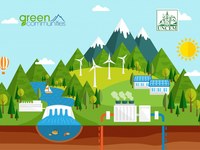
Sustainable management of the built heritage, energy efficiency, environmentally friendly mobility: how can mountain areas be upgraded and the overuse of natural resources curbed? The first “Green Communities” in Italy want to show that this is also possible in a socially acceptable way.
News

Publication
How much is nature worth?
Alpine pastures that provide us with food. Trees that provide a pleasant microclimate. Alpine landscapes that heal and touch. At the beginning of July 2021, around 100 participants from all Alpine countries discussed the benefits and value of nature in the Alpine region at CIPRA’s Annual Conference in Biella/I.
News

Re-Imagine Alps
[Project completed] Relations between humans, and between humans and nature, are the focus of the “Re-Imagine Alps” project. People take responsibility for their environment when they feel concerned and involved. Landscape here serves as a frame of reference and focal point for the perception and communication of sustainability issues: various relationships, memories and visions are illuminated in respect of, by, and for landscape in the overall Alpine context. Responsibilities and obligations grow out of ideas and relationships.
CIPRA Project
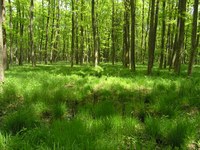
Nature providing services in the Alps
Whether mountain forests that protect us from avalanches and clean our air, or rivers and alpine pastures that provide us drinking water, energy or nourishment: in the AlpES Project ten partner organisations from six alpine countries have evaluated and documented ecosystem services for the past three years. They will present their results on 21st and 22nd November 2018 at a Final Event in Innsbruck/A. Press representatives are kindly invited to attend.
Press/Media release
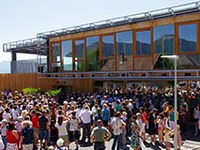
“The Climalp excursion was a breakthrough”
The local authority in Saint-Jean-d’Arvey decided to use local timber to construct an energy-efficient multipurpose building. In an interview with the Mayor Jean-Claude Monin, we learn how the idea was inspired by a CIPRA visit to Vorarlberg.
News
Joint action on climate change
The forests of the Alps will only be able to cope with climate change if the findings from all the various specialist fields are pooled together. And that requires new forms of co-operation and communication.
News

Healthy, natural forests: responding to climate change! cc.alps: CIPRA's demands for forest management
As forestry measures have long-term effects, adaptation of the forests to new climate conditions is urgently needed - but it should be initiated with great caution. The carbon storage ability of forests has to be exploited. Wood should first be used as a raw and building material; only under certain circumstances it should be used for heating. Short regional exploitation cycles are to be created. Natural forests should be fostered as they are more resilient to climate change. Forest owners who in the interest of climate protection give up part of their earnings should be compensated. Finally targeted research into practical climate adaptation measures has to become an important long-term task.
Position
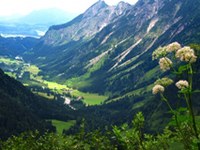
Changing forests
The seminar titled Forestry and Climate Change - Thinking One Step Ahead! looks at the consequences of global warming on the timber industry, forestry and its functions. What sort of strategies are needed to ensure the sustainable development of the forest within the context of regional development?
News
eco.mont - new journal for research in protected areas
The first issue of the new journal "eco.mont - Journal of protected mountain areas research" has appeared.
News
Results of the Workshop on Global Change Research in Mountainous Regions
A workshop on the global (climate) change and its impact on mountainous regions was held at the University of California Berkeley/US on 14 December 2008.
News
Modifications to Alpine plant communities
A recent French study into 171 woodland plants in temperate regions shows how plant species have already adjusted to climate change, with a significant upward shift in species optimum elevation averaging 29 meters per decade in response to rising global temperatures.
News

Stormy times in mountain forests
In the 1990s four storms in the Alpine regions caused quite a stir: in February 1990 Vivian and Wiebke, and in December 1999 Lothar and Martin. What they all had in common was the devastation they caused; what was also remarkable was the short time span between them. The Dossier's background report, which is available only in German, outlines the extent and causes of the damage caused in the forest areas and the way in which the storm areas were addressed depending on the different interests governing the use of those areas. Additional relevant material on the issue can be found in other language versions of this page.
Dossier
Collaboration in regional development
The last workshop in the series "Disseminating knowledge - networking people" is being held in St. Gall/CH on 3 April 2008 on the subject of "Collaboration in regional development".
News
Strengthening mountain forests
The Interreg IIIC project Network Mountain Forest (NMF), which was launched in 2003, has come to a close with the signing in Lindau/D on 29 October 2007 of a Memorandum aimed at strengthening mountain forests in Europe.